
Referee, Judge, or Bystander: What Works When Your Kids Fight
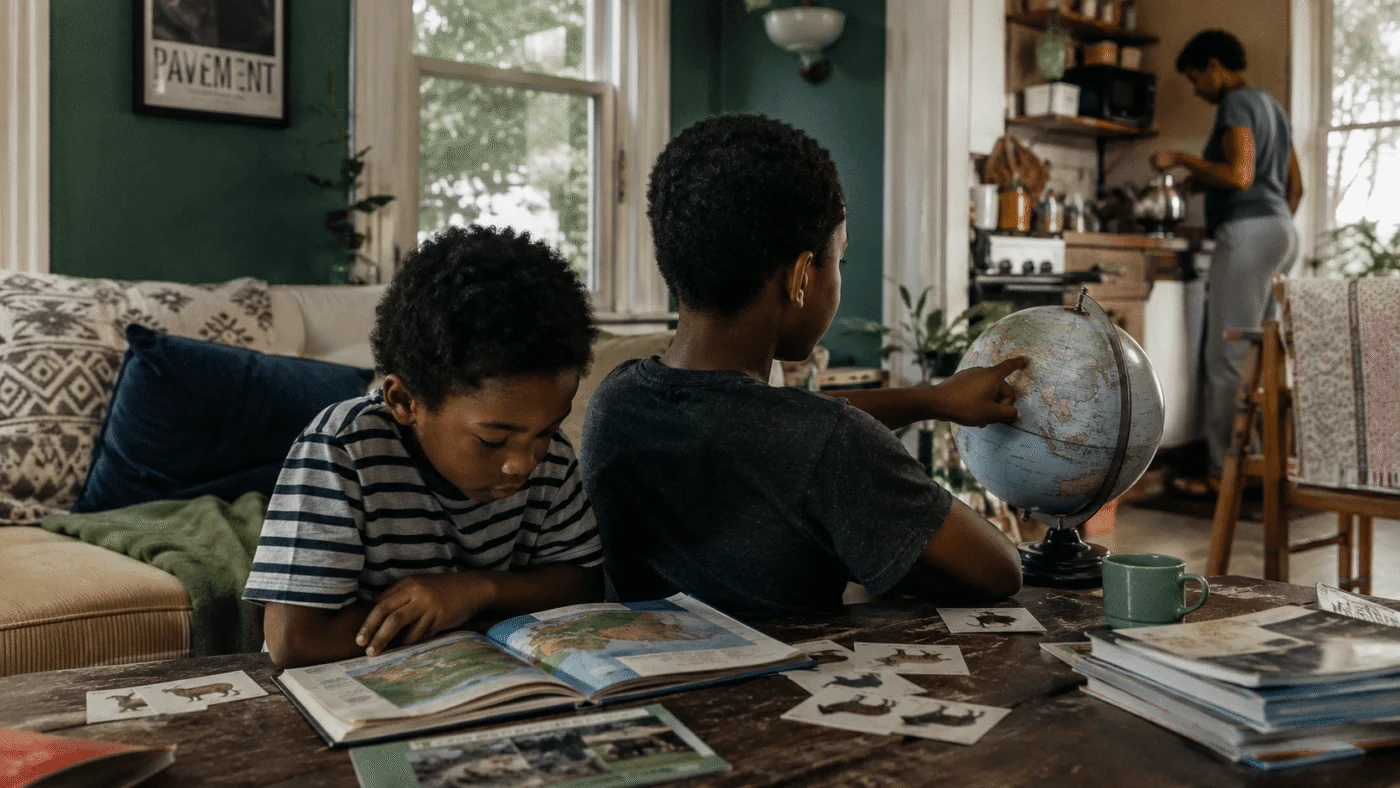
It usually starts over nothing you could have predicted. A chair. The blue cup. Who looked at whom on the stairs. By the time you have crossed the room both of them are crying, both of them are completely certain the other one started it, and you have somehow been handed the job of judge in a courtroom with no evidence and two extremely unreliable witnesses.
Here is the short version, because you are probably reading this over the sound of it happening in the next room. Most sibling fights are not a discipline problem, they are a skills problem, and your job is almost never referee. You step in for blood, real danger, or genuine cruelty. For the daily bickering, the more you judge, the longer it runs, because a judge needs a winner, a winner needs a loser, and now they will fight twice as hard to be the one who is not it.
Your kids fight more than you think, and that is the normal part
Sibling researcher Laurie Kramer once sent recorders into family homes and asked the grown-ups to leave the room. What came back was oddly reassuring. Young siblings clash astonishingly often, as many as seven or eight disputes an hour in some pairs, an extended one every ten to twenty minutes. Conflict is not the sign your kids secretly hate each other. It is the sign that two small people are learning to want different things in the same square meter of carpet, which is one of the hardest things a person ever learns to do.
That reframe matters, because it changes what you are aiming for. You are not trying to raise children who never argue. You are trying to raise children who can argue and come back. The fight is not the failure. What happens in the ninety seconds after it is the whole lesson.
Referee, judge, or bystander? Pick the role on purpose
There are really only three seats you can take when your kids fight, and most of us drop into the wrong one on autopilot. The referee exists for safety and nothing else. Someone is being hurt, frightened, or genuinely overpowered, so you step in fast, separate, and stay boring about it. That role is real, and it is rare.
The judge is the trap. This is the parent who arrives demanding to know who started it, hears two airtight stories, and picks a winner. It feels like justice and it works like gasoline. You have just taught them that the prize for fighting is your ruling, so the next fight is really a race to reach you first with the better version. The seat you want, most of the time, is the coach on the sideline: close enough that they feel held, quiet enough that they still have to do the work.
This one is not about siblings, it is about you, the referee who keeps getting pulled onto the field. Siegel and Bryson are good on the thing that decides how a fight ends, which is whether the biggest person in the room stays regulated. A calm parent is the intervention.
As an Amazon Associate, Decoded Kids earns from qualifying purchases. Price checked live on Amazon.
What to say in the heat of it
The classic parenting book on this, Adele Faber and Elaine Mazlish’s Siblings Without Rivalry, gives one move that does most of the work: describe what you see without taking a side, then hand the problem back. It looks almost too simple on the page and feels almost impossible in the moment, which is how you know it is the real skill.
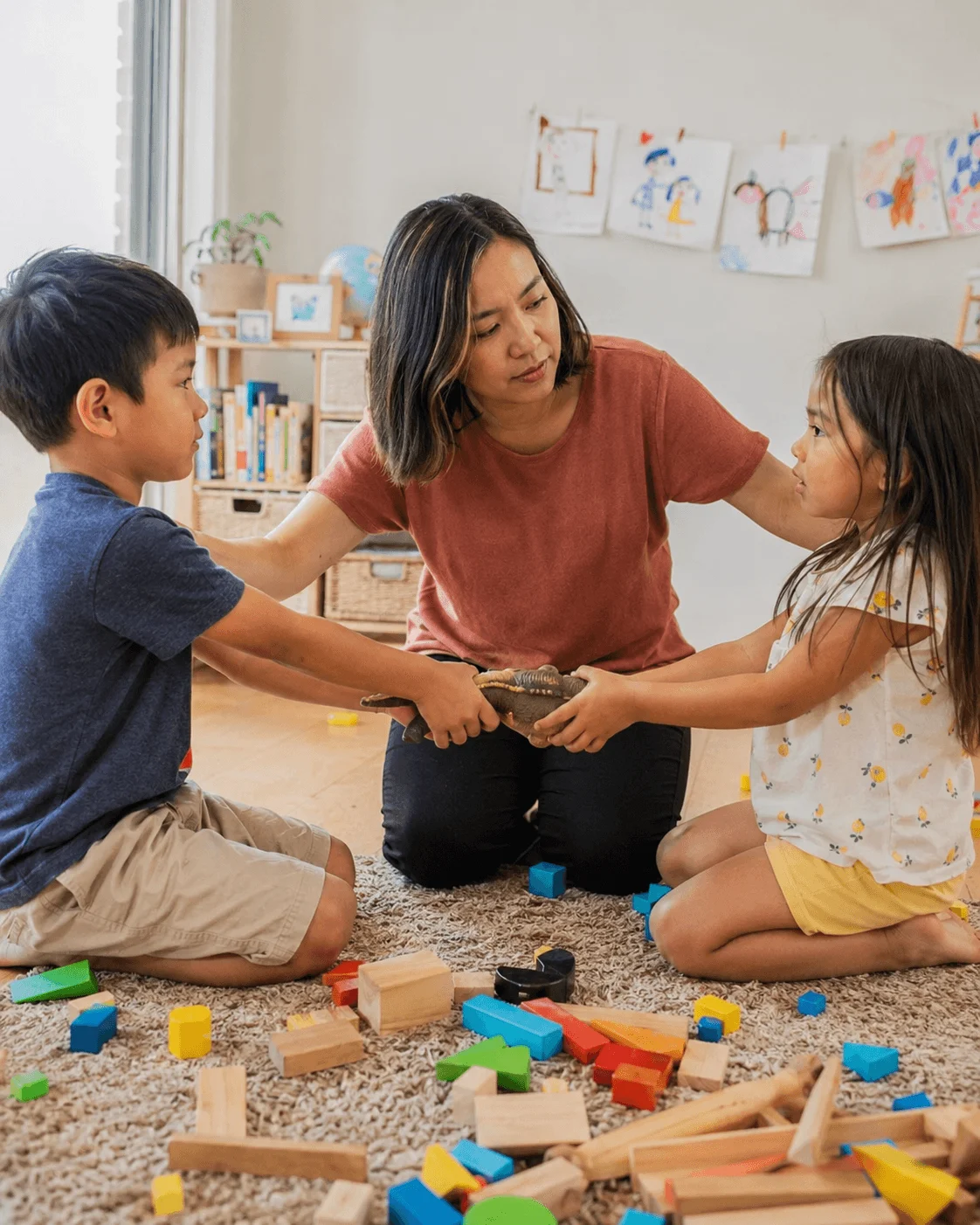
So you narrate instead of rule. “You both want the dinosaur. That is a tough one.” You name the wants out loud so each kid feels heard without either one being crowned. Then you express confidence and leave: “You two are smart. I bet you can work out a fair turn. Come find me if you get stuck.” And then, the hard part, you actually walk away, because an audience is fuel and a coach who hovers is just a judge who has not sat down yet. Half the time the fight dissolves the second the referee stops watching. This is the same muscle you lean on when a meltdown turns on you instead, the one we get into in why your words make the meltdown worse.
None of this means you go cold. A child who is genuinely overwhelmed still needs you, and the anger that spills onto a sibling is often about something else entirely, the way it can be when anxiety comes out looking like anger. Coaching from the sideline is not the same as checking out. It is trusting them with the small stuff so you have something left for the big stuff.
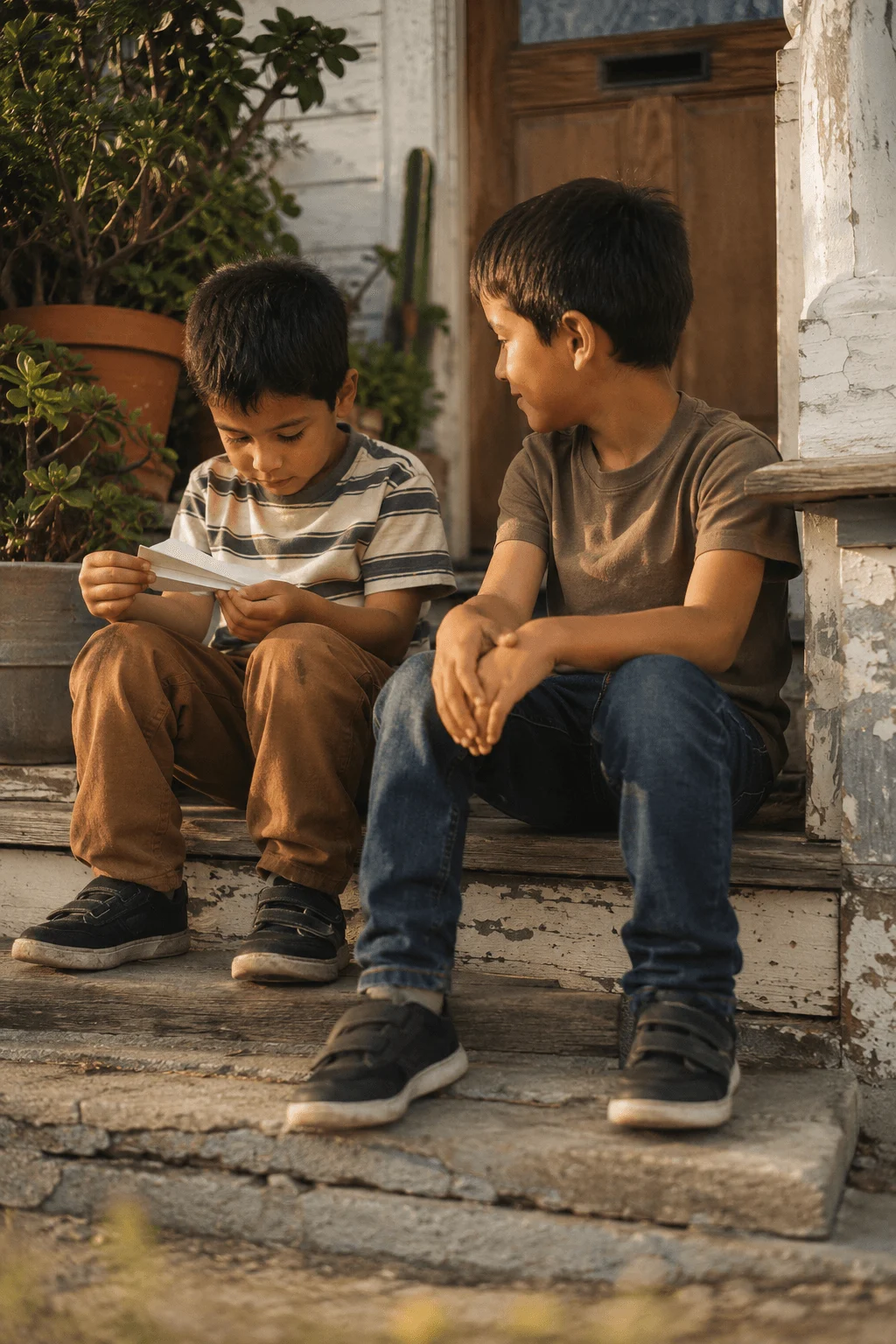
Here is the part that keeps me honest on the bad evenings. The siblings who bicker hardest are often the ones building the closest thing to a lifelong relationship, they are just doing it with the volume up. Your job is not to sand every edge off it. It is to keep everyone safe, hand back what they can carry, and let them find their own way back to the porch steps. They will. They almost always do, and usually faster than you.
Frequently asked questions
Mostly, yes. Step in for physical danger, cruelty, or a real power imbalance, but let the ordinary bickering run its course. Research on siblings shows conflict is where children rehearse negotiating and repairing. Every squabble you referee is one they do not get to learn to finish on their own.
You reduce it more than you stop it. Give them words for what each one wants, resist naming a winner, and hand small disputes back with a calm “I trust you two to sort a fair turn.” Fewer audiences and fewer judges tend to mean shorter, less frequent fights over time.
Often, yes. A new sibling rearranges every ratio of attention a child has ever known, and some regression or aggression is a normal protest, not bad behavior. Extra one-on-one time with the older child, plus naming the hard feeling instead of scolding it, settles most of it over the following weeks.
Conflict tends to be most frequent between roughly ages three and seven, when children want fiercely but negotiate poorly. Sibling researcher Laurie Kramer has recorded young pairs having several disputes an hour. It usually eases as language and perspective-taking mature, not as you get better at winning the arguments for them.
Leave the first comment
Share your thoughts

I'm for the parent doing it largely alone. I've done the single-dad decade - two homes, one income, the handovers, the very quiet Tuesdays - and I write from the far side of most of those days, with humor and hard-won calm. Not advice from above; a hand back from a few steps up the road.
More from DiegoWhat's the one thing that calmed the chaos in your house?
No right answers here - tell us how it went. Someone reading needs to hear it.
Join the conversation