
Six Hours, According to an App That Has Never Met Your Toddler
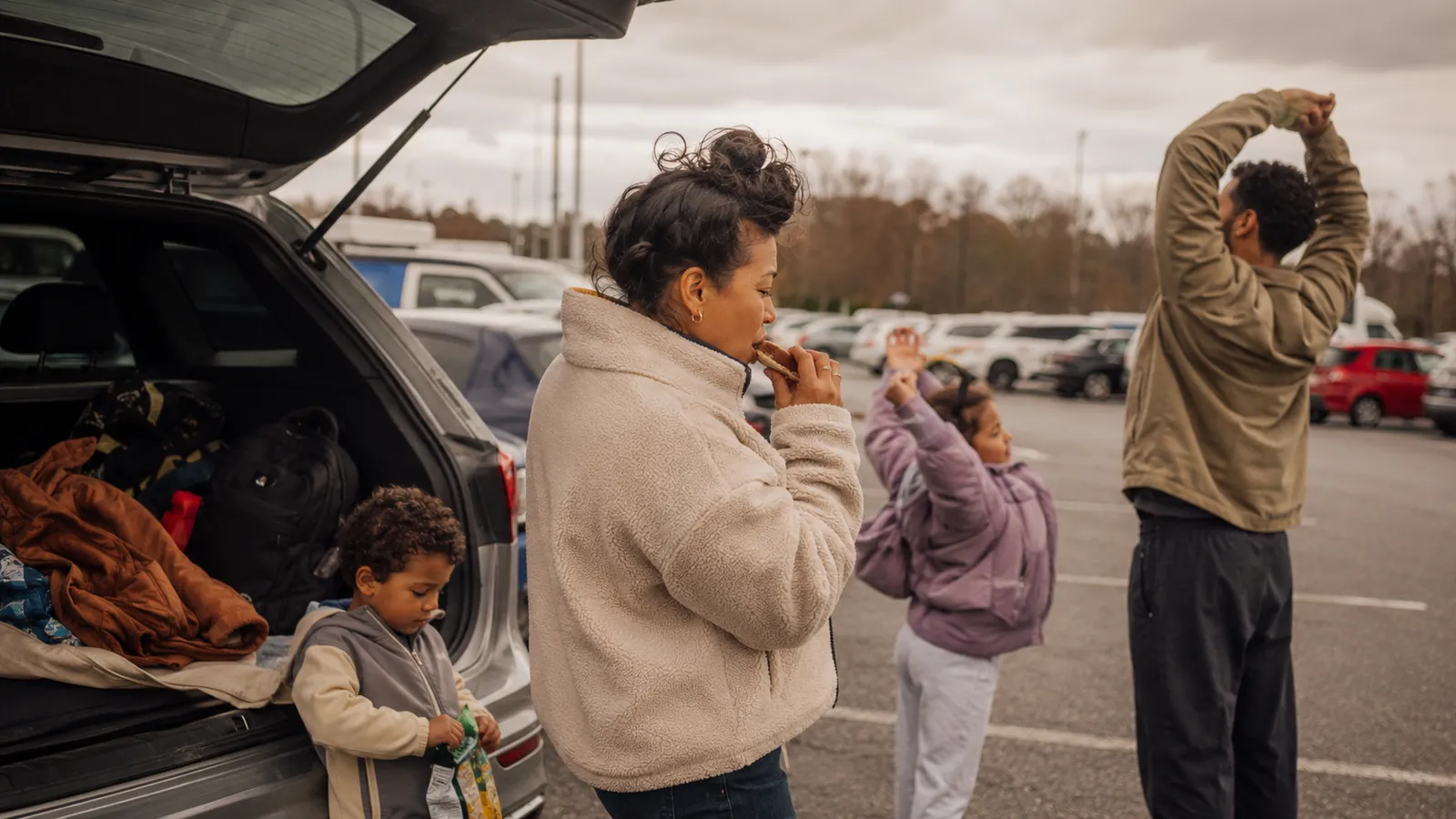
Six hours, the app says. That number comes from a machine. It has never sat through eleven good minutes of sleep, then forty of protest. It never had to explain why the trip is stopping again, less than two hours in.
A road trip with a toddler runs on two different clocks. One is the map. The other belongs to a two- or three-year-old. He does not care how far is left to go. He only cares how his body feels right now.
The car seat rule that matters more than anything else you packed
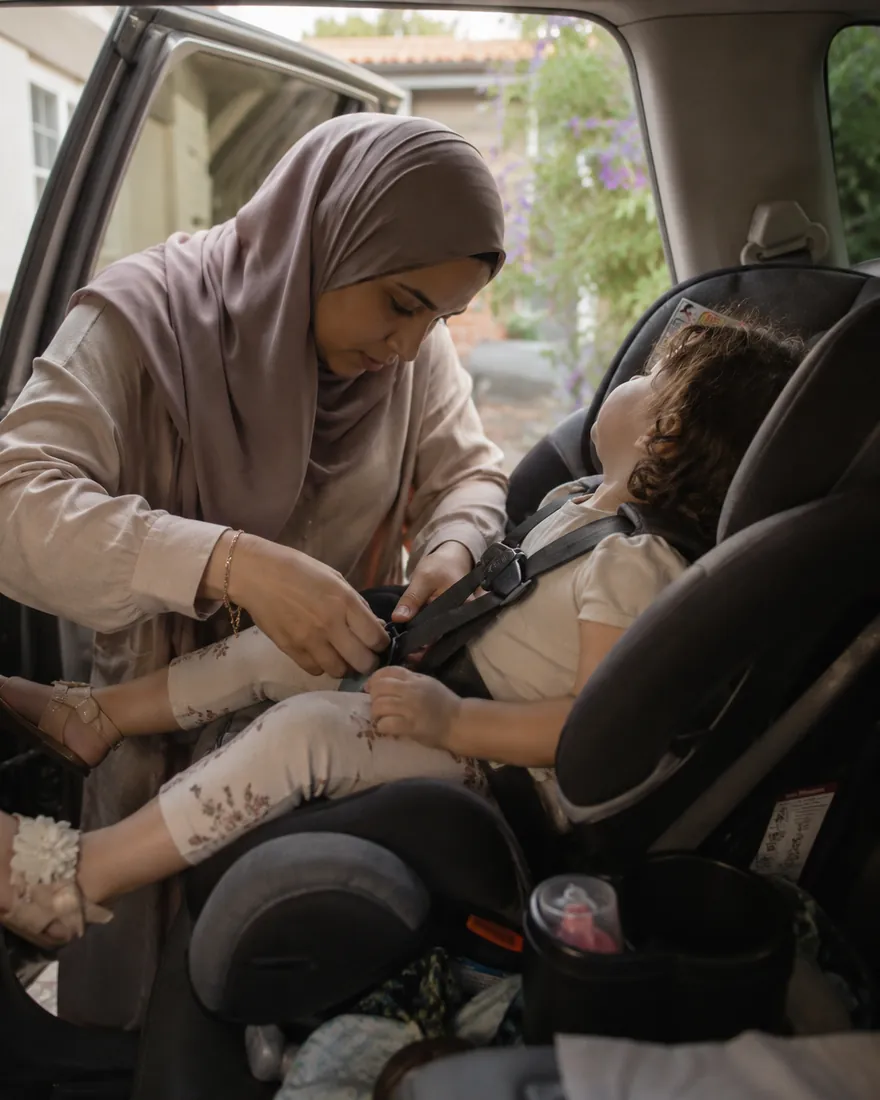
Deal with the coat before anything else on this list. A winter coat under the harness looks snug at first. Then a crash compresses it flat in an instant. The straps that seemed tight are suddenly loose enough for a child to slip through. You can check this yourself before you leave the driveway. Buckle him in as usual, then pinch the strap at his shoulder. If you can pinch a fold of fabric, the harness is too loose for what he’s wearing.
The fix is layering, not bulk. Our guide on the right way to layer a toddler for cold weather covers this from base layer to snowsuit. The same logic applies double once he is strapped into a five-point harness. Our full breakdown of the two-second coat test for a car seat walks through how to check the fit. Do it before the car ever leaves the driveway.
NHTSA says it plainly: a coat compressed in a crash leaves the harness loose. That’s exactly when it needs to be tightest. The backwards-coat trick sounds odd until you try it once. Try it at a cold gas station with numb fingers and a stuck zipper, and it clicks. Nobody has to fight a harness buckle through a stiff sleeve again.
How to plan the drive around a nap
Pick one clock to build the day around: the nap or the bedtime. Use whichever one is more reliable this month. A toddler who reliably naps from one to three has a natural window. That window covers the roughest stretch of highway.
Driving overnight trades one problem for another. Your child sleeps through more of it. But now you are the only person awake in a moving vehicle for six or eight hours. That is its own kind of unsafe if you are not used to it. A driver fighting drowsiness is a bigger risk than a toddler fighting boredom.
If you do drive through the night, share the wheel when you can. Pull over the moment you notice yourself checking the clock more than the road. Neither plan works if the driver arrives more worn out than the toddler.
Either way, build in real stops. Pediatricians suggest a break every two to three hours during the day, longer overnight. That gives a toddler time to get out of the harness, move, and reset before the next stretch.
Why snack time in a moving car is riskier than it looks
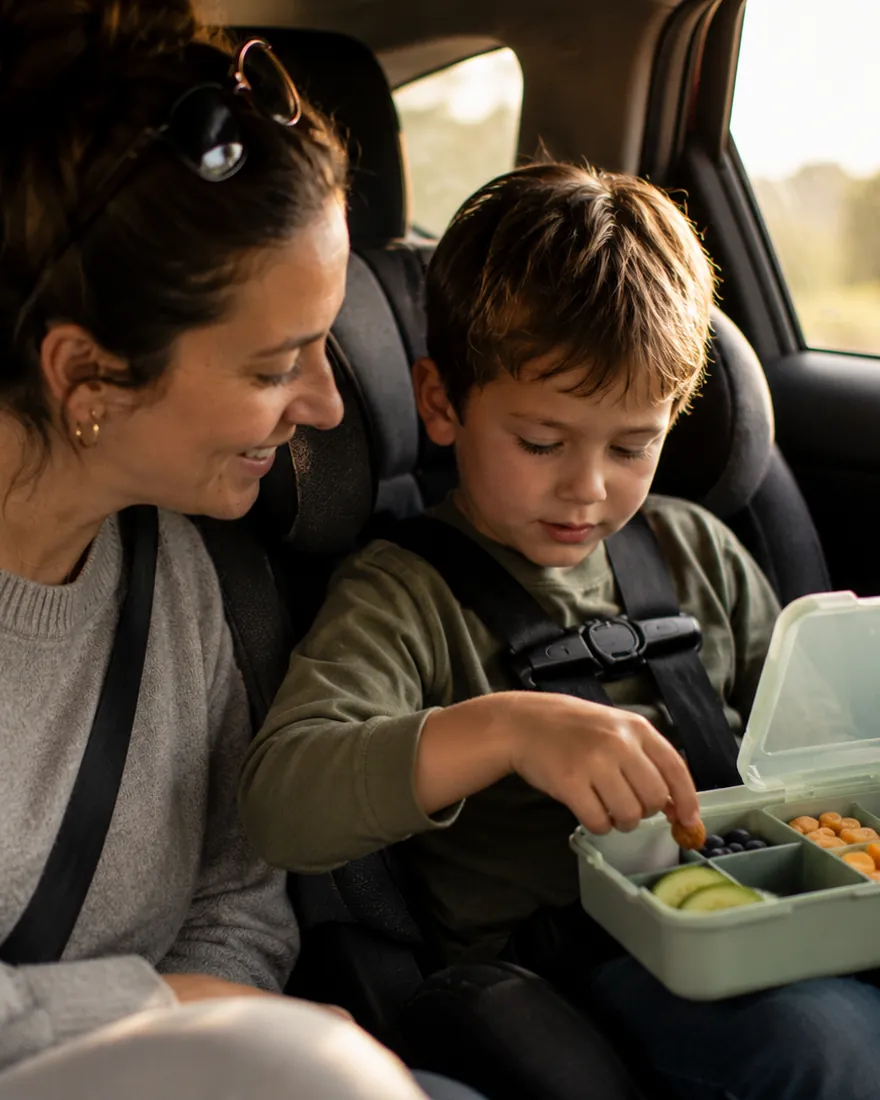
Snacks feel like the easy win of the whole drive. Then you remember he is alone in the back seat, buckled in, several feet behind the front seat. Nobody can reach him in three seconds if something goes wrong. A car seat mirror helps you keep an eye on him without turning around, but it doesn’t replace stopping the car.
Eating in a moving vehicle raises the choking risk. Nobody can respond fast enough if it happens. Round, firm foods are the worst offenders: whole grapes, hot dogs, hard candy. Pediatricians say to chop them small or skip them until a child is closer to four. A tray clipped to the seat can hold that food steady. Our own look at whether a kids travel tray for the car seat helps or creates its own safety problem covers this in full. The answer depends entirely on the tray.
The cheapest fix costs nothing. Pull over. A snack handed over at a stop is not a choking risk waiting to happen at highway speed.
The motion sickness signs that show up before the vomit does
A toddler who goes quiet and pale mid-drive is not necessarily being good. He might be sick, and the vomiting shows up later than you would think.
Pediatricians describe the early signs as pale skin, restlessness, and yawning. Sometimes crying too, well before he loses interest in food or is sick. It is easy to read that as a mood instead of a symptom, especially while you are also wondering whether he is headed for a tantrum or a true meltdown.
A screen in his lap only makes it worse. Focusing up close inside a moving vehicle is exactly what triggers the queasy feeling. Looking out the window helps more than any show does. And a screen-free audio player gives him something to focus on instead. It does not ask his eyes to fight the motion.
The bag that rides up front, and the one that doesn’t
Two bags exist on this trip. One holds pajamas and a spare outfit for whoever needs them at a hotel. That one can live in the trunk. The other holds snacks, wipes, a change of clothes for right now, and whatever toy currently has his loyalty. That one needs to live within your arm’s reach.
A seatback organizer solves this better than a loose bag does. It hangs off the front seat instead of sliding around the floor every time you brake.
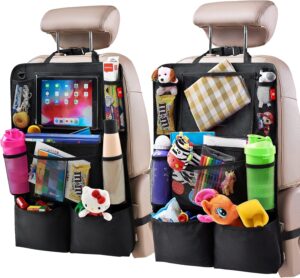
Backseat Car Organizer, Kick Mats Back Seat Protector with Touch Screen Tablet Holder, Back Seat…
As an Amazon Associate, Decoded Kids earns from qualifying purchases. Price checked live on Amazon.
Whatever goes in that reachable spot should already have proven itself quiet. The quiet travel toys that won’t roll under the seat earn their place here. Skip anything with a speaker. Need ideas to fill the actual miles once the essentials are sorted? We already built the list of ten things that make a long holiday drive survivable. This piece is only about the plan that gets you there in one piece.
Let the first night somewhere new be a little off too
Getting there is only half of it. Let the first night be a little strange. Let bedtime slide if it has to. A strange room after a long day rarely goes the way the brochure implies.
Leave the first comment
Share your thoughts
Frequently asked questions
Pack a reachable bag with snacks, wipes, and a spare outfit, plus a properly buckled car seat with no bulky coat under the harness and entertainment that doesn’t need a screen. Plan for a real stop every two to three hours, and pack pajamas and overnight things separately so you aren’t digging through suitcases after dark.
Plan a real stop every two to three hours during the day, longer if you’re driving overnight, so your toddler can get out of the car seat, move around, and reset. Pediatricians recommend this mainly for diaper changes, feeding, and giving a young child a break from being buckled in place.
The harness has to sit snug against your child’s body, which means no bulky winter coat underneath it. A coat compresses in a crash and leaves the straps loose exactly when they need to be tightest. Use thin layers instead, and add a blanket over the buckled harness for warmth.
Eating while the car is moving raises the choking risk because nobody can respond fast enough if something goes wrong. Save snacks for stops when you can, and if you do hand something over on the road, stick to soft pieces and skip whole grapes, hot dogs, and hard candy until your child is older.
If it’s motion sickness, watch for early signs like paleness, restlessness, and yawning, and have her look out the window instead of at a screen or book. For a real illness, pack a small kit with a thermometer and any regular medication, and plan on extra stops so a sick toddler gets more rest along the way.

For nearly two decades I was the youth mentor across from the angry kid, the silent one, the parents out of ideas. I write the way I listened - slow, steady, never from above. If tonight feels heavy, I hope this felt like having someone in the room.
More from TheoWhat's the one thing that calmed the chaos in your house?
No right answers here - tell us how it went. Someone reading needs to hear it.
Join the conversation