
Bedtime Alone With More Than One: A Solo Parent’s Survival Routine
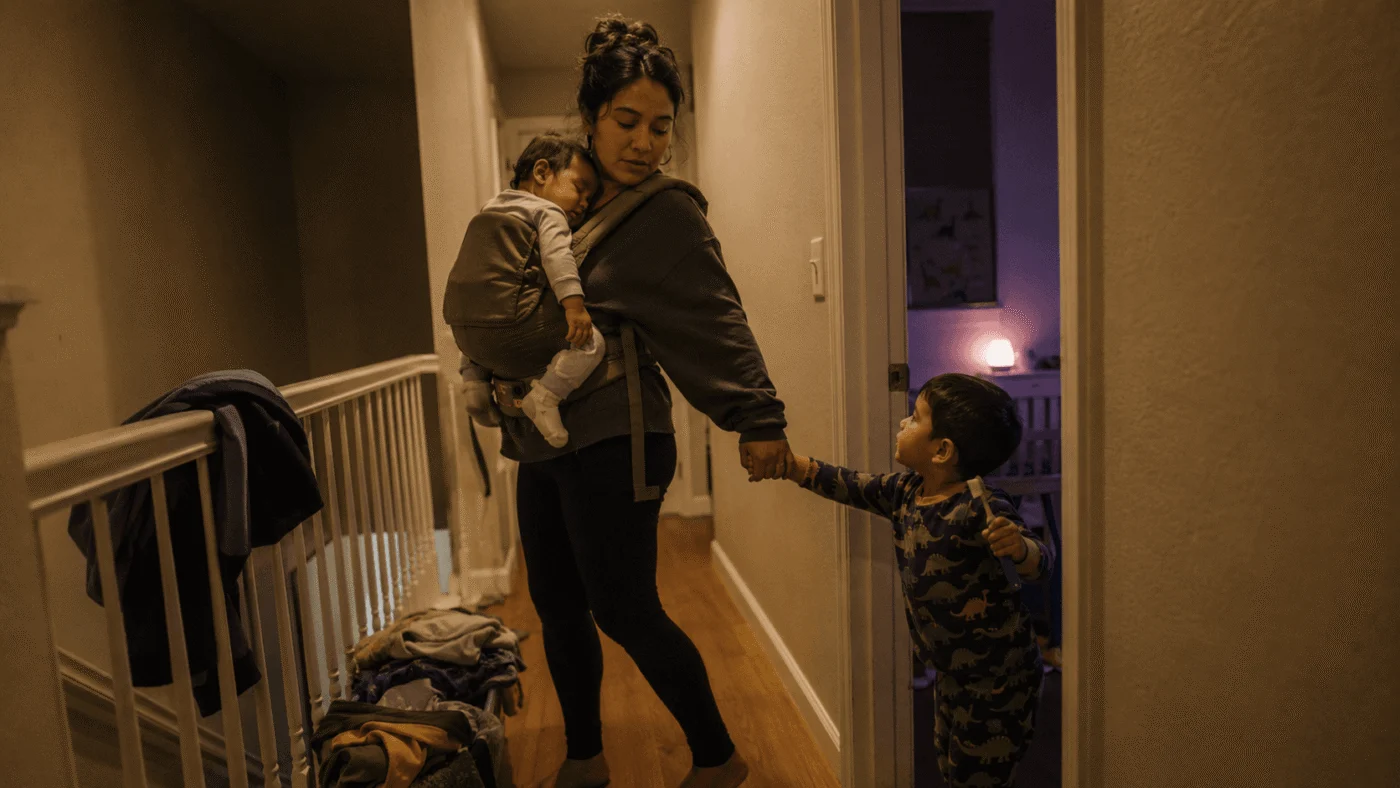
You’ve got a baby on your hip, a toddler who has decided this is the moment to take every sock out of the drawer, and exactly one of you. Bedtime, solo, with more than one kid is less a routine and more a small nightly logistics operation, and nobody handed you the manual when the other adult left the building.
So before anything practical: the reason this feels hard is because it is hard, not because you’re bad at it. Two kids needing different things at the same moment, with one set of hands, would defeat most people. The parents who make it look smooth aren’t calmer than you. They’ve just stumbled onto a few tricks, and you can have all of them in the next five minutes.
Together or one at a time?
This is the first fork, and there’s no wrong answer, only what fits your two. If your kids are close in age and wind each other up, a shared bedtime can turn into a circus. If they’re calm together, doing it all at once saves you a whole second round.
The middle path saves most solo parents: stagger the start, merge the end. Get the one who takes longest into pajamas and teeth first, then bring the easier one in to join the quiet bit: story, lights, song. (With a baby and a toddler, settle the toddler while you wear the baby. More on that below.) A lot of sleep consultants land here too, because it gives each kid a sliver of you without doubling the clock.
A clock that turns green at get-up time takes one argument off your morning. We reviewed one here: the LittleHippo Mella.
The ten minutes that save you forty
Future-you, at 7pm, will be too frazzled to think. So let 6pm-you do the thinking. The single biggest difference between a rough solo bedtime and a smooth one is whether the stuff is ready before you start climbing the stairs.
A quick before-you-start sweep:
- Pajamas out, both kids’, on the bed, not in a drawer you’ll be rummaging in with a baby screaming.
- Tonight’s books already by the bed, two, chosen, done. No browsing the shelf at 7:45.
- Water cups filled and upstairs, which kills the number-one stall tactic in one move.
- Bath stuff and towels within arm’s reach, so you never leave a toddler in water to fetch a towel.
- One timer set where they can see it, the secret weapon, see below.
Make the older one your assistant
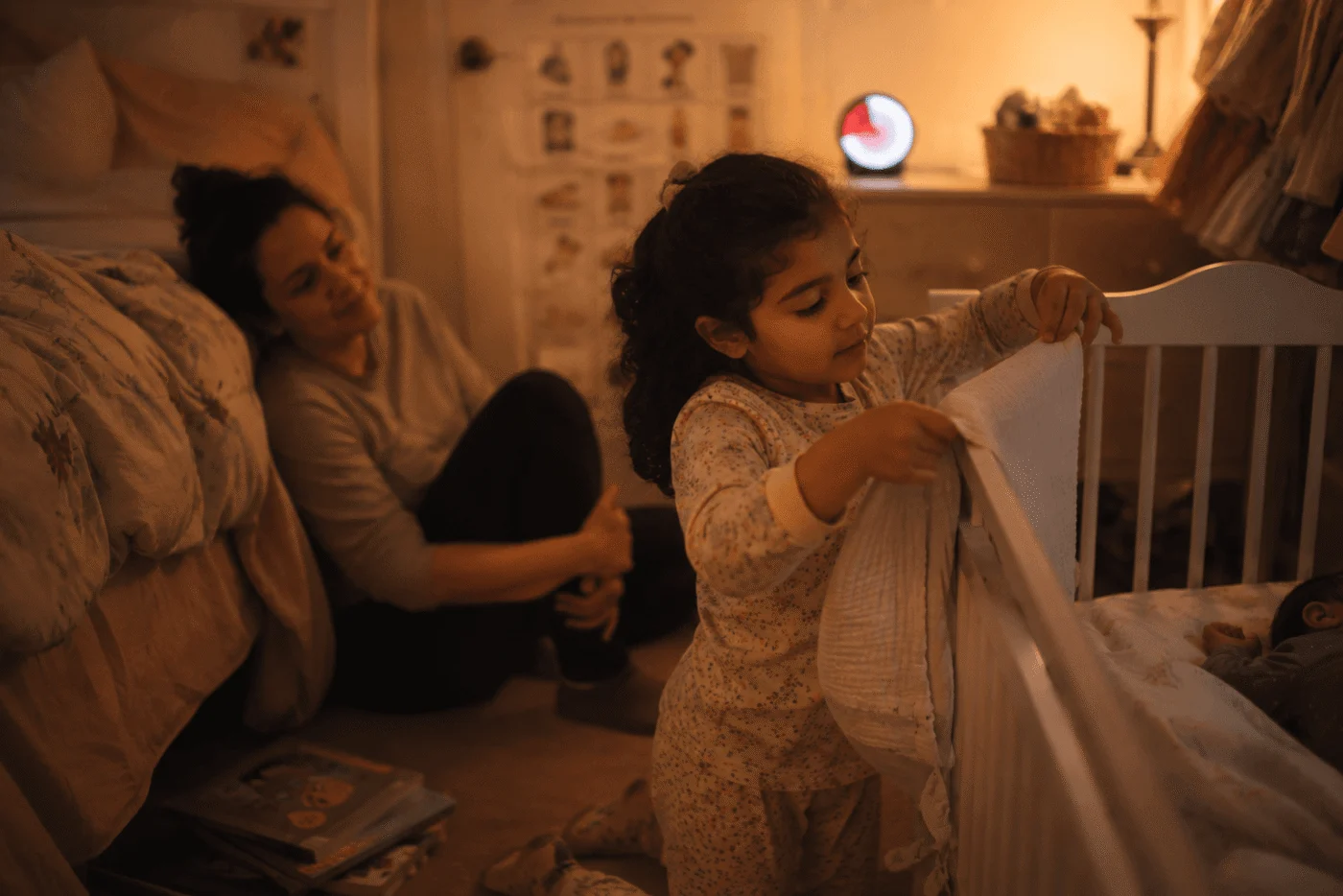
This one feels like cheating, it works so well. A three- or four-year-old desperately wants to be Big, so let them. Ask your toddler to choose the baby’s pajamas, fetch the burp cloth, pick tonight’s story, blow the baby a goodnight kiss. Suddenly the kid who was unraveling the sock drawer has a job and a status, and the whole room downshifts.
It does double duty, honestly. Your older one feels important instead of displaced (a real thing when a sibling is eating all your hands), and you get a small, slightly chaotic helper instead of a second crisis. Praise it like they single-handedly ran the bath. They’ll be back for more tomorrow.
The tools that buy you a spare hand
You can’t grow a third arm, but a couple of cheap things come close. None of this is essential. Each one just removes a specific solo-bedtime headache. Star ratings are the current Amazon / Google averages.
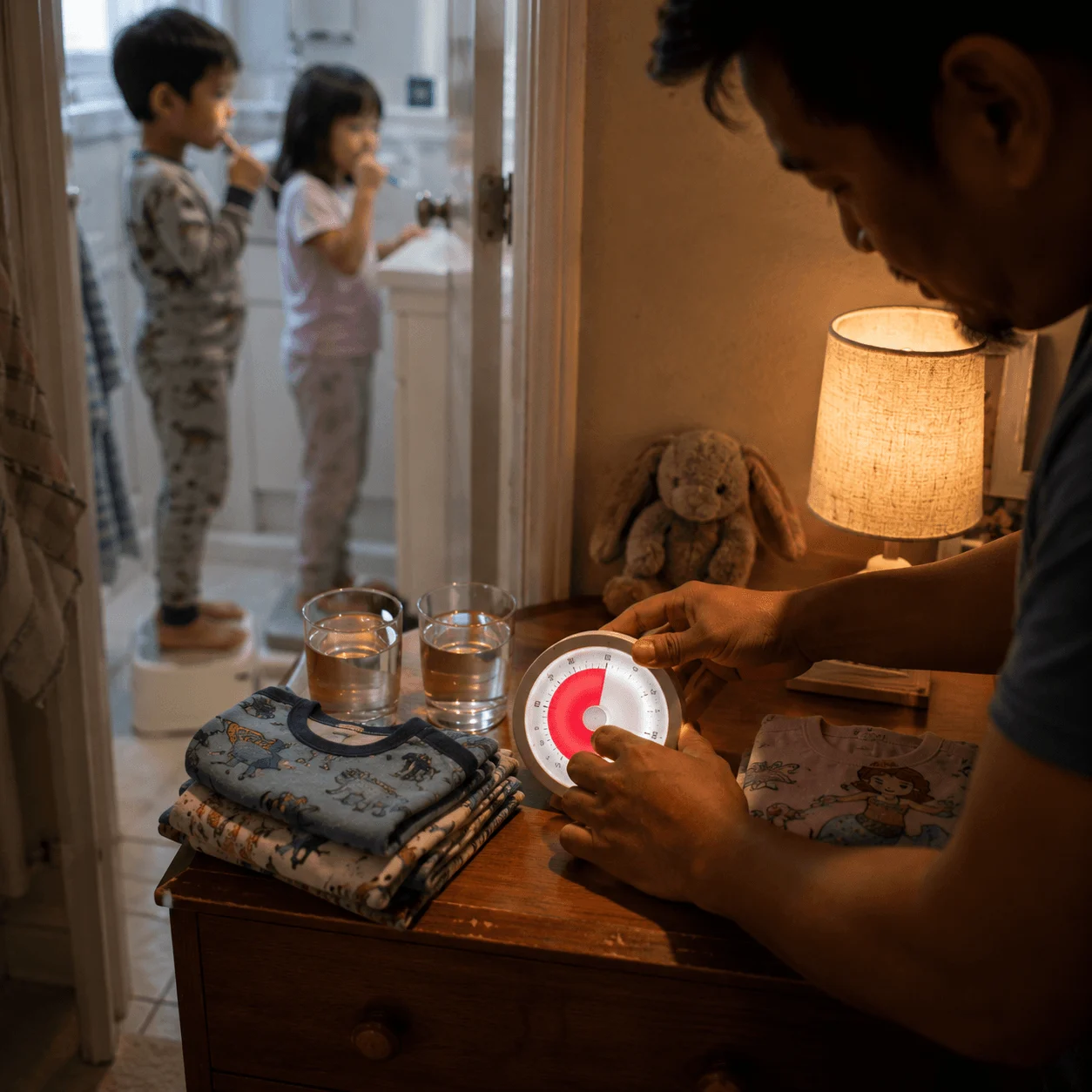
A timer that shows time as a disappearing red wedge so a pre-reader can see bedtime coming. The genius part: the timer becomes the one saying “time’s up,” not you, so you skip the negotiation entirely. It works like a quiet second grown-up in the room. As an Amazon Associate, Decoded Kids earns from qualifying purchases. Price checked live on Amazon.Time Timer Visual Timer

Bath, pajamas, teeth, two books, lights, all laid out as pictures your child moves through themselves. Older kids love bossing the chart, and “what’s next on your chart?” lands far better than the fortieth verbal reminder.
Strap the baby to your chest and you’ve got two hands back for the toddler’s bath and story. And the baby, warm and close to your heartbeat, very often nods off in there anyway. For the baby-plus-toddler stage this is the difference between coping and not.
The three, side by side
Three small things that each buy back a free hand. Ratings are current Amazon / Google averages.
When the hard part isn’t bedtime
Worth saying out loud: if bedtime is brutal because the kids are unsettled by moving between two houses, that’s its own thing, and the tweaks above will only get you so far. Keeping sleep and rhythm steady when your child sleeps at two different houses takes a slightly different playbook, same idea as holding the school routine together across two front doors.
For tonight, though? Pajamas out early, timer on, big kid on the payroll. You’ve got this more than you think.
Frequently asked questions
Stagger the start and merge the end: get the slower child into pajamas and teeth first, then bring the easier one in for the shared quiet part: story, lights, song. Prep everything (pajamas, books, water) before you start, and give a younger-but-able child a “helper” job so they feel included instead of sidelined.
It depends on their ages and how they behave together. Calm-together kids can share a bedtime and save you a second round; kids who rev each other up do better staggered, even by 15–20 minutes. Try both and keep what causes less chaos.
Wear the baby in a carrier so your hands are free for the toddler’s bath and story. Babies often fall asleep against you in the process. Settle the toddler first while the baby is contained and calm, then put the (often already drowsy) baby down last.
Aim for around 30 minutes, but give yourself up to 45 with more than one child. That’s normal, not slow. A visual timer and a prepped room are the two things that shave the most time off.
Leave the first comment
Share your thoughts

I'm for the parent mid-meltdown - theirs or the kid's. I write from the actual floor of it: the crying that won't stop, the dinner thrown, the bedtime that unravels. Blunt because I respect you too much to pretend it's easy. Just what tends to work.
More from NourWhat's getting you through right now? Be honest - we're all figuring it out.
No right answers here - tell us how it went. Someone reading needs to hear it.
Join the conversation