
The First Christmas After the Split
The first one is the one nobody warns you about properly. Not the paperwork, not the house, not the conversation with the school. The first Christmas.
It is the day the new arrangement becomes visible. Two houses, two trees, an afternoon that used to be automatic and now has to be negotiated by text. And underneath it, the thing most people do not say out loud. You are grieving a version of the day that is not coming back.
That is Shirley Thomas, a psychologist and the author of Two Happy Homes, on what the first holiday after a separation is. She is direct about the first year being the hardest. Her advice runs the other way from the instinct most parents have. Do not build a spectacular new day to make up for it. Keep as much of the old routine as you can, because what steadies a child is knowing what happens next. There is a wider version of that in how children adjust to a divorce.
Tell them the plan early, and tell them once
The single biggest source of anxiety in a first split Christmas is not the split. It is not knowing what happens on which day.
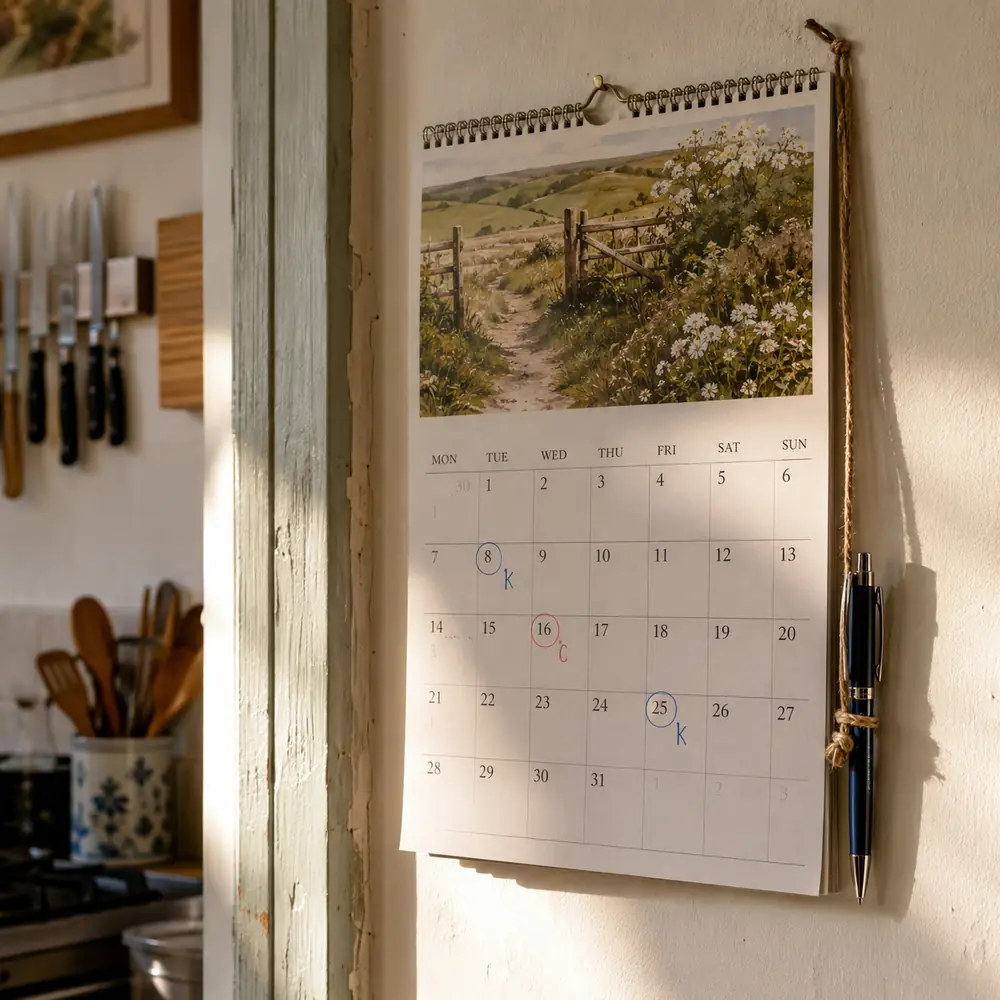
Agree the arrangement with your ex before December, then put it somewhere the child can see it. A calendar on the wall with the days marked works better than a conversation. A child can check it as often as they need to. They do not have to ask you, and they do not have to watch your face while you answer. The mechanics of the rota itself, including how the two week gap is usually split, we set out separately in co-parenting Christmas schedules.
Tell them the plan once, calmly, and then let it be boring. If you keep checking whether they are all right about it, you teach them that it is a thing to be worried about.
Two houses is not half a Christmas
The trap in the first year is trying to give a child everything twice, or trying to compress the whole day into the hours you have.
A child does not need two identical Christmases. They need two houses where they are welcome and where something predictable happens. Keep the two or three traditions that were actually yours, the ones your child would name if you asked. Let the rest go this year without a memorial service for it.
Then give the day its own shape rather than a shrunken version of the old one. Christmas Eve as your main event. Boxing Day as the big meal. The twenty seventh as the day you do the thing you have always done. Children accept a moved date far more easily than adults do, so long as somebody says clearly that this is how it works now.
The handover
Handovers on Christmas Day are short and they are watched closely. Your child will be reading both faces for evidence about whether they are allowed to enjoy the next few hours.
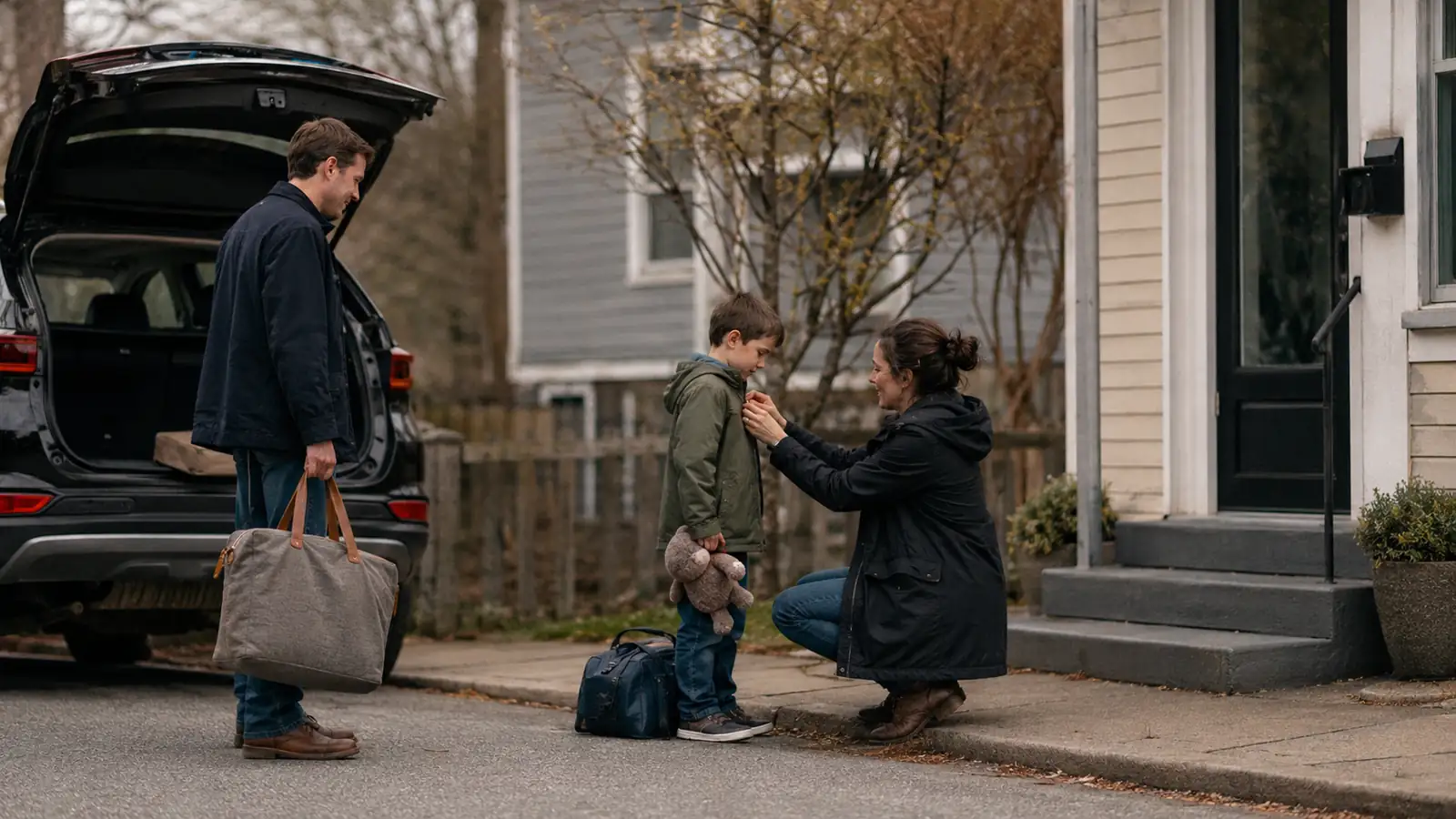
Keep it to a couple of minutes at the door or the car. Say something warm about where they are going. Do the bag and the coat in advance so there is no rummaging while everybody stands there. If you and their other parent cannot be civil in that moment, hand over somewhere neutral instead, and get the practical detail right using the handover checklist.
Whatever you are feeling, wait until the car door shuts. Children carry the last face they saw into the next house.
The gifts, and the competition nobody wins
There is a strong pull in the first year to be the parent with the better Christmas. It is understandable and it does not work.
Children notice being bought, and they read a huge pile in a new house as an apology rather than a treat. Worse, a gift war traps you into repeating it next year with less money.
The practical fix is to agree a rough spend and split the list, so nobody duplicates and nobody is outgunned. If that conversation is impossible, buy for your child and ignore the other house entirely. What you cannot do is compete, because your child is the scoreboard.
Two books that give feelings a name do more in a first split year than another package does, especially for a child who has gone quiet rather than tearful.

A Little SPOT Emotional Regulation Box Set
As an Amazon Associate, Decoded Kids earns from qualifying purchases. Price checked live on Amazon.
For a younger child, the simpler picture book version is the one that gets read at bedtime again and again, which is where these conversations happen.
There is a fuller shelf of these, sorted by what the child is struggling with, in books that help children through a divorce.
The day you do not have them

This part gets written about far less, and it is the part that floors people.
If this is the year you do not have them on the day, plan the hours in advance rather than deciding on the morning. Be somewhere with other people, or working, or walking. An empty house with a phone in your hand at four in the afternoon is the worst possible version of it.
Arrange one short call at a fixed time and keep it light. Do not ask them to describe the whole day while they are in the middle of it. Do not tell them you are missing them terribly. That turns their afternoon into a job. Then put the phone down and let them be children somewhere else.
And take seriously that this is grief, not weakness. The first year of anything is the loudest. By the second, the new shape has a name and your child has stopped checking whether the ground is solid. That is not a platitude, it is what almost every separated parent reports, and it is worth holding onto in the week when it does not feel true. If you are running on empty going into it, single parent burnout is the honest place to start.
Leave the first comment
Share your thoughts
Frequently asked questions
Agree the plan before December and show your child a marked calendar, keep the two or three traditions they would name, and give the new day its own shape rather than a shrunken copy of the old one. Familiarity steadies children more than a spectacular new version does.
Only if both of you can genuinely be relaxed for several hours. A tense shared day teaches a child that the tension is about them, and it can revive hopes of a reunion. Two calm separate days are better than one strained joint one.
Plan the hours before they arrive. Be with other people, or working, or outside. Arrange one short call at a fixed time and keep it light rather than emotional, then let them enjoy the rest of the day where they are.
Agree a rough figure and split the list so nothing is duplicated. Children notice a gift competition and tend to read a very large pile in one house as an apology. If agreeing is impossible, buy for your child and ignore what happens at the other house.

I'm for the parent doing it largely alone. I've done the single-dad decade - two homes, one income, the handovers, the very quiet Tuesdays - and I write from the far side of most of those days, with humor and hard-won calm. Not advice from above; a hand back from a few steps up the road.
More from DiegoWhat's getting you through right now? Be honest - we're all figuring it out.
No right answers here - tell us how it went. Someone reading needs to hear it.
Join the conversation