
The Age on the Box Is Not the Thing You Are Deciding
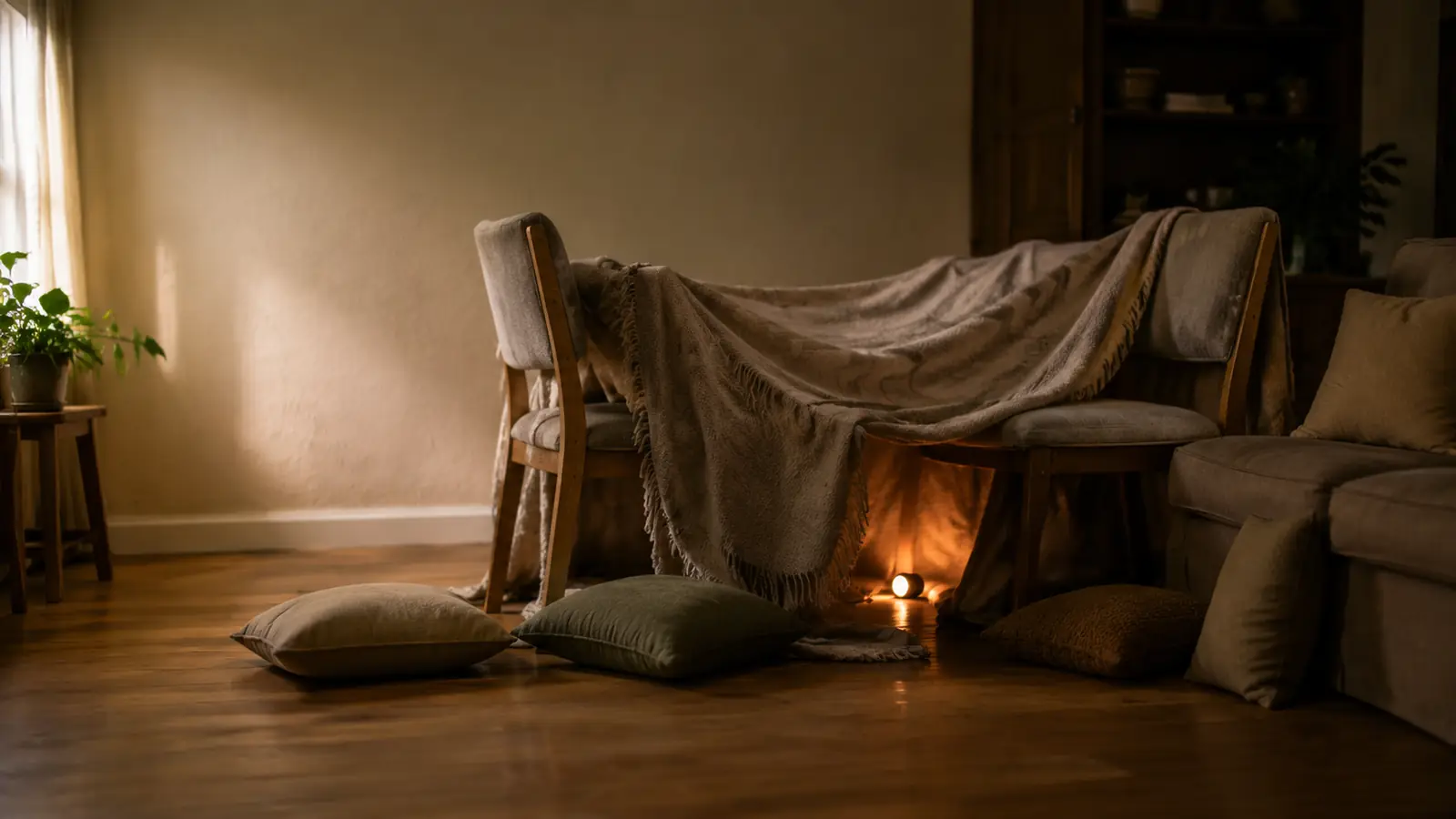
Everyone is under the blanket and the lights are off. It has gone well for thirty eight minutes. Then the boy on screen loses his ticket, or the snowman starts to melt, or a large shape comes over the ridge. The five year old climbs into your lap and asks, in a very small voice, whether it is going to be alright.
The movie was fine. It was rated for her. That was never the question you were answering.
Nearly every list you will find this month is ranked by how much the writer loved the movie at nine. That is a different measurement.
Why the age bands mislead
Joanne Cantor spent decades at the University of Wisconsin studying what frightens children on screen. The pattern she found is about development, not about ratings.
Young children respond to how a thing looks. Something that looks wrong is scary, even when nothing bad happens. Something that looks friendly is fine, even when it does something awful. Around seven or eight, that reverses. Older kids stop caring how a monster looks, because they know it is not real. What gets them is what could happen to them.
So the same movie lands two different ways in one house. Your nine year old shrugs at the growling creature that scared your four year old. Then he cannot sleep after a scene where a kid is left behind at a station.
From three to five, nothing has to be at stake
You want short, warm and slow, with nobody missing for long. Episodes beat movies here. Twenty two minutes is closer to what they can hold.
The preschool shows they already watch all have a Christmas episode. Those are the safest bet you have. After that, try the picture-book adaptations. Gentle pace, familiar shape, an ending you can see coming from the start.
Go carefully with the old stop-motion specials. That is the part people find surprising. The best-loved ones carry a lot of exclusion, name-calling, and one large frightening creature. They were made in a decade with different instincts about what a small child can hold.
Six to eight is the golden band, with two exceptions
This is the age most Christmas movies are built for. They can follow a plot across ninety minutes. They know a story has to go wrong before it goes right, and they are old enough to enjoy that part.
Elf, rated PG, is the reliable one. Broad, silly, and the worst thing that happens to anyone is embarrassment. Animated movies about how the whole gift operation works land well here too. The humor sits on top of the plot instead of replacing it.
Check two things before you press play. Is a child separated from a parent for a long stretch? Does anybody die? Both are fine for some seven year olds and neither is fine for others, and the rating will not tell you which is in there.
Nine and up, and then the teenage return
By nine, most of the peril reads as adventure and the jokes get funnier. Home Alone, PG, sits exactly here. Worth remembering what it is about, though: a child on his own in a house, with two men trying to get in.
This is also the age they start noticing the movies you love, which is the whole point of the exercise. Then around thirteen there is a lovely stretch. They will sit through an old black and white one with you because it is a bit ironic, and get quietly caught by the last twenty minutes anyway.
How to run the night itself
Look the movie up first. Common Sense Media breaks one down scene by scene, including the parts that scare children rather than the parts that worry censors. It takes about ninety seconds.
Then sit with them. Watching together is not supervision, it is the whole protective mechanism. You see the shoulders come up before they say anything. You can talk over the scary part, name what is happening, or pause it and go get a drink.
Give them an exit that is not a failure. “We can stop it and finish tomorrow” said out loud before you start means a child who is struggling does not have to choose between being frightened and admitting it. And keep it early. A movie that ends twenty minutes before bed leaves nowhere for a five year old to put what they just saw.
If something does get in and comes back at bedtime, that is not a discipline problem, and it is not small to them. What is happening when the dark suddenly gets frightening covers the fix. It is usually about the room, not the movie.
One film, properly, beats four in the background
The winter break temptation is to have something on all day. There is a version of the long week between Christmas and New Year where the television never actually goes off. That is a different activity from a movie night, and kids feel the difference even when they cannot name it. If the screen argument is bigger than one evening, where the real line sits is worth reading first.
So pick one and make it an event. Lights low, phones in another room, the card writing done earlier in the day so nothing is hanging over it. Watch it with them, and let them climb into your lap at minute thirty eight. That is the part they will still describe in fifteen years.
Leave the first comment
Share your thoughts
Frequently asked questions
Read the plot beats rather than the rating. Under six, what frightens is how something looks: monsters, transformations, a character who disappears. From about seven it flips to what could really happen, such as a child alone or a parent in danger. Common Sense Media breaks a movie down scene by scene in about ninety seconds.
Short, warm and slow, with nobody missing for long. Christmas episodes of the preschool shows they already watch are the safest bet, because twenty two minutes is closer to what they can hold. Picture-book adaptations work well too, since the ending is visible from the start.
Less often than parents expect. The best-loved stop-motion specials contain exclusion, name-calling and one large frightening creature. Ghost-story adaptations have genuinely scary spirits in them. Watch the first fifteen minutes yourself before the movie night, rather than finding out during it.
Watch it with them. Co-viewing is the protective part, not just supervision. You see the shoulders come up before they say anything, and you can name what is happening, talk over a scary stretch, or pause it. Say out loud before you start that stopping and finishing tomorrow is allowed.
Keep movie nights early, so the movie does not finish twenty minutes before bed with nowhere to put it. If something does come back at bedtime, treat it as a room problem rather than a behavior problem: more light, a predictable order to the evening, and somebody staying a few minutes longer.

I'm for the parent about to spend money they're not sure about. I buy the gadget, live with it, and give you the honest verdict - including the 'don't'. I've burned through enough hype to save you the cash, and when something truly earns its place, I'll show you exactly why.
More from TylerWhich tool earned its place - and which was a waste of money?
No right answers here - tell us how it went. Someone reading needs to hear it.
Join the conversation