
When Your Child Hits or Bites You: A Calm 5-Step Response

It shocks you every time, doesn’t it. That small hand, those little teeth, aimed straight at you.
When your child hits or bites you, the first useful move is a short boundary, a steady body, and enough curiosity to ask what the hitting or biting was trying to say.
Take the heat out of one thought first: a young child who hits or bites is almost never being “bad.” They’re a little person with a big impulse and not enough brake yet. That doesn’t make it okay, and yes, you’re going to stop it. But how you stop it decides whether this fades over a few weeks or digs in for months. These five steps are built for the version that fades.
1. Stop the hand, not the heart
Stop the body first, talk second. Catch the hand mid-swing, or move yourself out of biting range, and say something short and flat: “I won’t let you hit.” Not a shout. Not a lecture. A clear boundary, delivered with your whole calm body. Boundaries run both ways, which is worth remembering before making a child hug a relative they do not want to touch.
If she’s on your lap and biting, set her down gently. Don’t yelp, don’t yank her away. A big, dramatic reaction can accidentally become the most interesting thing that’s happened all day, and a toddler’s brain will chase an interesting thing twice. Aim to be predictable, every single time, with no fireworks for her to come back for.
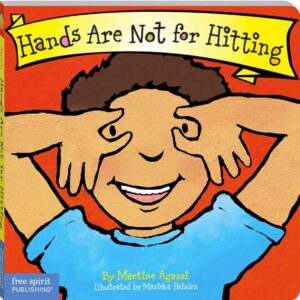
Hands Are Not for Hitting
As an Amazon Associate, Decoded Kids earns from qualifying purchases. Price checked live on Amazon.
2. Read what it was really about
Hitting and biting are almost always a sentence the child can’t say yet. She’s too tired. Overwhelmed in a too-loud room. Furious that the tower fell again. Maybe jealous of the new baby getting the cuddle that used to be hers.
Once you spot the pattern (and there’s nearly always a pattern), you stop fighting random acts of violence and start heading off a need you can see coming. Watch for the wind-up: the clenching, the stiffening, that particular whine right before. The ten-second window before the strike is where the real prevention lives.
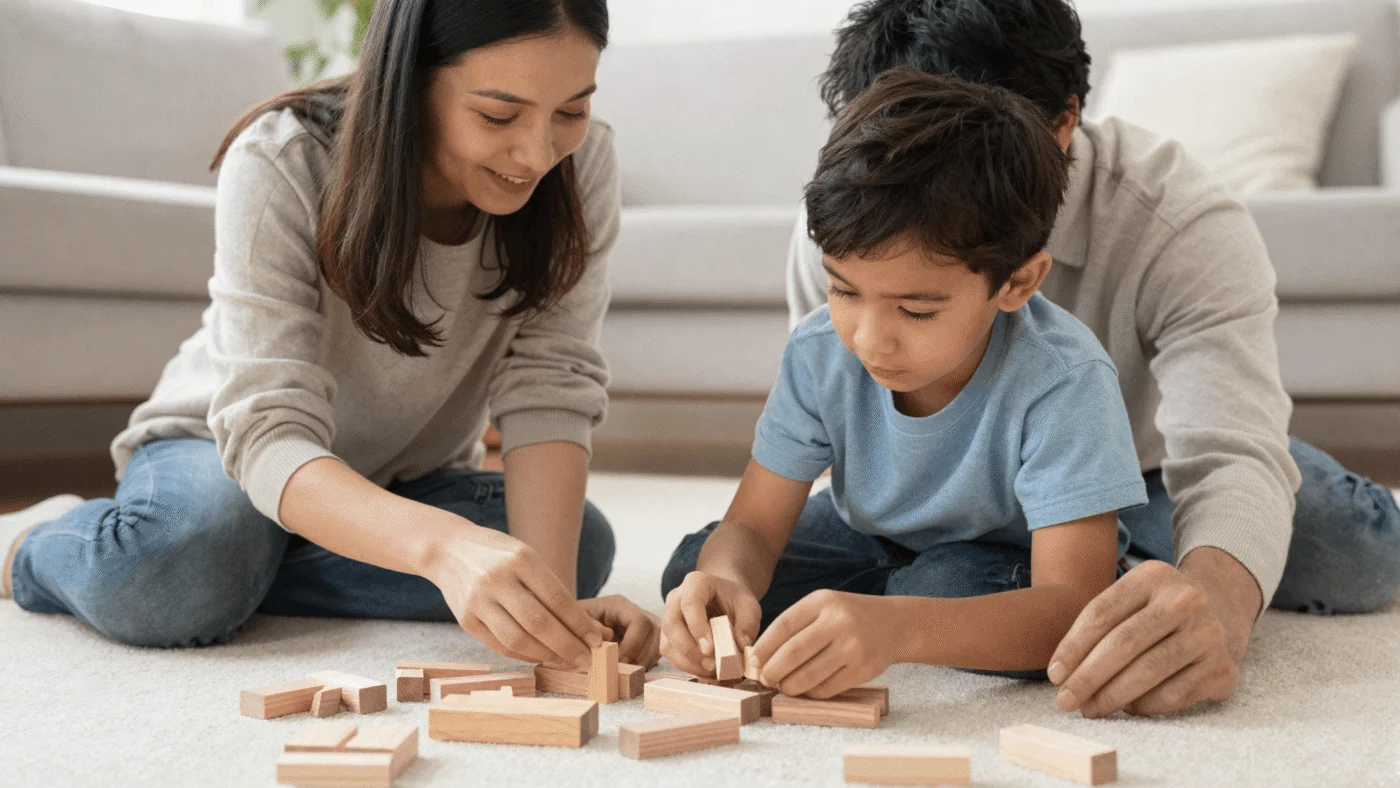
3. Name the feeling, hold the line
Give the feeling words while you keep the rule firm. Both at once: “You’re so angry he took it. I won’t let you hit him.” You’re showing her the emotion is completely allowed, even though the action isn’t, a distinction small kids genuinely need spelled out, over and over, because it doesn’t stick the first time.
Skip the long “how would you feel if” speeches. An overwhelmed three-year-old can’t run empathy math mid-meltdown. Short. Warm. Firm. Say it the same way every time, so the message sinks in through repetition, not volume.
4. Give the impulse somewhere to go
A child who hits or bites has a body full of something with nowhere to put it, so hand them a target that isn’t a person. “You can bite this teether, not your brother.” “You can stomp your feet right here.” “Squeeze my hands as hard as you like.” For biters especially, keep something chewable within reach if it’s a teething or sensory thing.
You’re not rewarding the behavior, you’re teaching the swap: same big energy, different exit. If biting is the main pattern, the NAEYC guide to children who bite is a useful extra read for spotting triggers without turning it into blame.
5. Repair, and check your own triggers
After it’s passed, reconnect and help her make it right in a way she can manage: fetching a washcloth for her brother, a clumsy little sorry, gentle hands on the spot she hurt. Keep it about repair, never groveling.
And here’s the bit nobody loves admitting: being hit by your own kid pokes something raw in a lot of us. If you catch yourself wanting to hit back or shame her, that’s worth its own quiet attention on a calm day.
This phase almost always passes as language and impulse control catch up. You’re not raising a violent child. You’re coaching a little one through a stage that runs out of road. The same steadiness helps when your child says “I hate you” too.
Frequently asked questions
Because you’re the safe one, and it stings precisely because of that. Being the person they fall apart with is a backhanded compliment: proof they trust you to still love the worst version of them. Kids hold it together for people they’re less sure of, then let the lid off at home.
On its own, no. Nearly every toddler goes through a stretch of using hands and teeth before words show up to do the job. If it comes bundled with other things you’ve quietly been clocking (speech delays, huge sensory reactions), raise it with your pediatrician. Trust the instinct that made you ask.
Bring the staff in rather than carrying it alone; they see this all the time and usually have a plan ready. At home, keep your line short and identical every single time. It also helps to know which one you are dealing with: our guide on tantrum or meltdown explains why the same response does not fit both. The consistency between you and daycare is what shifts it, even through the weeks it feels pointless.
Most kids grow out of it by four or five, once language and a bit of impulse control catch up with the size of their feelings. If it’s still going strong past then, or someone keeps getting hurt, your pediatrician can point you to support. There’s no medal for white-knuckling it alone. If most of the hitting is aimed at a new baby rather than at you, that pattern has its own explanation.
Leave the first comment
Share your thoughts

I'm for the parent doing it largely alone. I've done the single-dad decade - two homes, one income, the handovers, the very quiet Tuesdays - and I write from the far side of most of those days, with humor and hard-won calm. Not advice from above; a hand back from a few steps up the road.
More from DiegoWhat's the one thing that calmed the chaos in your house?
No right answers here - tell us how it went. Someone reading needs to hear it.
Join the conversation