
You Bought a Box of Thirty and You Have Written Eleven
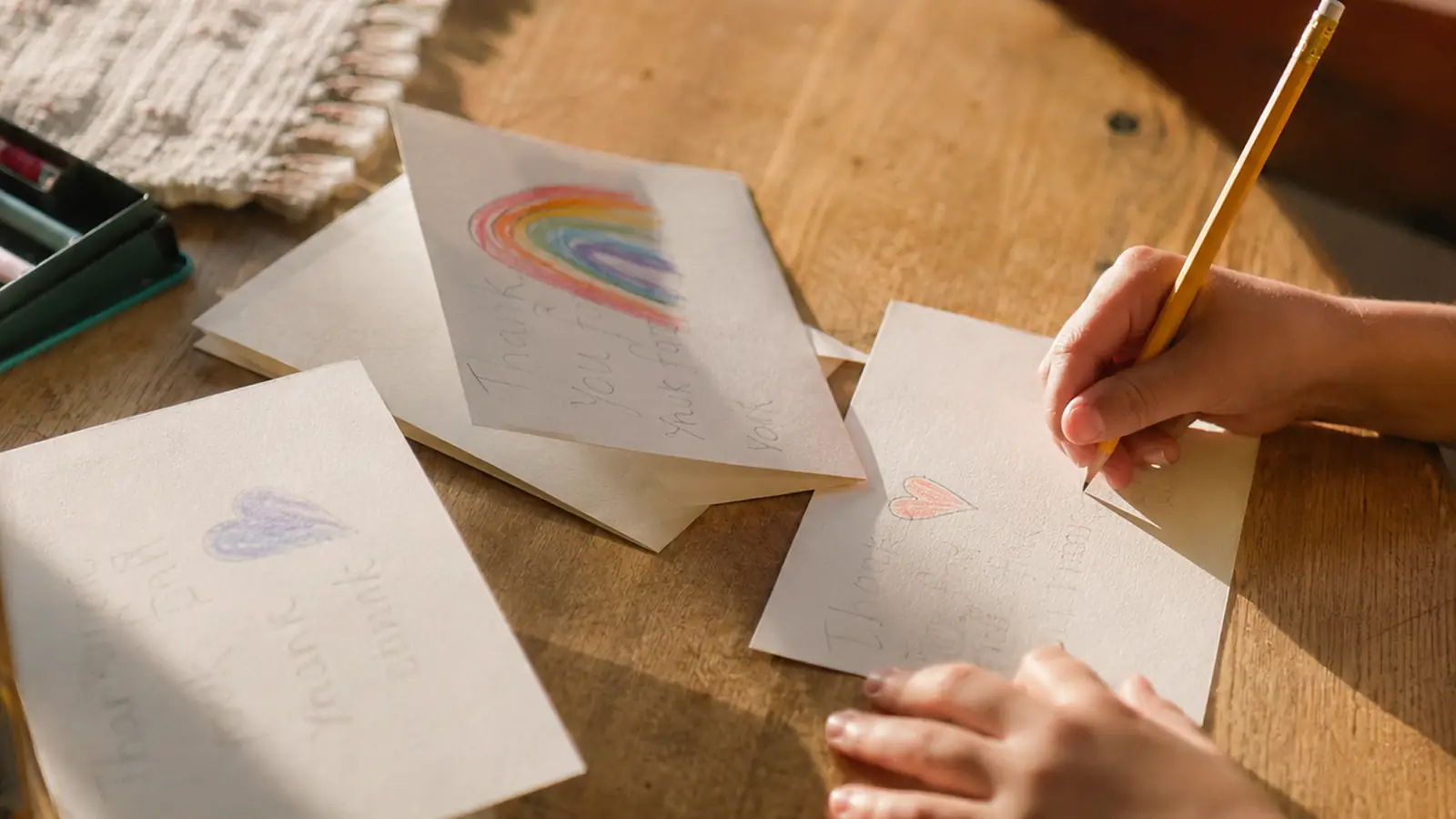
You bought a box of thirty. You have written eleven. Two of them have the same person’s name on and one is smudged, and the eight year old who begged to help has been coloring the same tree for twenty minutes and has not written a word.
Somewhere around card fourteen you start to wonder who this is for.
Nobody counts your cards. Somebody does keep one.
The pile is smaller than it used to be, and that is the opportunity
Roughly 1.3 billion holiday cards still go through the US mail each year, says the Greeting Card Association. That makes Christmas the biggest card-sending occasion there is. Even so, the pile on the average hall table is nothing like it was twenty years ago.
Which changes the math. When everyone sent forty, yours was one of forty. Now a hand-drawn card from a six year old lands in a week where somebody got four things in the mail and three were bills.
So stop trying to cover the list. Pick the people for whom a card is an event: grandparents, the great aunt nobody visits, a teacher, the neighbor who brings in your trash cans, the friend who moved away. Eight names is plenty.
The reason we all under-send is that we badly misjudge what a card does at the other end. Two researchers at Chicago and Texas tested exactly that in 2018, and the gap they found was not small.
In plain terms: you think it will land as a small nice thing and be slightly cringey to write. It lands much bigger than that, and nobody finds it awkward except you.
Let the kid own their own list
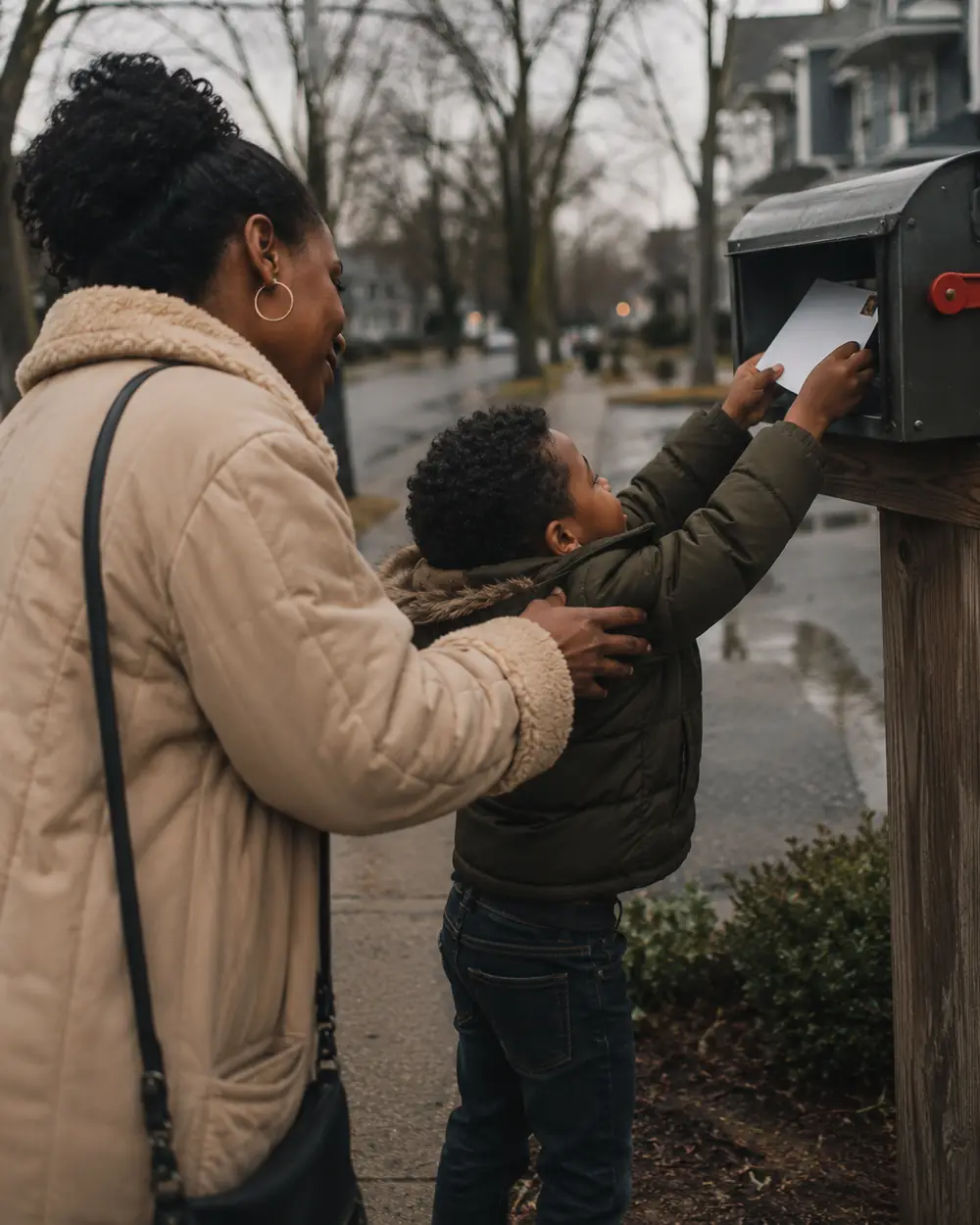
One change turns this from a chore into something they want to do: hand over the choosing. Ask who they want to send one to. Write down whatever they say, including the friend from swimming whose last name nobody knows, and the dog.
They pick people you would not have. A five year old once made one for the woman at the pharmacy counter. That kind of card makes somebody’s whole December, and it was never going to be on my list.
Then walk to the mailbox together and let them post each one. That bit matters more than anything that happened at the table. Sending is the part where it stops being craft and becomes a thing that goes to a person.
What works at each age
Under three, do handprints and stop there. Paint the palm, press it on folded card, and turn it into a reindeer or a tree later when they have gone to bed. Two minutes of their attention is the entire budget and you get something a grandparent will keep for thirty years.
Three to six is stamping, stickers, potato prints, tearing paper and gluing it down. Fine motor skill is the limit, so pick things that look good when they are done badly. Fingerprint lights along a drawn string works every time, because wonky is the point of it.
Seven and up can write, and the writing is worth more than the picture. Two sentences about something specific, not “Merry Christmas love Ada”. Something they remember about that person, or one thing that happened this year. Give them the prompt out loud and let them copy it down in their own words.
Teenagers will do it if the ask is small and the list is theirs, and often only one card. One is fine.
Whatever the age, the table set-up is the same. Fold the cards before they sit down, put out fewer materials than you think, and cover the surface. Half of what sinks a craft session is the ten minutes spent hunting for glue at the start. It is the same reason a small daily December job works better than a big one.
Photo cards, and whether to bother

Printed photo cards are the fast route and there is nothing wrong with them. Order them in the first week of December while shipping is still sane. Have the kids sign inside each one, so there is a hand in it somewhere.
Getting a photo everyone is looking at the same way is its own project, and the ninety second version of that is in the piece on family photos with a toddler. Take it in November. The light is better and you are not doing it in a panic.
You can do both. Printed cards for the long list, eight handmade ones for the people who will notice. That is roughly where our house landed, after years of trying to do one or the other properly.
Where to put the ones that come back
Hang a length of string across a doorway and peg them up as they arrive. It costs nothing, it looks better than a mantelpiece, and children check it every day, which is half the pleasure of the whole exercise.
Keep one or two in January, put them in the box with the decorations, and get them out next year. A card your child made at four, found again at nine, is a strange and quite good ten seconds. It is the same small pull as the traditions that cost nothing, and it lasts about as long in the memory.
Then write yours in the first week of December, before the rest of the month arrives. Eight cards, one afternoon, and one walk to the mailbox with somebody small holding the envelopes.
Leave the first comment
Share your thoughts
Frequently asked questions
From about one, if you do the work. Under three, handprints are the whole activity: paint the palm, press it on folded card, and turn it into a reindeer or a tree after they have gone to bed. Three to six can stamp, sticker and glue. Seven and up can write, and the writing matters more than the picture.
Around eight. Pick the people for whom a card is genuinely an event, such as grandparents, a great aunt, a teacher, or the neighbor who takes the bins in. Thirty cards in one sitting is where this falls apart, because the child stops at card four and you finish the rest alone.
Two specific sentences rather than Merry Christmas and their name. Something they remember about that person, or one thing that happened this year. Say the prompt out loud and let them put it in their own words, and leave the spelling exactly as they wrote it.
Neither is better. Printed photo cards get the long list done, so order them in the first week of December while shipping is calm, and have the children sign inside each one. Plenty of families do both: printed for the wide list, eight handmade for the people who will notice.
Hang a length of string across a doorway and peg them up as they come in. Children check it daily, which is half the pleasure. Keep one or two in January, put them in the box with the decorations, and take them out again next year.

I'm for the parent doing it largely alone. I've done the single-dad decade - two homes, one income, the handovers, the very quiet Tuesdays - and I write from the far side of most of those days, with humor and hard-won calm. Not advice from above; a hand back from a few steps up the road.
More from DiegoWhat's the one thing that calmed the chaos in your house?
No right answers here - tell us how it went. Someone reading needs to hear it.
Join the conversation