
The Dinner Table Isn’t a Battlefield: the One Rule That Ends Food Fights
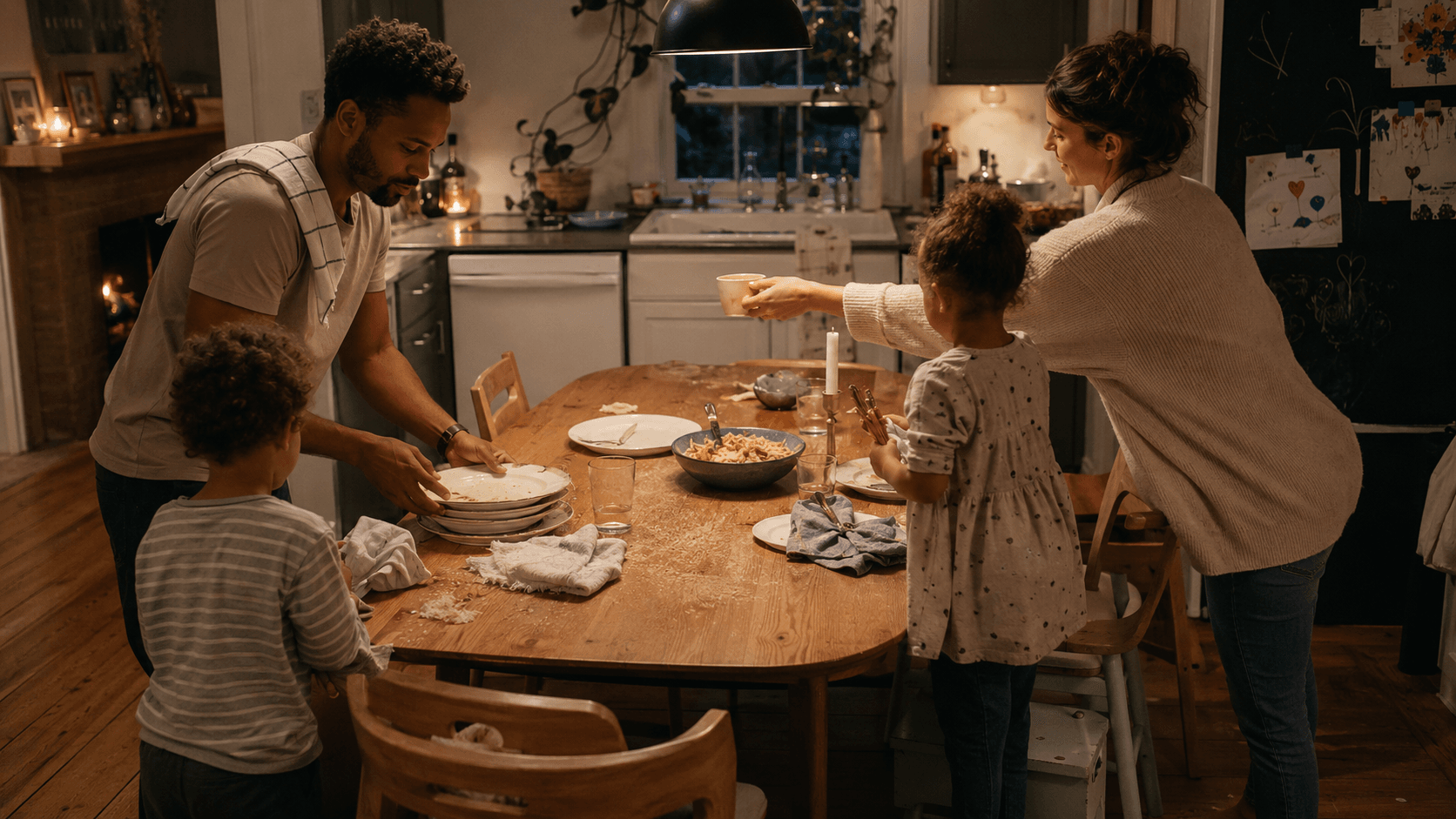
You made two dinners again tonight. One for the rest of the family, one plain version for the kid who inspects everything like it might be a trap. You told yourself you wouldn’t do this anymore, and here you are, back at the stove for round two.
The exhausting part isn’t the cooking. It’s the negotiating, the bargaining, the one more bite, the please just try it. Every dinner turns into a small standoff, and somehow you’re always the one losing.
There’s a simpler way to split this up, and it’s been sitting in nutrition research for decades.
Why splitting the job actually works
Dietitian Ellyn Satter developed this framework, called the Division of Responsibility, after watching the same pattern over and over: parents who took on the child’s job (deciding how much they should eat) ended up fighting a battle nobody could win. A child can’t be made to eat. The instant you try, dinner becomes about control instead of food.
Handing back the “whether” isn’t giving up. It’s recognizing that your child’s appetite is actually theirs to manage, the same way you wouldn’t force an extra hour of sleep on someone who’s already rested. Your job stops at the edge of the plate.
What this actually looks like at dinner

The framework sounds simple, but here’s how it plays out on an ordinary Tuesday:
- One meal, no short-order cooking. Serve the same food to everyone, with at least one thing on the table you know your child will eat, bread, rice, plain pasta, whatever their safe anchor is.
- No pressure, no bribes. Skip “three more bites” and “finish your plate for dessert.” Both turn eating into a transaction instead of a response to hunger.
- Offer new foods beside familiar ones, without comment. Let it sit on the plate untouched for weeks if it has to. Repeated, low-pressure exposure works far better than a lecture ever will.
When it feels like they’ll starve on three bites
The rule sounds calm on paper. It feels a lot less calm when your kid pushes the plate away for the third night running and your brain starts doing math about whether they’re getting enough. That fear is the reason most parents quietly pick the negotiating back up.
Here’s what actually steadies it: kids balance their intake over days, not meals. A toddler who eats almost nothing at dinner often makes it up at breakfast, or across the week, in a pattern that rarely looks tidy on any single night. Judging it one plate at a time is what makes it look alarming.
If the weekly picture holds, steady growth, decent energy, generally well, a light dinner is just a light dinner. If it genuinely doesn’t, that’s a conversation for your pediatrician, not for the dinner table.
Give the plate room to be boring sometimes
Some nights your kid eats three bites of bread and calls it done. That’s allowed. Their appetite doesn’t have to make sense to you every single night. Your job was never to get a certain number of bites in, it was to put good food within reach and step back.
Frequently asked questions
It’s a feeding framework developed by dietitian Ellyn Satter: the parent decides what food is offered, when, and where, while the child decides whether to eat and how much. Splitting the roles this way removes most mealtime power struggles.
No, pressuring a child to finish tends to backfire by disconnecting them from their own hunger and fullness cues. Trusting a child to decide how much to eat, from what’s offered, supports healthier long-term eating habits.
Food refusal is extremely common in toddlers and usually reflects normal developmental caution around new or changing foods, not a lasting aversion. Continuing to offer the food without pressure, alongside familiar favorites, usually resolves it over time.
Generally, no. Making a separate meal after your child refuses the family meal tends to reinforce refusal as an effective strategy. Serving one meal with at least one familiar food included works better long-term.
Research on food acceptance suggests it can take 8 to 15 exposures, sometimes more, before a child accepts a new food. Offering it calmly and repeatedly, without pressure to eat it, matters more than any single meal.
Leave the first comment
Share your thoughts

I'm for the parent mid-meltdown - theirs or the kid's. I write from the actual floor of it: the crying that won't stop, the dinner thrown, the bedtime that unravels. Blunt because I respect you too much to pretend it's easy. Just what tends to actually work.
More from NourWhat's the one thing that actually calmed the chaos in your house?
No right answers here - tell us how it actually went. Someone reading needs to hear it.
Join the conversation