
The Calm Down Corner Poster Your Kid Will Actually Look At Twice
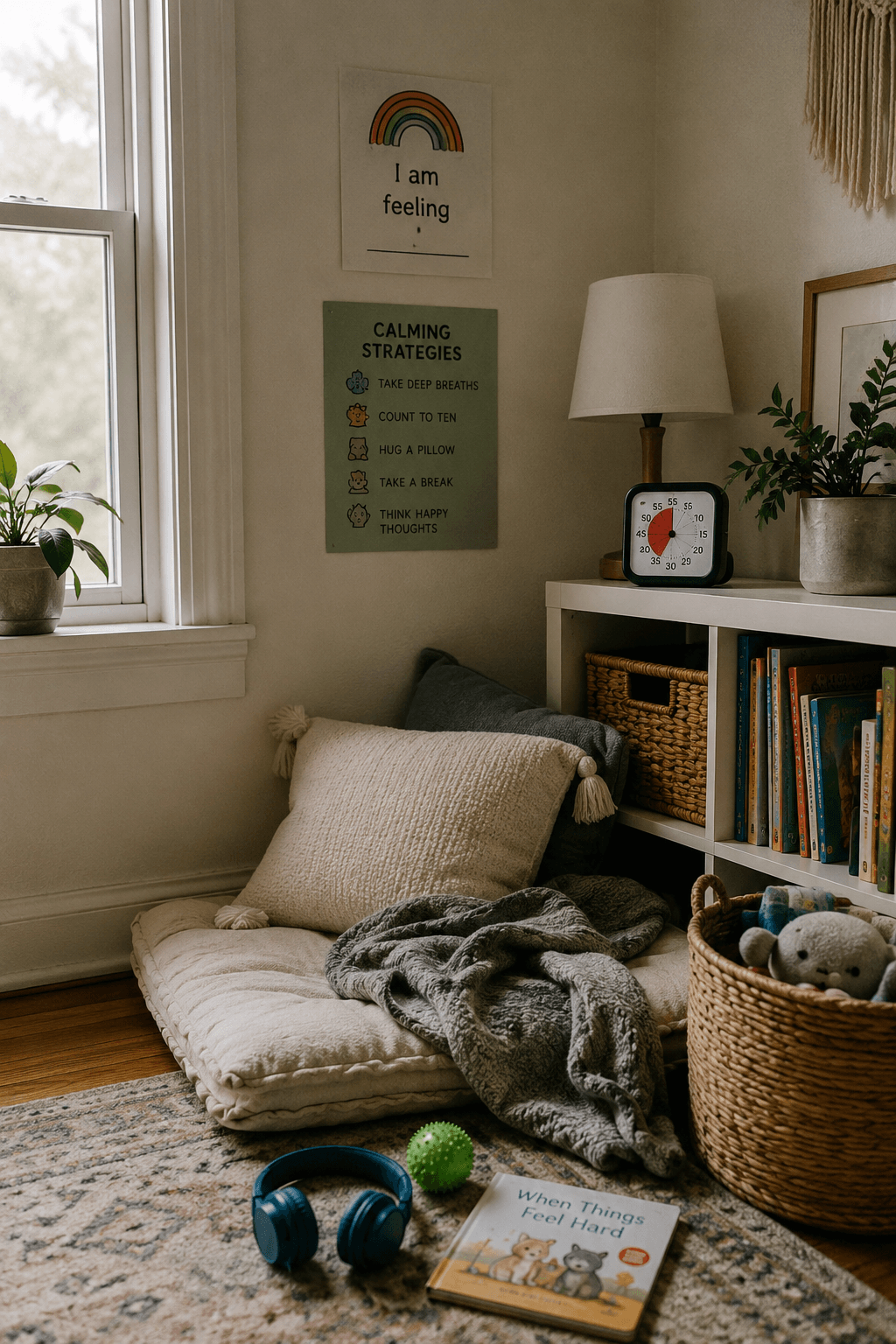
You printed it on a hopeful Sunday afternoon. Five calming strategies in a friendly font, taped up at his eye level, right where he’d see it the second things got hard. For a few days it actually worked, he’d point at “take a deep breath” mid-meltdown like you’d taught him something real.
Then, quietly, it stopped. Not because he forgot the strategies. Because the poster turned into wallpaper.
That’s not a sign the calm corner failed, or that he’s too far gone for a chart to help. It’s just what brains do with anything that stops changing.
Why the poster stops working (and it’s not about him)
Habituation is one of the best-documented patterns in psychology. A cue that’s always visible and never changes gradually stops registering as information at all. The brain files it under “background,” the same way it does a ticking clock or a hum of traffic. Research on habituation puts the window at just a handful of days before a static visual cue loses its pull.
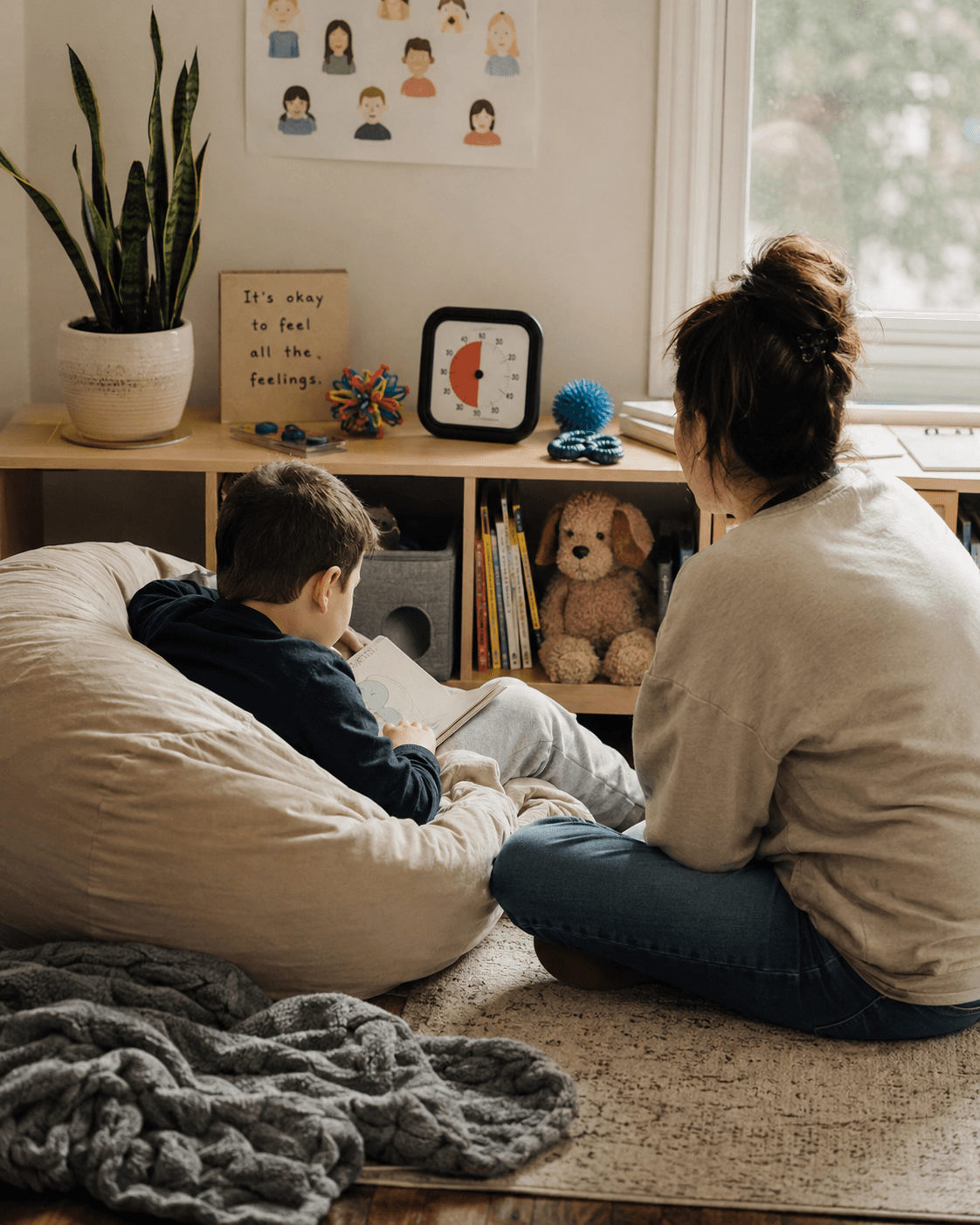
So the poster your kid ignores after week two isn’t a parenting failure, it’s just biology doing exactly what it’s built to do. The fix was never a nicer poster. It’s giving the same information a reason to feel new again. And it’s giving your kid practice using it before the moment he actually needs it.
What actually keeps a calm corner poster working
A few small habits do more than any redesign:
- Rotate it, don’t just replace it. Swap the poster for a related one every few weeks, or even just move it to a different spot on the wall. New position, new attention.
- Practice on a calm day, not a hard one. Walk through the poster together when nobody’s upset. A strategy he’s only ever seen mid-meltdown never gets the rehearsal it needs to become automatic.
- Let something interactive share the job. A poster only asks to be looked at. A tool he physically flips, points to, or moves asks to be used, and that small extra step is often what makes it stick past week one.
As an Amazon Associate, Decoded Kids earns from qualifying purchases. Price checked live on Amazon.
The poster was never the whole plan
Think of the poster as a reminder, not a solution, the same way a grocery list doesn’t cook dinner for you. The real work is the practice underneath it. Calm days spent walking through it together, so that by the time your kid actually needs it, the poster is just confirming something he already half-knows how to do.
Frequently asked questions
A brain stops actively registering any visual cue that never changes, a process called habituation, often within days. It’s not that your child stopped caring, the poster simply became part of the background. Rotating it or changing its position resets the effect.
They work best as a reminder of strategies already practiced on calm days, not as a stand-alone fix introduced only during a meltdown. Paired with practice and occasional rotation, a poster can genuinely help a child reach for a coping strategy on their own.
Every few weeks is a reasonable rhythm, or sooner if you notice your child has stopped glancing at it at all. Even just moving it to a new spot on the wall can restore some of its visual pull without buying anything new.
Free printables are a great low-cost way to start, but treat them the same as a purchased poster: rotate them, practice with them on calm days, and don’t expect a printout alone to do the emotional regulation work.
Nothing replaces practiced connection, but interactive tools that ask a child to flip, point, or choose tend to hold attention longer than a static poster because they require a small action rather than passive viewing.
Leave the first comment
Share your thoughts

I'm for the parent mid-meltdown - theirs or the kid's. I write from the actual floor of it: the crying that won't stop, the dinner thrown, the bedtime that unravels. Blunt because I respect you too much to pretend it's easy. Just what tends to actually work.
More from NourWhat's the one thing that actually calmed the chaos in your house?
No right answers here - tell us how it actually went. Someone reading needs to hear it.
Join the conversation