
.dkp-wrap{padding:22px 16px 60px;}
.dkp-panel{max-width:900px;margin:0 auto;background:#7B9DE8;border-radius:22px;box-shadow:0 50px 140px -20px rgba(0,0,0,.7);padding:clamp(26px,5vw,46px) clamp(20px,5vw,48px) 50px;color:#141414;font-family:Marcellus,Georgia,serif;}
.dkp-htop{display:flex;align-items:center;justify-content:space-between;margin-bottom:26px;}
.dkp-pill{display:inline-block;border:1.5px solid rgba(10,10,10,.5);border-radius:999px;padding:6px 16px;font-family:Marcellus,serif;font-size:12px;letter-spacing:.06em;text-transform:uppercase;color:#0A0A0A;text-decoration:none;}
.dkp-pill:hover{background:#0A0A0A;color:#7B9DE8;}
.dkp-close{display:inline-flex;width:42px;height:42px;border:1.5px solid rgba(10,10,10,.4);border-radius:999px;align-items:center;justify-content:center;font-size:16px;color:#0A0A0A;text-decoration:none;transition:background .3s,color .3s;}
.dkp-close:hover{background:#0A0A0A;color:#7B9DE8;}
.dkp-title{font-family:Fraunces,’Cormorant Garamond’,serif;font-weight:600;font-size:clamp(31px,5.4vw,50px);line-height:1.04;letter-spacing:-.015em;color:#0A0A0A;margin:0 0 14px;}
.dkp-byline{font-family:Marcellus,serif;font-size:12px;letter-spacing:.05em;color:rgba(10,10,10,.6);margin:0 0 26px;text-transform:uppercase;}
.dkp-herofig{margin:0 0 30px;}
.dkp-herofig img{display:block;width:100%;height:auto;border-radius:16px;box-shadow:0 30px 70px -34px rgba(0,0,0,.55);}
.dkp-herofig figcaption{margin-top:.7em;font-family:’Cormorant Garamond’,serif;font-style:italic;font-size:1rem;color:rgba(10,10,10,.58);text-align:center;}
.dkp-body{font-size:1.16rem;line-height:1.82;color:#1b1b18;}
.dkp-body p{margin:0 0 1.25em;}
.dkp-body h2{font-family:Fraunces,’Cormorant Garamond’,serif;font-weight:600;font-size:clamp(24px,4vw,33px);line-height:1.13;color:#0A0A0A;margin:1.95em 0 .5em;clear:both;}
.dkp-body a{color:#15397F;text-decoration:underline;text-underline-offset:3px;text-decoration-thickness:1px;}
.dkp-body a:hover{color:#0A2257;}
.dkp-body ul{margin:1.3em 0;padding:0;list-style:none;}
.dkp-body ul li{position:relative;padding:0 0 0 1.6em;margin:0 0 .8em;}
.dkp-body ul li::before{content:”;position:absolute;left:.2em;top:.6em;width:7px;height:7px;border-radius:50%;background:#0A0A0A;}
.dkp-body strong{color:#0A0A0A;}
.dkp-quote{margin:2.1em 0;text-align:center;padding-top:.4em;font-family:’Cormorant Garamond’,serif;font-style:italic;font-size:clamp(22px,3.4vw,30px);line-height:1.32;color:#0A0A0A;position:relative;clear:both;}
.dkp-quote span{display:block;width:46px;height:2px;background:rgba(10,10,10,.5);margin:.7em auto 0;}
.dkp-quote cite{display:block;margin-top:.6em;font-family:Marcellus,serif;font-style:normal;font-size:13px;letter-spacing:.05em;text-transform:uppercase;color:rgba(10,10,10,.6);}
.dkp-key{margin:1.9em 0;padding:1em 1.3em;background:rgba(10,10,10,.08);border-left:3px solid rgba(10,10,10,.6);border-radius:14px;font-family:’Cormorant Garamond’,serif;font-style:italic;font-size:1.3rem;line-height:1.42;color:#0A0A0A;clear:both;}
.dkp-callout{margin:1.9em 0;padding:1.1em 1.35em;background:rgba(10,10,10,.08);border-radius:16px;font-size:1.04rem;line-height:1.68;color:#1b1b18;clear:both;}
.dkp-callout strong{color:#0A0A0A;}
.dkp-fig{margin:1.9em 0;}
.dkp-fig img{display:block;width:100%;height:auto;border-radius:16px;box-shadow:0 30px 70px -34px rgba(0,0,0,.5);}
.dkp-fig figcaption{margin-top:.7em;font-family:’Cormorant Garamond’,serif;font-style:italic;font-size:1rem;color:rgba(10,10,10,.58);text-align:center;}
.dkp-fig–right{float:right;width:46%;margin:.3em 0 1.3em 1.9em;}
.dkp-fig–left{float:left;width:46%;margin:.3em 1.9em 1.3em 0;}
.dkp-cmpwrap{background:#141418;border-radius:18px;padding:22px clamp(16px,3vw,26px);margin:24px 0;clear:both;}
.dkp-panel .pk-faq{margin:34px 0 4px;clear:both;}
@media(max-width:600px){.dkp-panel{padding:22px 18px 32px;border-radius:18px;}.dkp-body{font-size:1.08rem;}.dkp-fig–right,.dkp-fig–left{float:none;width:100%;margin:1.9em 0;}}

Rejection Sensitive Dysphoria: Why a Small “No” Feels Huge to Your ADHD Kid
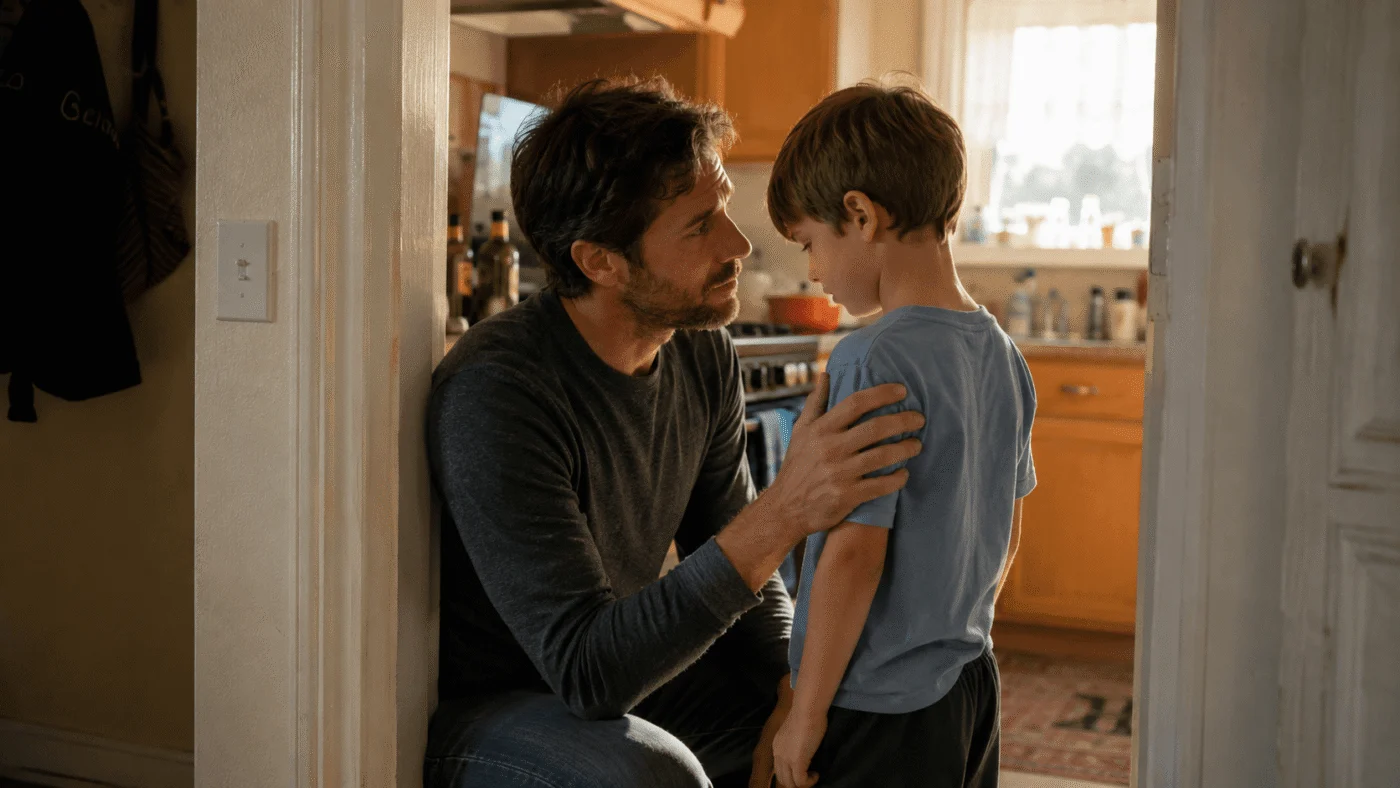
A father crouches at his young son's eye level in a warm kitchen doorway, one hand resting on the boy's shoulder, after a small correction the boy's face has fallen
The correction was small. To him, it landed like the whole day falling apart.

You say not right now to a snack, or you point out one wrong answer on a worksheet, and your kid folds like you shouted at him. Not annoyed. Wrecked. Crying about a spelling word like someone took his dog away. You didn’t raise your voice. You barely said anything at all.

If you’ve stood there thinking that reaction did not match what just happened, you’re not imagining it, and you didn’t cause it either. For a lot of kids with ADHD, the feeling of being corrected, teased, or even gently left out doesn’t arrive at a normal volume. There’s calm, and then there’s flood, with almost nothing in between.

Rejection Sensitive Dysphoria (RSD) describes the intense emotional pain some kids with ADHD feel from real or even imagined criticism, teasing, or failure. It isn’t an official diagnosis, but the pattern is well documented and tied to how ADHD affects emotional regulation. The fix isn’t toughening your kid up. It’s naming the wave early and riding it out together.

Why this isn’t your kid being “too sensitive”

A mother sits close beside her daughter on a bedroom rug, both quiet, the girl looking down at a drawing pad after a wave of feeling has passed
The wave passes faster when someone just sits in it with you.

ADHD isn’t only about attention. A big, underrated part of it is emotional regulation, the built-in brake between feeling something and acting on it. In a lot of ADHD brains, that brake is thinner than average, so a feeling that would register as a two out of ten for another kid shows up closer to a nine. It’s not drama and it’s not a choice. Your ADHD kid isn’t giving you a hard time, they’re having one, and rejection sensitivity is one of the harder ones to watch, because the trigger is so small and the crash is so total.

It shows up in ordinary moments. A friend picks a different partner for a game. A teacher corrects one line of homework. You ask him to put his shoes on for the third time. None of that is rejection in any real sense, but the brain reads it that way, and the body reacts as though something serious just happened.

Rejection sensitive dysphoria is not a character flaw. It’s a neurologic phenomenon.Dr. William Dodson, psychiatrist

Dr. Dodson, the clinician who coined the term, has also been the first to say RSD has never made it into the DSM as its own diagnosis. That matters, because it means no test can confirm it and no doctor can officially write it down. What clinicians agree on instead is the pattern underneath it: kids (and adults) with ADHD often feel criticism and rejection at a volume that looks disproportionate from the outside and feels completely real on the inside.

Watch
The scientist behind decades of ADHD research explains where RSD sits, and doesn't sit, in the official picture.

What actually helps in the moment

The instinct is to explain why the reaction is too big. Resist it. In the middle of the flood, your kid can’t hear logic any better than you can mid-argument. What helps first is your calm, not your case. Get low, keep your voice even, and name the feeling out loud before you touch the facts: that felt like a lot, huh. Naming it does something logic can’t. It tells the nervous system the danger has been seen, which is usually the first thing it’s actually asking for.

Once the wave has dropped, and only then, you can go back to the worksheet or the shoes. A parent who understands the shape of ADHD emotional regulation, not just the behavior chart, tends to build this instinct faster.
OUR PICK★ 4.7

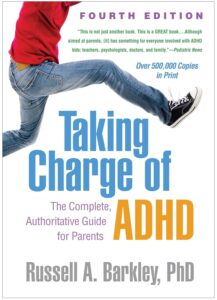
Taking Charge of ADHD

AuthorRussell Barkley, PhD
Pages448
Best forParents wanting the science
Edition4th, updated

Written by the researcher in the video above, this is the book that explains why the emotional brake is thinner in ADHD, in plain language, without the jargon. It’s the one we hand to parents who want to understand instead of just manage.

Check price on Amazon

As an Amazon Associate, Decoded Kids earns from qualifying purchases. Price checked live on Amazon.

For the nights the correction turns into a meltdown before you’ve even finished your sentence, here’s what to say instead of what most of us reach for by instinct.

Teaching the words before the wave hits

Kids who can’t yet say I feel embarrassed or that stung tend to skip straight to the meltdown, because the feeling has nowhere else to go. Giving them the vocabulary earlier, on an ordinary afternoon, not mid-crisis, gives the feeling somewhere to land next time.

Set8 feelings
Best age3-8 years
UseNaming practice
Why it worksFeelings become objects, not floods

Eight soft, simple shapes, one per feeling, that turn an abstract flood into something a small kid can pick up and hand to you. Ours calls the angry one over before the yelling starts, which is most of the value right there.

Check price on Amazon

A five-minute check-in over dinner, not at bedtime, works better than any worksheet. Ask what felt big today, and let the answer be small. The goal isn’t a breakthrough. It’s practice, the same way you’d practice any other skill that eventually needs to run on its own.

The part where you regulate first

Here’s the harder truth. A parent who’s running on empty tends to answer a flooded kid with their own flood, and two floods in a small kitchen rarely go well. If you notice your own voice climbing before your child’s has even peaked, that’s worth its own attention, not guilt.

AuthorsMark Bertin, MD
Pages216
Best forParents who react before they mean to
ApproachMindfulness-based

Half the book is genuinely for you, not your kid. It’s the one that finally explained why staying calm during a meltdown is a skill, not a personality trait, and one you can actually build.

Check price on Amazon

Some of this crosses over with plain old ADHD struggle at school too. A kid who’s already bracing for correction all day tends to melt faster the second he’s home, which is worth remembering on the afternoons that go sideways for what looks like no reason. Here’s more on why school specifically wears an ADHD kid down.

What not to do: Don’t tell him he’s too sensitive, and don’t say it’s not a big deal. Both are true from where you’re standing and false from where he is, and both teach him to hide the reaction next time instead of learning to ride it out. If the words that usually come out under pressure keep making things worse, this breaks down which ones actually calm a flooded kid down.

Believe the size of the feeling, not the size of the trigger

You don’t need a diagnosis on paper to take this seriously, and you don’t need to fix it tonight either. Just believe him when the feeling looks too big for the moment. That belief, more than any script, is what eventually teaches a kid he can survive being told no.

For the days a bruised feeling turns into words aimed straight at you, this is worth reading before it happens again.

FAQADHD & Focus

Frequently asked questions

No. RSD isn’t in the DSM as its own condition, and Dr. William Dodson, who coined the term, has said so himself. What is well documented is that ADHD affects emotional regulation, which is the mechanism behind the pattern people call RSD.

It’s most commonly discussed alongside ADHD, but similar rejection sensitivity shows up in autism and in some anxiety profiles too. The common thread is a nervous system that reacts strongly to a perceived social threat.

Look at the gap between the trigger and the reaction. Ordinary sensitivity usually scales with the event. RSD looks disproportionate almost every time, a tiny correction produces a reaction sized for something much bigger, and it happens repeatedly, not just on a hard day.

It can appear as soon as a child is old enough to read social feedback, often around age 5 or 6, and tends to become more visible once school introduces regular grading, comparison, and correction.

Some parents and clinicians report that stimulant medication softens the intensity of these reactions for some kids, since it targets the same regulation systems. It isn’t a guaranteed fix, and the naming-and-calming approach still matters alongside it.

WHILE YOU’RE HERE…

Parental Control Apps That Don’t Make You the Enemy: What We’d Actually Install

Referee, Judge, or Bystander: What Actually Works When Your Kids Fight

Weighted Blanket or Weighted Vest for Your ADHD Kid? How to Choose

Children’s Reading Statistics 2026: What Every Parent Needs to Know

When You Have a Child From an Affair and a Wife You Never Wanted to Hurt

Parallel Parenting: How to Co-Parent Without Co-Operating

Yogasleep Hushh Review: The $25 Sound Machine That Goes Where Your Baby Goes

The Two Weeks Before School That Actually Matter

Your ADHD Kid Isn’t Giving You a Hard Time. They’re Having One

Books for When the Big Feelings Are Bigger Than Both of You

JOIN THE CONVERSATION

Leave the first comment

Share your thoughts


{“@context”:”https://schema.org”,”@type”:”FAQPage”,”mainEntity”:[{“@type”:”Question”,”name”:”Is Rejection Sensitive Dysphoria an official diagnosis?”,”acceptedAnswer”:{“@type”:”Answer”,”text”:”No. RSD isn’t in the DSM as its own condition, and Dr. William Dodson, who coined the term, has said so himself. What is well documented is that ADHD affects emotional regulation, which is the mechanism behind the pattern people call RSD.”}},{“@type”:”Question”,”name”:”Does RSD only happen with ADHD?”,”acceptedAnswer”:{“@type”:”Answer”,”text”:”It’s most commonly discussed alongside ADHD, but similar rejection sensitivity shows up in autism and in some anxiety profiles too. The common thread is a nervous system that reacts strongly to a perceived social threat.”}},{“@type”:”Question”,”name”:”How do I tell RSD apart from normal kid sensitivity?”,”acceptedAnswer”:{“@type”:”Answer”,”text”:”Look at the gap between the trigger and the reaction. Ordinary sensitivity usually scales with the event. RSD looks disproportionate almost every time and happens repeatedly, not just on a hard day.”}},{“@type”:”Question”,”name”:”At what age does RSD usually show up?”,”acceptedAnswer”:{“@type”:”Answer”,”text”:”It can appear as soon as a child is old enough to read social feedback, often around age 5 or 6, and tends to become more visible once school introduces regular grading, comparison, and correction.”}},{“@type”:”Question”,”name”:”Can ADHD medication help with RSD?”,”acceptedAnswer”:{“@type”:”Answer”,”text”:”Some parents and clinicians report that stimulant medication softens the intensity of these reactions for some kids, since it targets the same regulation systems. It isn’t a guaranteed fix, and the naming-and-calming approach still matters alongside it.”}}]}

Marcus Webb
ADHD & Focus
Hey, I'm Marcus
Marcus Webb
Dad of threereads the research, not the hot takesADHD lived at home, daily

I'm for the parent whose mornings keep falling apart. I didn't train in ADHD - I lived it with three kids, then read the actual studies, so what you get here holds up in a real kitchen at 7:50 a.m. Specific, tested at home, never preachy.

More from Marcus
Your turn

What finally made your child's focus click - even a little?

No right answers here - tell us how it actually went. Someone reading needs to hear it.

Join the conversation