
WEATHER
By Tyler Brooks · Updated June 2026 · Reviewed for accuracy · 5 min read
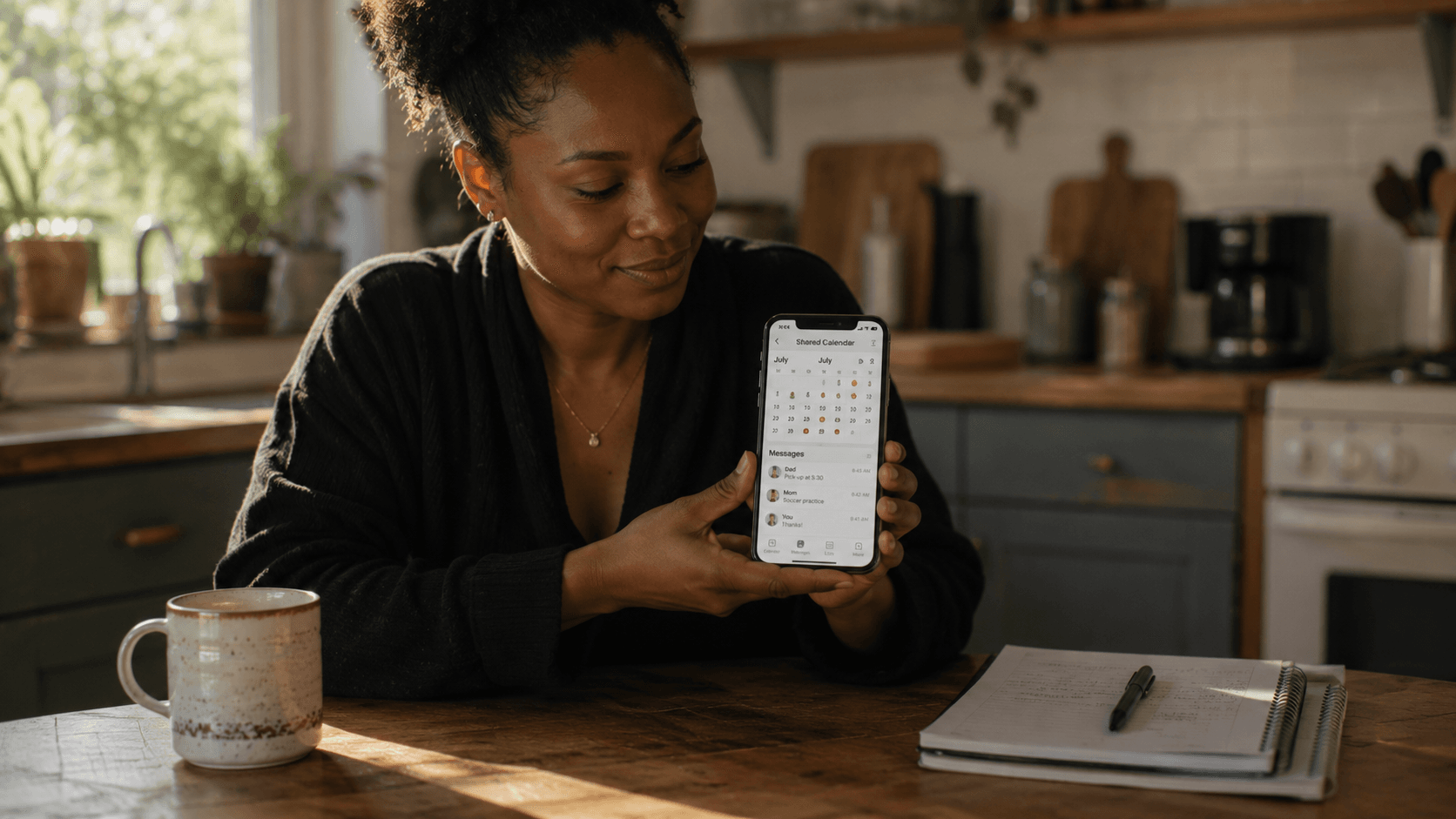
If you switched to AppClose when TalkingParents started charging, you’ve had a rough few months. AppClose quietly ended its free plan on January 1st. TalkingParents followed in March. And just like that, the two apps most parents relied on to keep things civil are now $77 to over $100 a year, per parent.
That’s a real cost when you’re already splitting everything.
So what’s left? More than you’d think. The co-parenting app market has shifted, not collapsed, and there are genuinely good options at every price point right now.
\n\n
If a court-ordered setup is your reality, we put the biggest name through its paces in our full OurFamilyWizard review.
A regular text thread or shared Google Calendar works for some families. But when communication gets tense, or when a judge has asked both parents to keep records, a dedicated app earns its keep fast. The key things they do that a text can’t: they log every message with a timestamp, make those records court-admissible, and keep the schedule separate from the heat of a difficult conversation so the two don’t blur together.
If your co-parenting situation is high-conflict, or has ever been through court, an app isn’t a nice-to-have. It’s protection.
The best co-parenting app is the one the other parent will actually use.
Here’s where five of the most-used apps stand right now. Ratings are from the App Store and Google Play as of June 2026.
From court-required documentation to simple shared calendars. Pick the one that fits your actual situation.
OurFamilyWizard has been around since 2001, which in app years is several lifetimes. Judges and family lawyers across all 50 states recognize it, and if a court order tells you to use a co-parenting app, this is usually the one they have in mind.
The feature set is comprehensive: a shared calendar, expense tracking, a message board with unalterable records, and even a ToneMeter tool that flags messages that might read as hostile. Plans start around $119 a year per parent, with court-ready professional accounts for your attorney or mediator available as add-ons.
For some families, that’s money well spent. For others, it’s a stretch. If a court hasn’t specifically required OurFamilyWizard and things between you and your co-parent are manageable, cheaper options will cover your needs.
If a court order names a specific app, follow it. If it just says “use a co-parenting app,” you have more flexibility than you might think.What TalkingParents does better than anyone else is create a record. Every call, message, and note is logged and timestamped, and those records are court-admissible. The Accountable Calling feature lets both parents make recorded phone and video calls directly inside the app, which no other co-parenting app currently offers.
Since March 2026, the free tier is gone. The Essentials plan runs around $77 a year per parent, with higher tiers reaching above $350 a year. If your situation genuinely needs that level of documentation, it’s worth it. If things are mostly civil and you mainly need a shared calendar, it’s probably more than you need.
One thing worth knowing before you both commit: iOS users rate TalkingParents 4.4 out of 5. Android users rate it 2.5. If your co-parent is on Android, check that out first.

For a lot of parents, AppClose was the obvious free choice. Trusted by over 2.4 million families, it has court-ready records, secure messaging, expense tracking, and calls, all in one place.
That hasn’t changed. What changed on January 1st is the free tier. Subscriptions now run around $8 to $9 a month per parent depending on whether you sign up on the web or through the App Store. That’s close to $100 a year, per parent.
If you were already using AppClose and found the workflow comfortable, staying is a reasonable call. If you’re starting fresh and the price is a problem, Kidtime covers most of the same ground without the cost.
Kidtime picked up a lot of new users in 2026, and it’s easy to see why. It’s the only purpose-built co-parenting app still offering a free tier with no time limit. The core workflow is solid: shared custody calendar, parenting-time tracking, secure messaging, and over 15 pre-built schedule templates. Enough to get set up in under an hour.
A paid Pro tier runs $69.99 a year per parent, which is reasonable given what the competition charges. But you can do a lot on the free plan before you hit that wall.
The one caveat: Kidtime launched in 2023. Some family lawyers are still unfamiliar with it, and not every jurisdiction has tested its court-admissibility in the same way as OurFamilyWizard or TalkingParents. If there’s any possibility your schedule ends up in front of a judge, confirm with your attorney first.
Cozi isn’t a co-parenting app in the traditional sense. It’s a family organizer that happens to work well for low-conflict situations where two parents mainly need to sync schedules without a documentation layer.
The free version runs ads, which gets old fast. Cozi Gold removes them for $39 a year and covers the whole family rather than charging per parent, making it the most affordable paid option on this list. It gives you a shared calendar, shopping lists, meal planning, and reminders.
What it doesn’t have: court-admissible records, tracked expense splitting, or anything close to the accountability features the others offer. If your relationship with your co-parent is cooperative, Cozi is a sensible choice. If there’s friction or legal history in the picture, you’ll want something with a proper audit trail.
Every app on this list does one thing a group text can’t: it keeps co-parenting communication in a separate, contained space. That alone, the ability to close the app and have the conversation stay there, is worth something when things are hard.
Keeping co-parenting out of your personal messages is worth more than any feature list.
Yes. Kidtime is currently the only purpose-built co-parenting app with a genuine free tier in 2026. AppClose ended its free plan on January 1st and TalkingParents followed in March. Cozi is free with ads (or $39 a year for Cozi Gold), but it’s a family organizer rather than a dedicated co-parenting tool.
For most dedicated apps, yes. OurFamilyWizard, TalkingParents, AppClose, and Kidtime all require both parents to have their own account, and both are typically paid accounts. Cozi works differently: one subscription covers the whole family, so $39 a year covers both parents.
OurFamilyWizard is the most widely court-recognized co-parenting app in the US. It has been accepted in all 50 states since 2001. TalkingParents is also accepted in many jurisdictions. If a court order specifies an app, follow it. If it just says “use a co-parenting app,” ask your attorney before choosing a newer platform like Kidtime.
If a court ordered it, refusing can be a contempt issue. Some parents have argued that an app that recently went paid (like AppClose or TalkingParents in 2026) can’t be court-enforced without both parties agreeing to the cost. If you’re in this situation, that’s a question for your family law attorney, not the app.

I'm for the parent about to spend money they're not sure about. I buy the gadget, live with it, and give you the honest verdict - including the 'don't'. I've burned through enough hype to save you the cash, and when something truly earns its place, I'll show you exactly why.
More from TylerNo right answers here - tell us how it actually went. Someone reading needs to hear it.
Join the conversation