
Four Days of Strange Food and He Is Living on Chocolate Coins
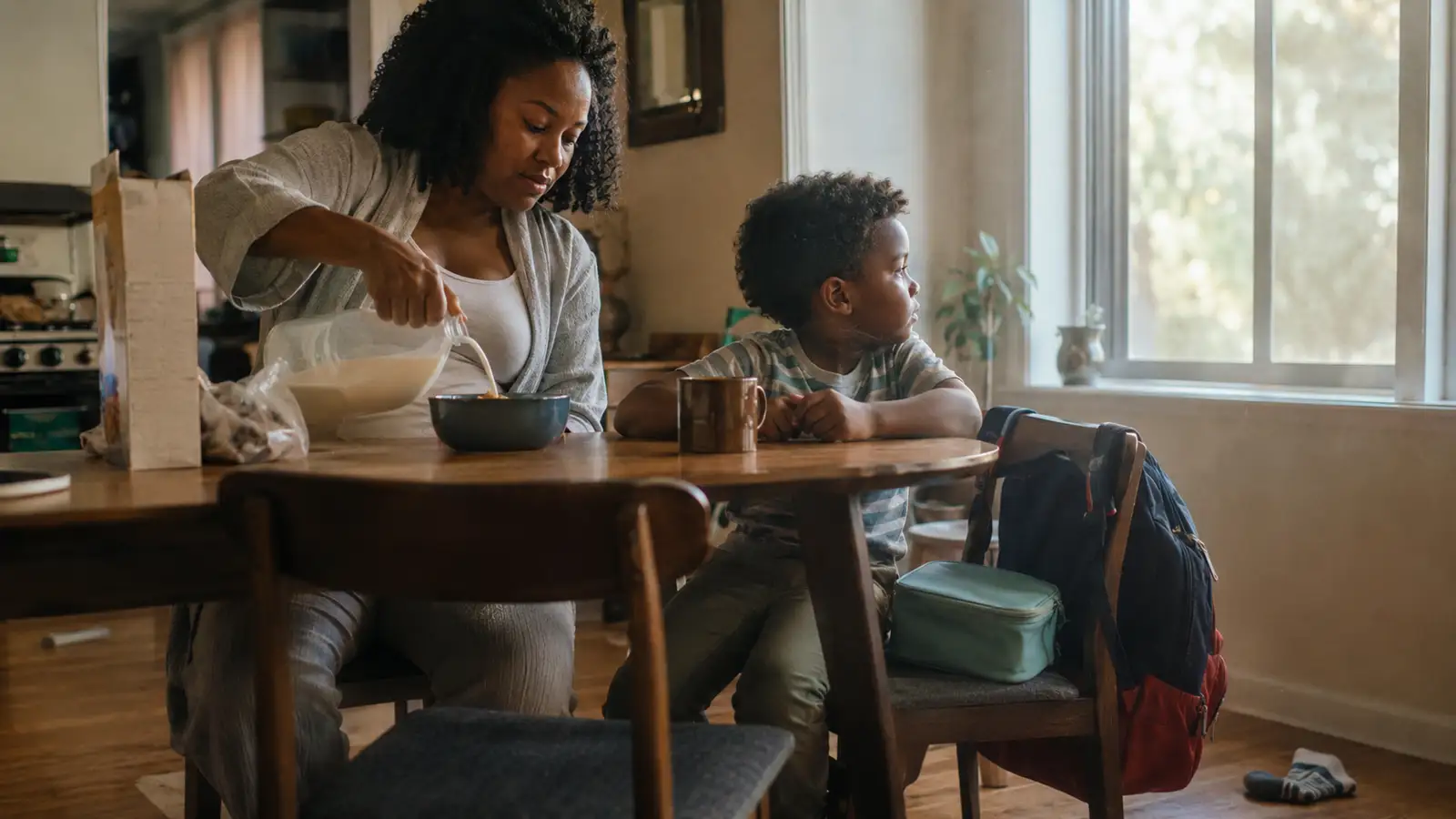
It started on Christmas Eve with a buffet he would not touch. By the twenty-seventh he has eaten four proper things and about nine hundred chocolate coins.
Most advice about this aims at the big dinner. That is the wrong target. The problem is not one meal, it is four or five days where nothing is at the normal time, half the food is unfamiliar, and you are often in somebody else’s kitchen. Keep one or two meals a day completely ordinary and the rest of it stops mattering.
It is a week, not a dinner
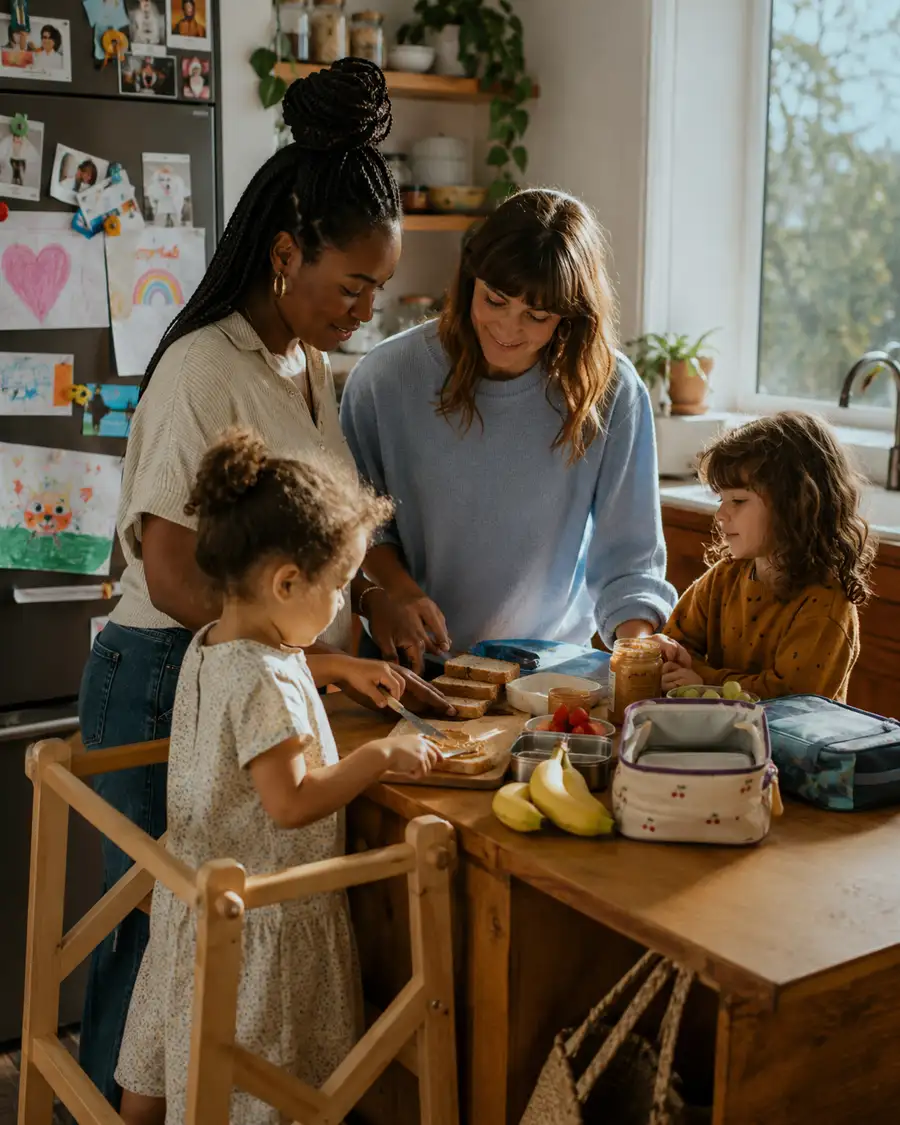
Think about what actually happens from the twenty-third onwards. Lunch is whenever. Dinner is at four one day and eight the next. There are tins of things out on every surface.
For a child who copes by knowing what is coming, that is the hard part. The turkey is just the most visible bit of it.
So pick the meal you can hold steady and hold it. Breakfast is usually the easy one, because nobody has strong feelings about Christmas breakfast and you are the one making it. Same bowl, same thing, same time. That one fixed point does a surprising amount of work across a chaotic week.
Then let the rest go. Really go, not go while you keep score.
That is the idea behind the approach most feeding specialists use, and it is the one worth holding onto this week. The dietitian Ellyn Satter built a whole model on splitting the job: you decide what is served, when and where, and your child decides whether to eat it and how much. We went through how that works day to day in its own guide. On the twenty-fifth it mostly means putting food down and then saying nothing at all.
The plate that makes the big meal survivable
Serve him from the same food as everyone else, then add one thing you know he eats. Bread, plain potatoes, a bit of cheese. Put it on at the same time as the rest, not afterwards as a rescue.
That timing matters more than the food does. Producing a separate plate once he refuses teaches him that refusing summons better options. Having it there from the start is just what dinner looks like.
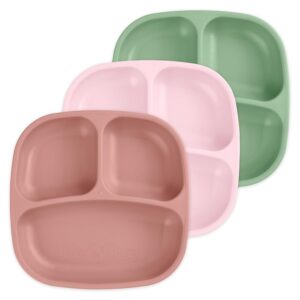
Re-Play Divided Toddler Plates Set of 3
As an Amazon Associate, Decoded Kids earns from qualifying purchases. Price checked live on Amazon.
Divided plates do one quietly useful thing on a day like this: the gravy stays where it is. For a lot of children the objection is not the food but the food touching other food, and a plate with walls in it removes the whole argument.
If you would rather sidestep a plated meal altogether, a board of separate things works better than a roast for a lot of families. Our board of things they already eat is built on exactly that idea.
Other people’s houses
This is where it usually goes wrong. Unfamiliar kitchen, an audience, and a host who has cooked for two days.
Take food. Not as a statement, just in a bag. Something he eats, ready to go, so you are never standing in a relative’s kitchen at three o’clock deciding whether to make a fuss.
A packed box is less conspicuous than a plate of your own food. It comes out, he eats, nobody has to discuss it.
Tell the host beforehand, briefly and cheerfully, so it is not a surprise. Most people are relieved. The ones who are not are the same ones who would have commented anyway, and that particular conversation is worth preparing for once rather than improvising every year.
The chocolate question
He will eat an unreasonable amount of it. This is true of every child in every house this week.
Treating it as a crisis makes it a bigger deal than it is. A few days of sugar does not undo anything, and the child who is told sweets are running out will eat them faster. Put some out, leave the rest away, and move on.
What does help is keeping the sweets attached to meals rather than replacing them. Chocolate after lunch is fine. Chocolate instead of lunch, all afternoon, is what produces the four o’clock collapse everybody blames on excitement.
When it is not really fussiness
For most children this is preference, and preference softens with time. For some it is not.
The signs are different in kind, not degree. A very short list of accepted foods that keeps shrinking. Gagging or real distress at the sight or smell of something, not just a refusal. Dropping a food permanently after one bad experience with it. Meals that take an hour because eating itself is hard work.
None of that is something to sort out over Christmas. It is worth a conversation with your doctor or a paediatric dietitian in the new year, though, because the usual advice about exposure and not making a fuss is aimed at the ordinary version and can make the other one worse.
If that is your child, take the pressure off this week entirely and let him eat bread.
On the twenty-eighth
Go back to normal meals the moment the visiting stops. Not a detox, not a talk about how much chocolate there was. Just lunch at the usual time in the usual bowl.
Most children reset within a couple of days once the timetable does. If you want somewhere easy to restart, the meals that reliably get eaten are the right list for that first quiet week.
Leave the first comment
Share your thoughts
Frequently asked questions
Serve him from the same food as everyone else and add one thing you know he eats, put down at the same time rather than afterwards. Bread, plain potatoes or cheese all work. Adding it from the start makes it part of the meal instead of a reward for refusing.
No, and most hosts are relieved. Mention it beforehand in one cheerful sentence so it is not a surprise on the day. A packed box is less conspicuous than plating up separate food in someone else’s kitchen while everyone watches.
A few days of extra sweets changes nothing long term. What helps is keeping them attached to meals rather than replacing them, so chocolate after lunch rather than instead of it. Restricting hard tends to backfire, because a child who thinks sweets are running out eats faster.
No. The audience, the pressure and the occasion make a cautious eater more likely to refuse, and a bad experience at a loaded table can put a food out of reach for months. Introduce new things on an ordinary day in January when nobody is watching.
A disrupted week of eating is normal and most children reset within a couple of days of the routine returning. Go back to ordinary meals at ordinary times without discussing it. Speak to your doctor if the refusing continues well past the holidays or he is losing weight.

I'm for the parent watching a feeling they can't name and wondering if it's normal. I've spent years close to the child-mental-health research and the specialists behind it, and I carry the heavy parts into plain language. I won't diagnose your child - I'll help you see what you're looking at, and say honestly when it's time to ask someone in person.
More from SofiaWhat's the one thing that actually calmed the chaos in your house?
No right answers here - tell us how it actually went. Someone reading needs to hear it.
Join the conversation