
Twenty Pounds of Apples and One Bite Out of Each
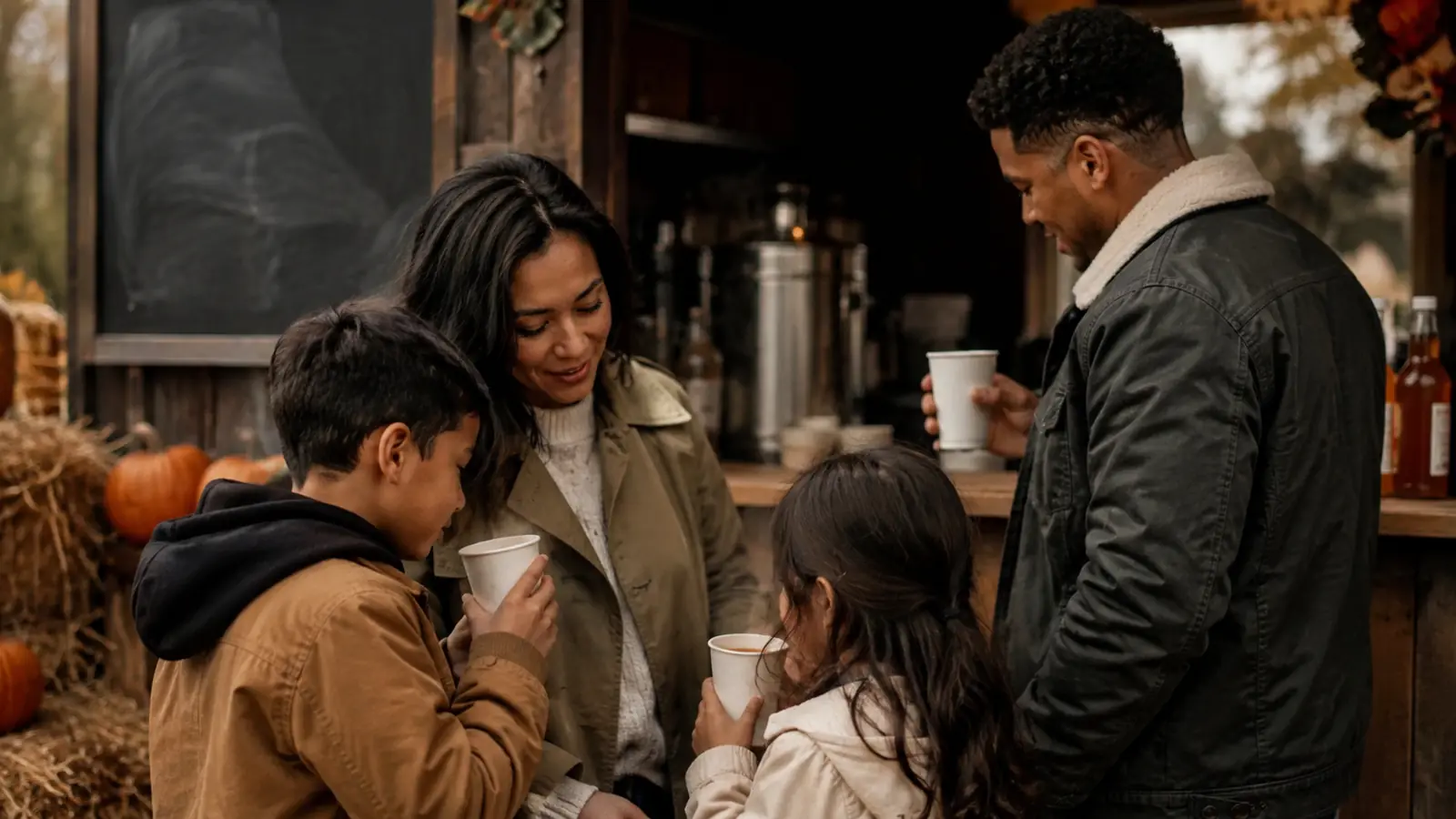
Somewhere around the third row, your eight-year-old announced a new plan. One apple from every tree, one bite each, for science. Your four-year-old loved this plan, and now there are six apples in the bag with a bite missing from each.
So yes, apple picking with kids is sweet and a little chaotic, and you drive home with more fruit than any family can eat. A bit of planning keeps the good parts and shrinks the pile.
When should you go apple picking with kids?
Early fall is the classic window, but apples don’t all ripen at once. Each variety has its own moment. Iowa State University Extension notes that early types like Pristine ripen in late summer, while GoldRush and Enterprise may not be ready until late October.
So the orchard’s website is your best friend. Most farms post what is ready to pick that week, and a quick call clears up the rest.
Go in the morning if you can. Kids have more energy, the rows are quieter, and you will be done before anyone falls apart over lunch. Pack water and a snack anyway. Orchards are bigger than they look from the parking lot, and a six-year-old’s legs are shorter than yours. (Much shorter, as they will remind you.)
How do you actually pick an apple?
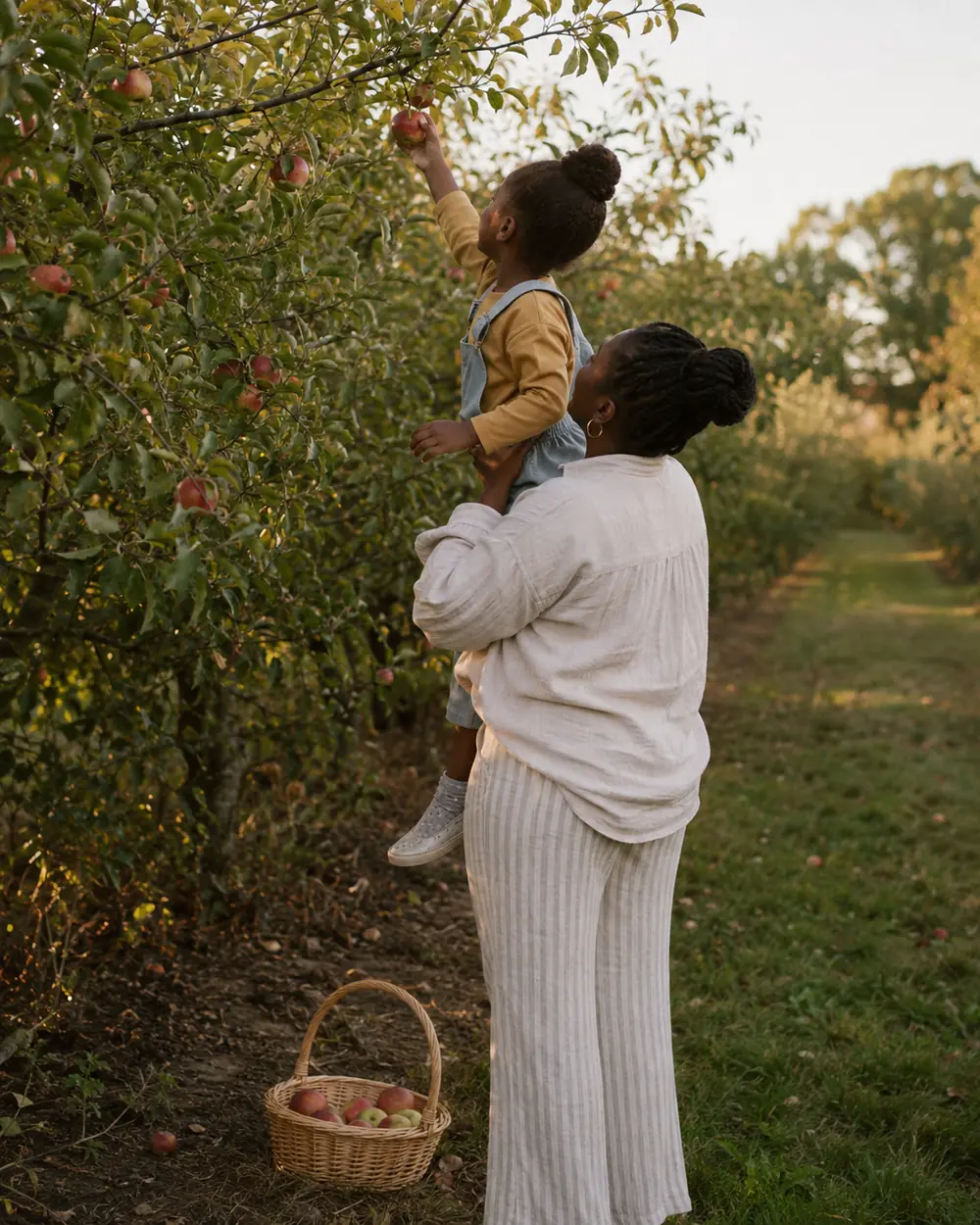
This part is worth two minutes of coaching at the first tree. Show your kids how to hold the apple in the palm of the hand, then roll it up and back until it lets go of the branch. The stem should stay on the apple. A ripe one usually comes off easily, so if it fights back, move on to the next.
Use the whole hand. Squeezing with fingertips leaves bruises, and bruised apples don’t keep well. Set each apple in the bag gently, too. Kids love the thunk of a dropped apple, which is exactly the problem.
The big mistake is yanking. It feels faster, and it can shake loose a shower of apples that small kids find thrilling. Pulling hard can also tear the stem off, and apples without stems don’t store as well.
A leaf that comes away with the apple is a small clue that something went wrong. According to Iowa State’s guide to harvesting and storing apples, an attached leaf likely means you damaged the spur. Spurs are the short, stubby twigs the apples grow on.
That is a great thing to tell a kid. The tree has a job next fall too, and a gentle picker is helping it. My nine-year-old appointed herself spur police after hearing that, which was mildly annoying and completely worth it.
What orchard rules should kids know?
Every farm has its own rules, so read the sign at the entrance out loud together. Some orchards are happy for you to taste an apple while you pick. Others ask you to pay before anyone takes a bite.
A few rules show up almost everywhere. Stay in the rows that are open, and keep off the trees. Leave the apples on the ground alone. Iowa State says apples collected from the ground should never be mixed with ones picked from the tree, since they can bring in contamination. So the drops are not snacks, and they are definitely not for throwing at your brother.
Ladders are for grown-ups, full stop. If the farm has a ladder or a picker on a long pole, an adult does the reaching while the child holds the bag. Bees and wasps like to hang around the soft fallen apples, so teach kids to walk slowly away if one comes close.
How many apples do you really need?
Here is the math nobody does at the orchard. According to Ohio State University Extension, a peck of apples weighs 10 and a half pounds, and a pound is about 3 medium apples. That makes one peck roughly 30 apples. A bushel is about 40 pounds, which is well over 100 apples.
Many orchards sell bags by the peck or the half-bushel. A half-bushel sounds cute when you are standing under the tree. It is about 20 pounds, and that is how you end up with a trunk that smells like cider for a week. For most families, a peck is plenty unless you plan to bake. (We did not plan to bake. We baked a lot.)
Give each kid a job so the bag doesn’t fill up in ten minutes. One child holds the bag, and another counts. Older kids can hunt for the single best apple in each row, a task they will take very seriously.
How do you make the day last longer than the photo?
Take the photo, then turn the rest of the trip into a small science project. Pick two or three apples of each variety and keep them in separate bags. That night, slice them up and hold a family tasting test. Sweet or tart? Crunchy or soft? Everyone votes, and somebody writes down the winner.
A cheap notebook makes it even better. Kids can draw the apple, tape in a leaf, and write the variety and the date. A tasting game also helps kids who are wary of new foods, since there is no pressure to like anything. If that sounds like your house, these easy meals for fussy eaters keep the same low-stress spirit. For more days outside, our ideas for bored kids hold up fine in fall.
What do you do with all those apples at home?
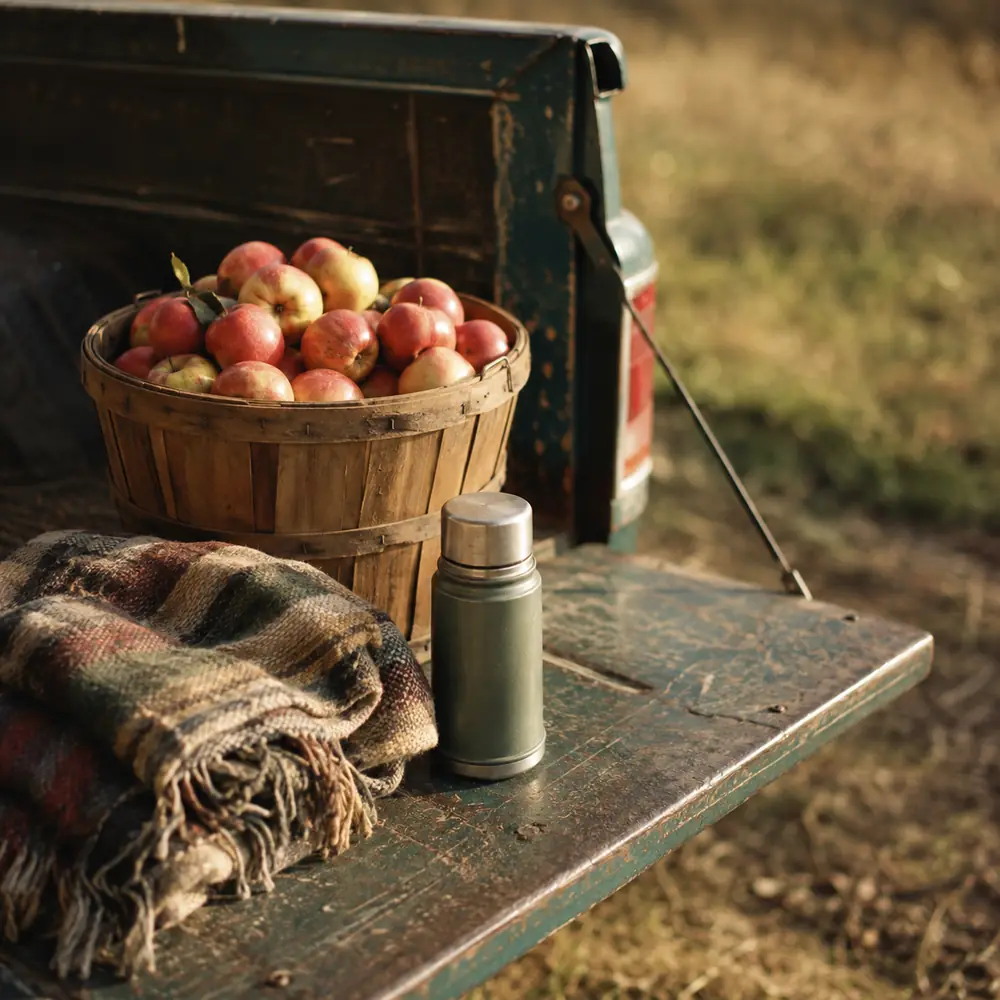
Start with storage. Ohio State says apples can be kept in the refrigerator for 4 to 6 weeks. Put them in a plastic bag with a few holes poked in it, in the crisper drawer if you have one. Iowa State adds that apples stored at 50 degrees spoil two to three times faster than those kept at 32, so the fridge wins over the fruit bowl by a mile.
Then bake. Two pounds, or about 6 to 8 apples, makes a 9-inch pie. Applesauce uses up even more, and little kids can mash soft cooked apples with a potato masher. The same setup from baking cookies with kids works here, with one clear job and a small space for each child. A learning tower or step stool gets short cooks up to the counter.
Last, give some away. A bag of apples on a neighbor’s porch with a note in a kid’s wobbly handwriting is a lovely thing to find. It also makes the half-bushel mistake look almost planned.
Leave the first comment
Share your thoughts
Frequently asked questions
Early fall is the main season, but each apple variety ripens at its own time, from late summer into late October. Check the orchard’s website to see what is ready that week. Go in the morning, when kids have the most energy and the rows are less crowded.
Show them how to hold the apple in the palm of their hand and roll it up and back off the branch, keeping the stem on. Ask them not to yank, since pulling hard bruises apples, tears off stems and can damage the spurs that grow future apples.
A peck of apples weighs about 10 and a half pounds, and one pound is about 3 medium apples. That makes a peck roughly 30 apples. A bushel weighs about 40 pounds, which is well over 100 apples and far more than most families can use before they go soft.
Keep them in the refrigerator, where apples last about 4 to 6 weeks. Place them in a plastic bag with a few holes poked in it, in the crisper drawer if you have one. Pull out bruised apples and eat them first, since damaged fruit does not keep well.
Yes, with a few simple rules. Adults handle any ladders, and kids stay out of the trees. Apples on the ground should be left alone, not eaten or thrown. Watch for bees near soft fallen fruit, and bring water and snacks, because orchards involve more walking than kids expect.

For nearly two decades I was the school counsellor across from the angry kid, the silent one, the parents out of ideas. I write the way I listened - slow, steady, never from above. If tonight feels heavy, I hope this felt like having someone in the room.
More from TheoWhat's the one thing that actually calmed the chaos in your house?
No right answers here - tell us how it actually went. Someone reading needs to hear it.
Join the conversation