
The Shortest Day Is the One They Can Actually Feel
She asked me in October why it was dark when we got home and light when her cousin got home in Australia, and I gave an answer that was about forty per cent correct with a lot of confidence in it.
The solstice is the one piece of astronomy children can verify from the kitchen window, which is most of why it is worth marking.
The word comes from the Latin for sun and for standing still, because for a few days around the solstice the sun rises and sets at almost the same points on the horizon. It looks like it stops. Then it turns around.
How to explain it without a diagram
Take an orange and a torch. Stick a cocktail stick through the orange, corner to corner but leaning, and that lean is the whole lesson. Shine the torch straight at the middle and walk the orange around the torch without ever changing the lean.
Half the year, the top of the orange leans towards the light and gets a long bright day. Half the year it leans away and the light only clips it. Let them do the walking. A seven year old who has carried the orange around the lamp once understands seasons better than one who has been shown a diagram five times.
Then the fact that surprises adults as much as children: the Earth is nearest the sun at the start of January, in the middle of the northern winter. Cold is a question of angle, not distance.
The thing nobody expects about sunsets
Here is the detail that makes a child stop and check. The earliest sunset of the year does not happen on the solstice. It happens roughly two weeks before it, in early December. The latest sunrise comes about two weeks after.
The solstice is the shortest day overall, but the evenings have already started stretching before it arrives. This comes from the Earth’s orbit being slightly oval and its tilt shifting the timing of solar noon, an effect astronomers call the equation of time, and you can watch it happen in a notebook.
Which is genuinely useful in a dark December. The evenings are already turning while everyone is still complaining about the dark.
How other people mark it
Almost every culture at a northern latitude did something on the longest night, and most of them chose fire. That is not a coincidence and it is worth saying to children plainly.
- Yalda, in Iran and across Persian-speaking countries, is the longest night. Families stay up together with pomegranates, watermelon, nuts and readings of the poet Hafez.
- Dongzhi in China and East Asia, where families eat tangyuan, small round rice-flour dumplings, for the return of the light and the coming together of the family.
- Saint Lucia’s Day in Sweden on 13 December, with a procession of candles and saffron buns in the dark before school. It sits two days after Saint Nicholas Day, which plenty of families keep as well.
- Soyal among the Hopi in Arizona, a ceremony welcoming the sun back at its lowest point.
- Yule in northern Europe, the source of the log, the evergreens indoors and a good deal of what later attached itself to Christmas.
Pick one that is not yours and try a piece of it. Pomegranate seeds in a bowl on the longest night is about a dollar and a half of effort and it starts a much better conversation than another chocolate.
Six things to actually do on the night
Keep it to one or two. The whole appeal of the solstice for a tired family in the third week of December is that it asks for almost nothing.
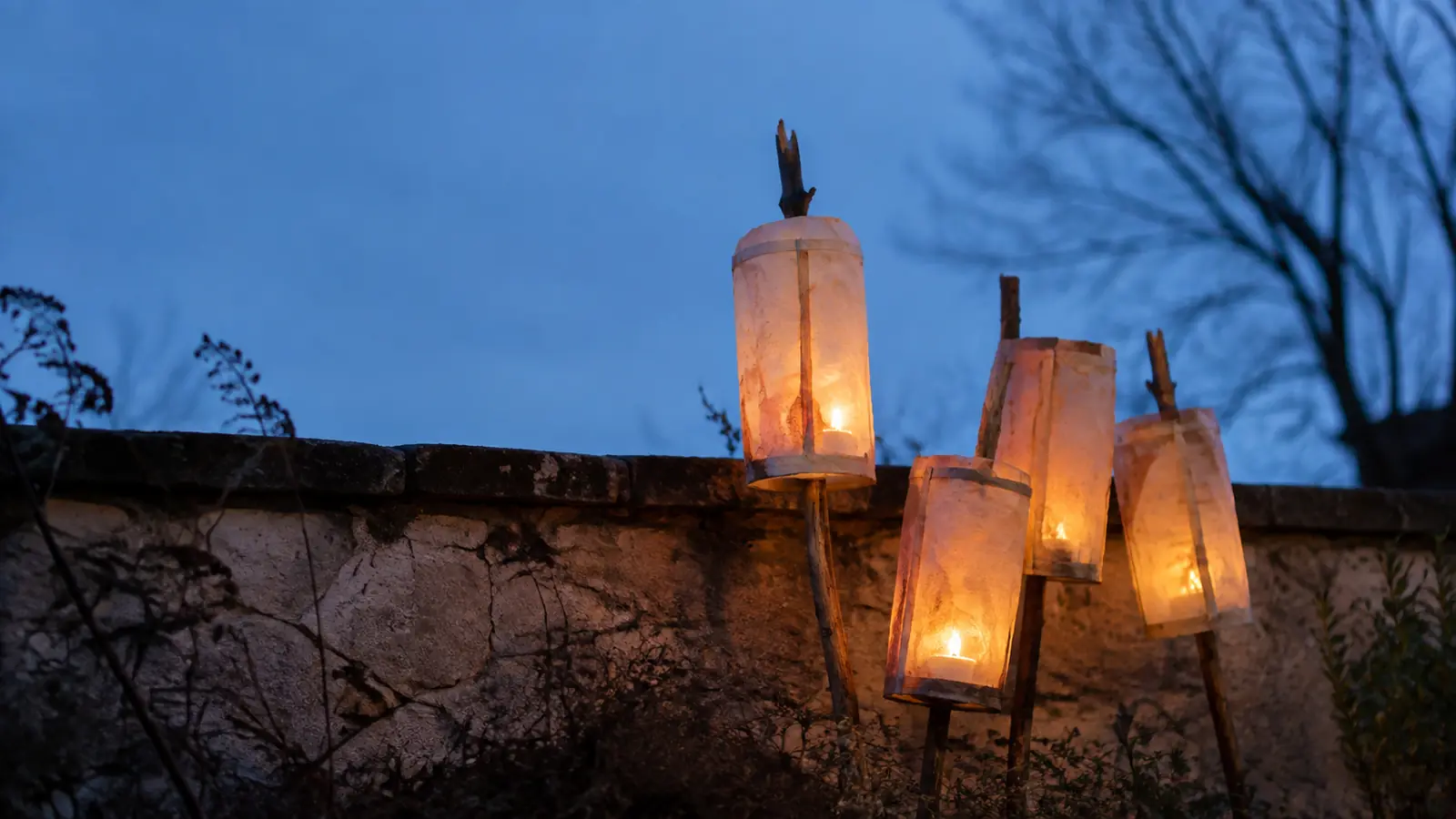
- A lantern walk. Jam jar, tealight, wire handle, or a paper bag with sand in the bottom. Walk to the end of the road and back at half past four. Take cocoa in a flask, which turns it from an errand into an event.
- Dinner by candlelight. No overhead light at all. Children behave strangely well in candlelight and nobody knows why.
- The orange and the torch. Ten minutes, above.
- Feed the birds. Pine cone, peanut butter, seeds, hung outside. Something else is having a hard week too.
- Write down one thing to leave behind and one to carry in. Burn the first in a candle flame if your children are old enough to be sensible about it. This is a New Year’s resolution nine days early and it works far better in the dark.
- Stay up for absolutely nothing. Fifteen minutes past bedtime, outside, looking up. Nothing happens. That is the point, and they will remember it.
Why this helps in a month that is often too much
December for a lot of children is a long escalation of noise, sugar and anticipation. The solstice is the opposite shape. It is quiet, it is short, it costs nothing, and it happens in the dark.
For a child who finds the whole season overwhelming, having one evening that is deliberately small can be the best part of the month. That sits alongside what we have written about traditions that are not gifts, and if the dark itself is landing heavily on someone in your house, low winter mood in children is a real thing rather than a phase to push through.
And there is the promise built into it, which children take more seriously than adults do. From this night on, every single day is longer than the one before. Not by much. By about a minute at first. But in the right direction, and they can check.
Leave the first comment
Share your thoughts
The winter solstice, answered
It is the shortest day of the year in the northern half of the world, around 21 December. The Earth is tilted by about 23.4 degrees, so for part of the year the top of the planet leans away from the sun and days get short.
No, and this surprises most adults too. The Earth is at its closest to the sun in early January, in the middle of the northern winter. Cold comes from the angle the light arrives at, not the distance.
It is not. The earliest sunset happens about two weeks before the solstice and the latest sunrise about two weeks after, because the Earth’s orbit is slightly oval. The evenings are already lengthening by the time the shortest day arrives.
Almost always with light. A lantern walk at dusk, dinner by candlelight, or a fire. Around the world it is marked by Yalda in Iran with pomegranates and poetry, Dongzhi in East Asia with rice-flour dumplings, Saint Lucia’s Day in Sweden with candles, and Soyal among the Hopi.
It comes from Latin words for sun and standing still. For a few days around the solstice the sun rises and sets at nearly the same spots on the horizon, so it appears to stop before turning back.
For nearly two decades I was the school counsellor across from the angry kid, the silent one, the parents out of ideas. I write the way I listened - slow, steady, never from above. If tonight feels heavy, I hope this felt like having someone in the room.
More from TheoWhich book actually changed something at home - and which did you put back?
No right answers here - tell us how it actually went. Someone reading needs to hear it.
Join the conversation