
The Four Hours Between the Table Being Ready and Anyone Sitting Down
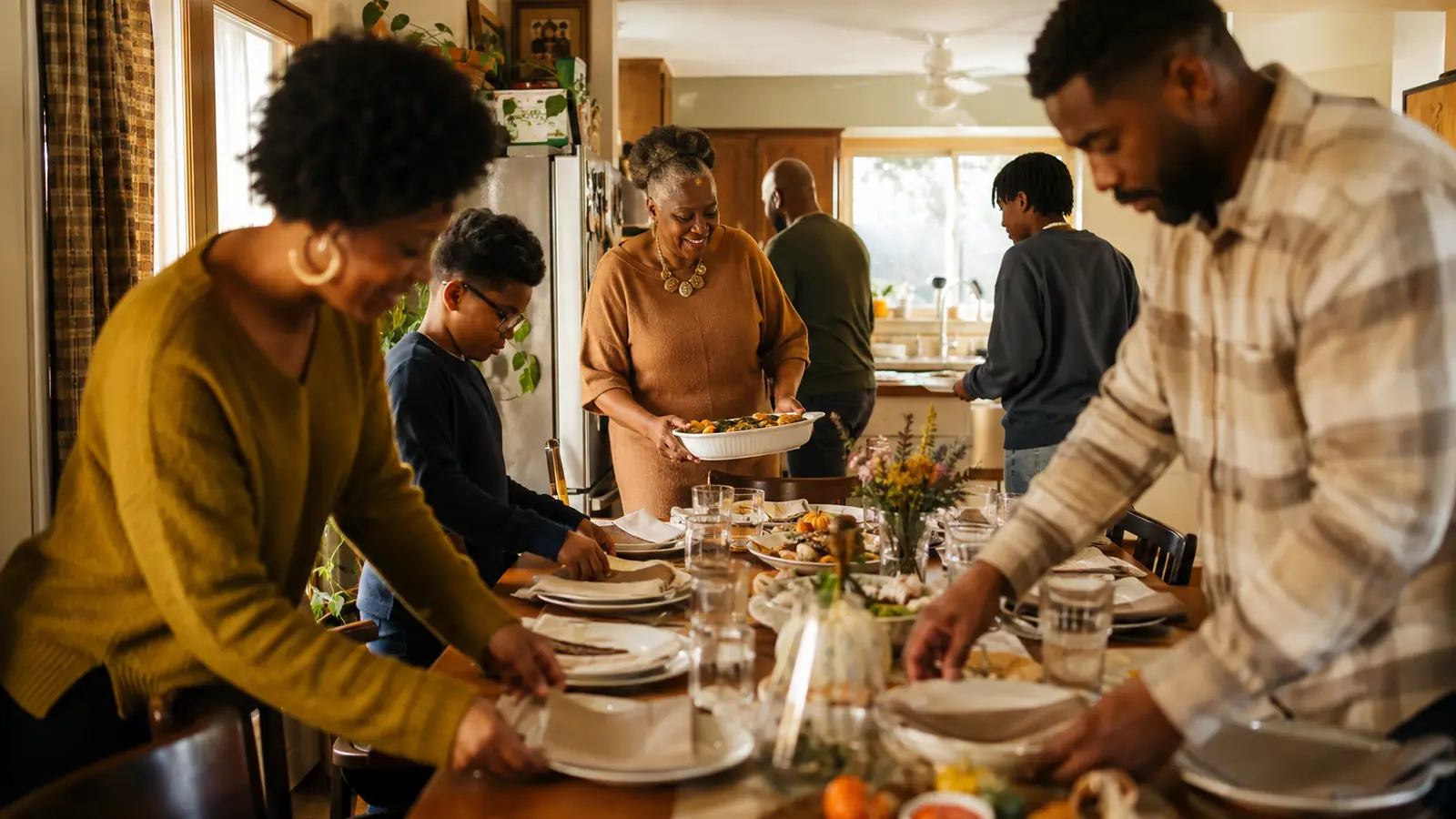
The table looked lovely at eleven in the morning. That was the problem.
By 12:30 two cousins had been under it, somebody had eaten the decorative nuts, and a four year old was asking, for the ninth time, whether it was dinner yet. Nobody plans for the gap. Everybody has the gap.
What follows is what has actually worked in our house and in a few louder ones, roughly in the order you will need them.
The hour when they are still polite
Start with the thing that has a job attached, because early on they still want to be useful and that window closes fast.
Place cards are the easiest. Give them folded card, a pen each, and the list of names. Let them decide where everybody sits.
It takes twenty minutes. It makes them the boss of something. And it means the seating plan is no longer your argument to have, which on some years is worth the whole afternoon.
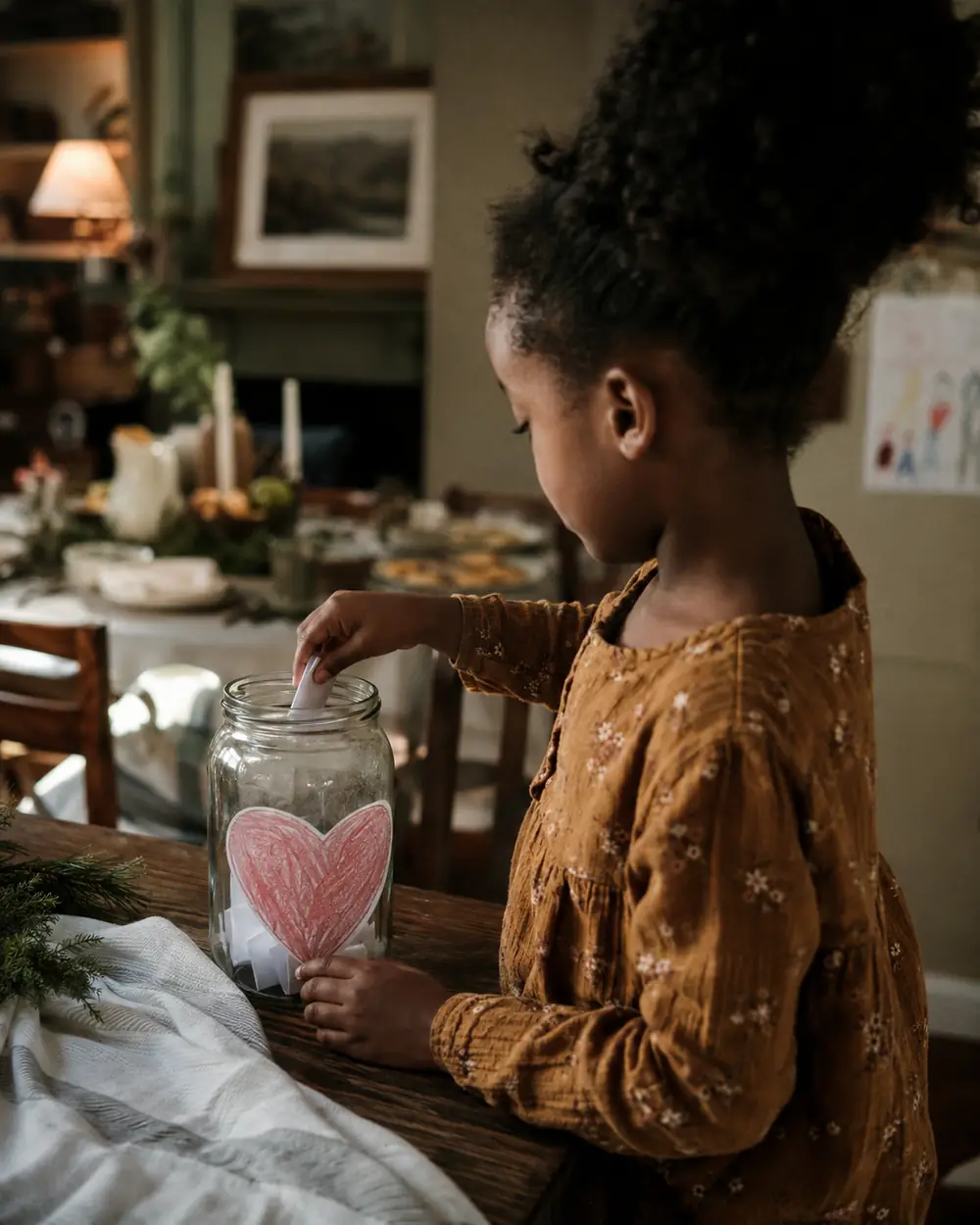
The gratitude jar is the other one, and it is worth more than it looks. Slips of paper, a jar, one sentence each, read out at the table. It is not profound and it is not meant to be. A five year old will write down the dog.
What makes it work is that it happens every year, in the same jar. You read last year’s slips first.
Jeffrey Froh and his team at Hofstra tried a version of this with 89 children and teenagers. Each wrote a letter to somebody they were grateful to, then handed it over in person. The children who gained the most were the ones who started out least cheerful, and they were still doing better two months on.
That was a real child, writing to a real adult, in a study. It is worth remembering when a seven year old writes “chips” on their slip and everybody laughs. The habit is the thing. The depth arrives later, on its own.
The middle stretch, when the kitchen gets serious
This is when they need something that runs without you. Set it up in a corner of a room you are not cooking in and walk away.
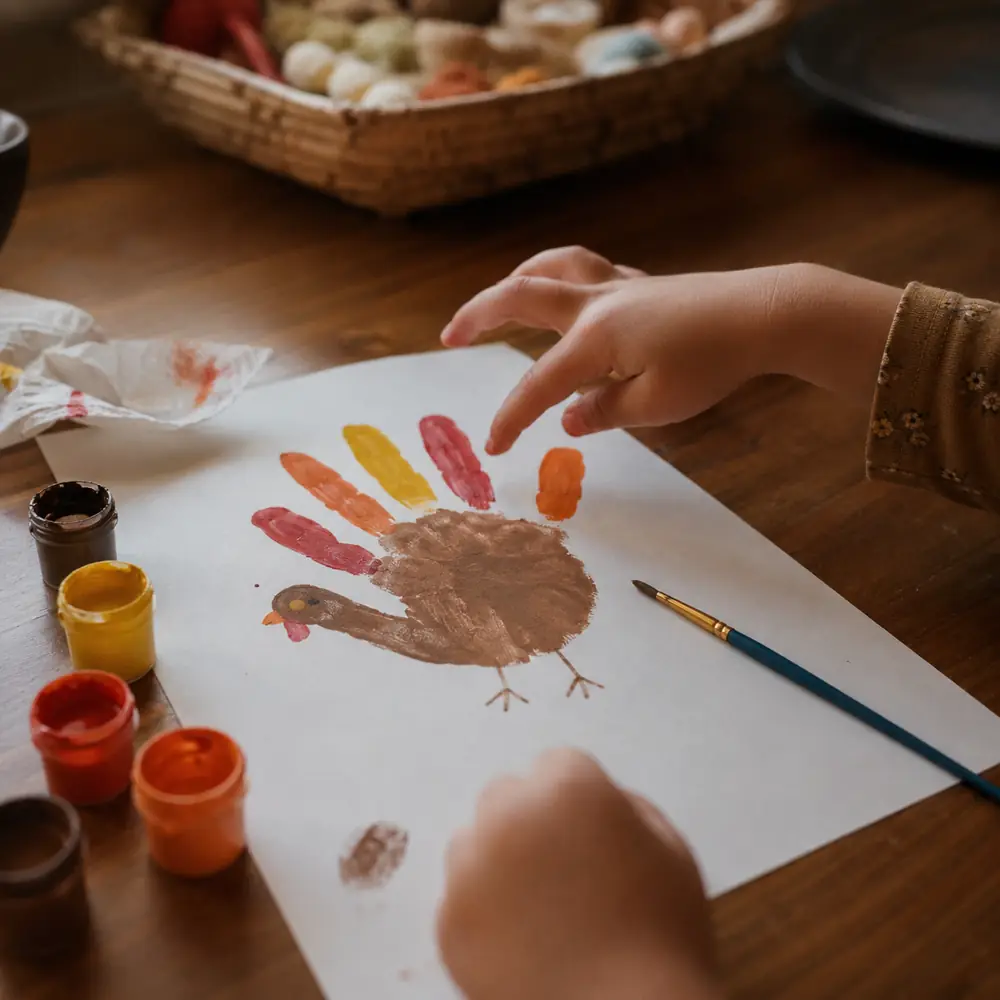
The traced hand turkey has survived four generations for a reason. Paper, a pencil, whatever colors you have.
Every child in the house can do one. Including the one who is far too cool for it, who will make his sarcastically, and then stick it on the fridge.
Play dough on a tray is the other reliable one, because it takes a two year old and a nine year old at the same table and neither is bored. Get it out at noon and you buy most of an hour.
Play-Doh Starter Set 9-Piece Kit with Storage Tote & 4 Modeling Compound Cans, Arts and Crafts for…
As an Amazon Associate, Decoded Kids earns from qualifying purchases. Price checked live on Amazon.
A leaf hunt buys you twenty minutes outdoors if the weather holds. Five things on a list, one bag each. The winner is whoever comes back muddiest, a rule that costs nothing and delights everyone under eight.
If it is raining and outside is off the table, the indoor list in the piece on fall afternoons when it goes dark at four covers the same gap with more options.
The last hour, which is the actual test
Hungry, wound up, and out of patience, all at once. Do not save the good activity for after dinner. Save it for here.
You want something quiet and absorbing, done sitting down, well away from the kitchen. A hidden pictures book is close to perfect. It suits a wide age range, and a child will work at one alone for twenty five minutes without a word.
Feed them something real at this point rather than holding out. A child who eats a proper snack at three eats better at five. That is the opposite of what everybody’s mother says, and it is still true.
The same goes for the child who is cautious about the food itself. Pushing at the table makes it worse, and the everyday version of that is worked through in the piece on meals a fussy eater will eat.
What not to plan
The other thing worth dropping is the expectation that they sit at the table for the whole meal. Most children under seven cannot, and the fight about it ruins the part of the day you were looking forward to. We went through this properly in the piece on the child who will not stay in their chair.
What they will remember
Not the food. Ask any adult about Thanksgiving as a child and you get the cousins, the kids’ table, the one aunt, the argument about the football.
Which is a relief, because the kids’ table is free and the food is not.
If you do one thing off this list, do the jar. It repeats, and repeating is what turns an ordinary afternoon into a thing with a name on it. The same finding sits underneath the traditions that cost nothing a month later, and underneath the deal you make about the candy a month before.
Ours is on its fourth year. The dog got mentioned three times running, which we now read out first, on purpose.
Leave the first comment
Share your thoughts
Frequently asked questions
Things that can be started and abandoned in ten minutes and need no adult sitting with them. Place cards early, a gratitude jar at the table, play dough or a traced hand turkey in the middle stretch, and one quiet absorbing activity saved for the hungry last hour.
Slips of paper, a pen each, one sentence per person, all read out before the meal. Keep the same jar every year and read last year’s slips first. The repetition does the work, so it does not matter that a young child writes down the dog.
Most children under seven genuinely cannot, and forcing it turns the best part of the day into a standoff. Agree a realistic stretch before you sit down, give them a job while they are there, and let them leave the table once it is done.
Yes, and something real rather than candy. A child who has eaten properly in the afternoon is calmer and usually eats better at the meal itself. Holding out to protect their appetite mostly produces a hungry, unraveled child by the time the food arrives.
Run two or three loose activities side by side rather than one organized game. Children between three and twelve will not converge on the same thing, and the group game usually ends in an argument about rules while you are trying to cook.

For nearly two decades I was the youth mentor across from the angry kid, the silent one, the parents out of ideas. I write the way I listened - slow, steady, never from above. If tonight feels heavy, I hope this felt like having someone in the room.
More from TheoWhat's the one thing that calmed the chaos in your house?
No right answers here - tell us how it went. Someone reading needs to hear it.
Join the conversation