
Your Child Can Read the Words. That Is Not the Same as Reading.

Reading practice at home has a particular sound. A word, a pause, a wrong guess, a sigh from somebody. Ten minutes that feel like forty.
And the confusing part is that they can do it. They got through the page. They just did it in a way that left nothing behind, and neither of you enjoyed a second of it.
The reason this is so hard to fix from the sofa is that reading is not one skill. It is at least three, and they fail differently. Practicing the wrong one is why a year of nightly reading sometimes changes nothing.
Three different problems that look identical

Decoding. Turning letters into sounds and sounds into a word. A child stuck here guesses from the first letter and the picture. They get stuck on words they read correctly yesterday, and spelling is hard in the same way. This is the one with the strongest evidence behind a specific fix, and that fix is systematic phonics.
Fluency. They can decode every word but it takes so much effort that there is nothing left over. It sounds flat and slow, with no expression, because expression requires knowing what is coming next. This is the most commonly missed of the three.
Comprehension. Smooth, confident reading and then a blank face when you ask what happened. Sometimes vocabulary, sometimes not enough background knowledge about the thing being described, sometimes attention rather than reading at all.
You can usually tell which one you are dealing with in five minutes. Read a page to them and then ask about it. If they can answer easily when they did not have to do the reading, comprehension is fine and the trouble is further down.
What helps at home
Twelve minutes, at a table, at the same time each day. Short and boringly consistent beats long and occasional. A timer on the table also ends the argument about how long it has been, which is usually half the fight.
Read the hard bits to them. Alternating pages, or you read the page first and they read it after, is not cheating. It is how fluency is built, and it lets a child meet stories that are worth their actual age.
Let the finger stay. Tracking with a finger or a strip is often discouraged too early. For a child losing their place, it removes a whole layer of work.
The one physical tool worth owning is a reading strip. It is a colored window that shows one line at a time. For children who skip lines or get lost in a dense page, it does more than any app we have tried. The pocket version lives in a school bag.
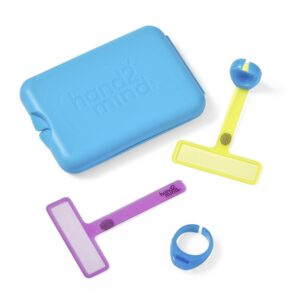
hand2mind FingerFocus Highlighter to Go | Guided Reading Strips
As an Amazon Associate, Decoded Kids earns from qualifying purchases. Price checked live on Amazon.
The desk version is the same idea in a shape that suits homework rather than a book at bedtime. Buy one, not both, and do not expect it to help a child whose problem is decoding rather than tracking.
Keep books they choose separate from books they practice. One pile is for skill and one is for pleasure, and the pleasure pile has no questions attached to it. Comics count. Audiobooks count. If you need somewhere to start, our book guide by age is built for exactly that pile.
When it is more than slow progress
Most children who find reading hard at six are just children who find reading hard at six. The ones worth looking at more closely share a particular combination. A family history of reading difficulty. Trouble with rhyme, and with hearing the separate sounds in a word. And a gap between how well they talk and how well they read.
That gap is the one to trust. A child with a rich spoken vocabulary who cannot get a simple page out is telling you something different from a child who struggles with both. The early signs piece goes through what that looks like at each age.
If handwriting is part of the picture too, the handwriting piece covers where those two overlap and where they do not. Some of what looks like a reading problem is really a planning one, and executive function by age is the honest yardstick there.
Heading into a conversation with school about formal support? Read the difference between a 504 and an IEP before the meeting rather than during it.
Ask school for the actual assessment data rather than a reassurance. Where is the child against the expected range, on which measure, and what happens next if the gap has not closed by a named date. That last question is the one that changes meetings.
The part nobody tells you
A child who thinks they are bad at reading will protect themselves from it, and that protection looks exactly like not trying. Refusing, clowning, losing the book, needing the toilet at 7:15 every night.
Which means the first job is often not reading at all. It is getting the temperature of the session down far enough that trying feels safe again. Twelve minutes, no corrections for the first week beyond supplying the word, and a genuine end time they can see.
The reading itself catches up later than you want it to. It does catch up for most children, and the ones for whom it does not are the ones who got looked at properly and early. There is more on how far behind is actually behind in our reading statistics piece.
Leave the first comment
Share your thoughts
Frequently asked questions
Twelve minutes a day at the same time, with a book easy enough that most of it flows. Read the hard passages to them, alternate pages, and keep a separate pile of books they choose purely for pleasure with no questions attached. Consistency matters far more than length.
Usually because decoding is still taking all the effort, so nothing is left for meaning. Test it by reading a page aloud to them and then asking about it. If they can answer easily when someone else did the reading, comprehension is not the problem and fluency is.
The combination worth acting on is a family history, difficulty hearing the separate sounds in words, and a clear gap between spoken language and reading. One slow year on its own is common. That pattern together is a reason to ask school for an assessment rather than waiting another term.
They help a specific problem, which is losing your place and being overwhelmed by a dense page. They do not teach decoding and they are not a treatment for dyslexia, despite how they are sometimes sold. Useful and cheap for the right child, irrelevant for the wrong one.

I'm for the parent standing in the bookshop, overwhelmed. I read them all - the wise, the smug, the single good idea stretched to 240 pages - so your nightstand stack stays short. I'll point you to what's truly worth it, and kindly, what to put back.
More from MeiWhich book changed something at home - and which did you put back?
No right answers here - tell us how it went. Someone reading needs to hear it.
Join the conversation