
10 Night Lights and Sound Machines for the Kid Who Cannot Sleep in the Dark
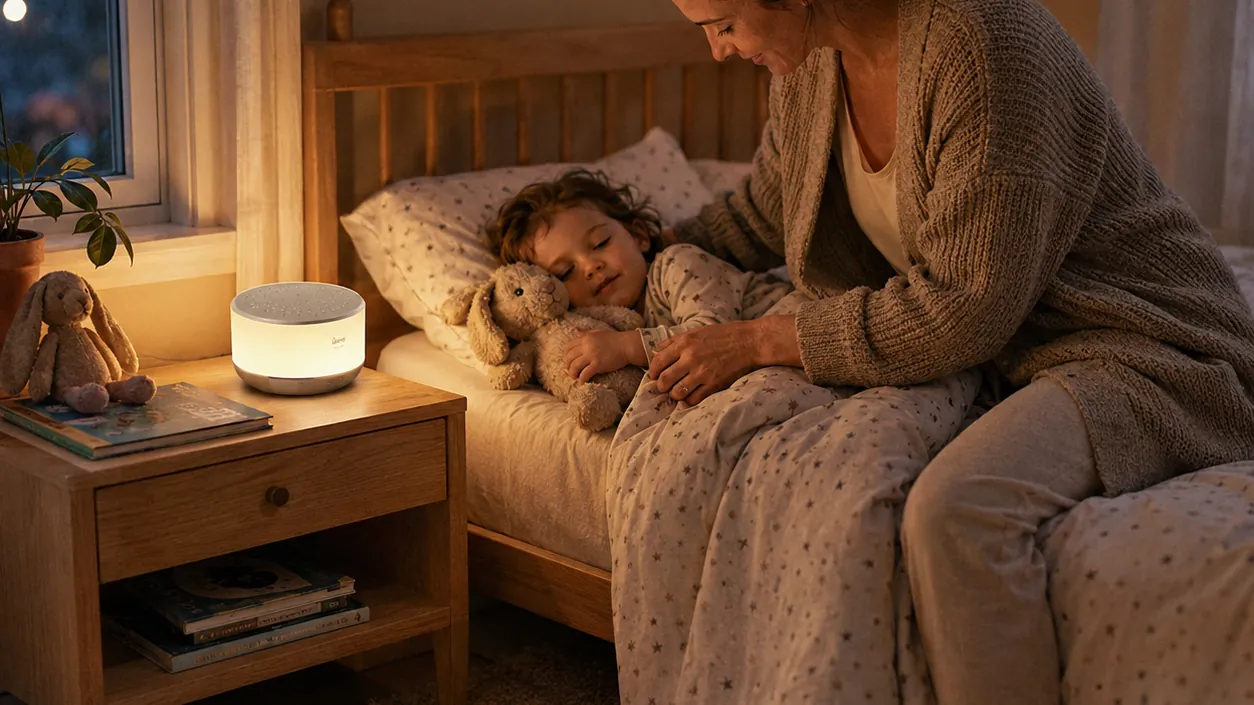
The dark is not the problem. Being alone in it is.
That is why the first night light often fails. A parent buys a lamp, the child still calls out, and everyone decides the child is being difficult. What most children are asking for is a room they can read at three in the morning, so that waking up does not mean working out where they are. A good light does that. A bad one turns the ceiling into a disco and keeps them up.
Ten picks in four groups. Ratings are live Amazon ratings, never ours.
- 1
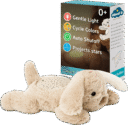 Gentle mini night lightBest if you only buy one thing
 - 2
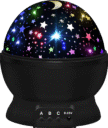 Soft bedside night lightBest for a child who wants it within reach
 - 3
 Calming sensory sea lampBest for a child who needs something to watch
 - 4
 Galaxy star projectorBest for an older child who wants a ceiling
 - 5
 Rotating star projectorBest quiet projector for a small room
 - 6
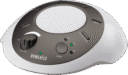 Plain white noise machineBest for a noisy house or a thin wall
 - 7
 Compact sound machine with a lightBest two jobs in one plug
 - 8
 Sound machine with a sleep timerBest if you do not want it running all night
 - 9
 Crib-side soother with musicBest for a toddler still in a crib
 - 10
 Color-changing ready-to-wake clockBest for the five in the morning problem
Group one
The ones that light the room, not the ceiling
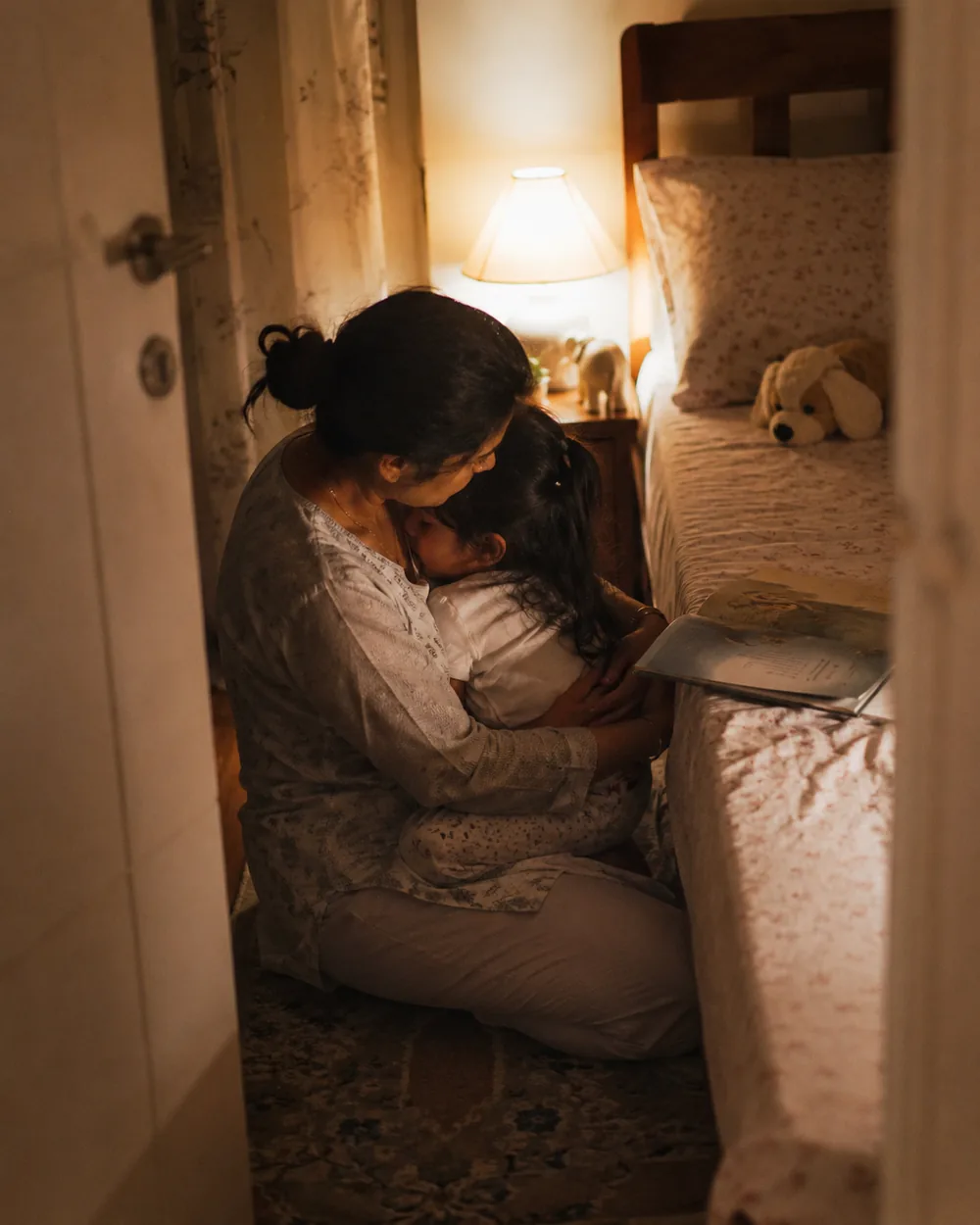
This is the group to start with, and for most families it is the only group they need.
Two things make the difference. Warm color, because blue and white light are the ones that tell a body it is morning. And low placement, because a light at eye level in a dark room is glare, while the same light near the floor turns the room into something a half-asleep child can read.
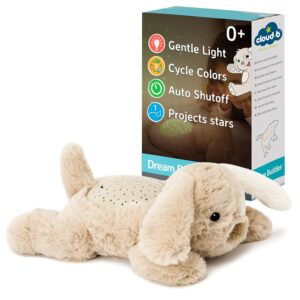
Cloud b Calming Mini Nightlight Star Projector | Gentle Brightness
As an Amazon Associate, Decoded Kids earns from qualifying purchases. Price checked live on Amazon.
If your child wants it in the bed with them, that is worth allowing. A light they can hold is a light they can control, and control is most of what the fear is about. Our piece on why bedtime suddenly turns frightening covers what is usually going on underneath.
Group two
The ones that put something on the ceiling
Projectors are the ones parents buy first and regret most often, so here is the honest version.
They are wonderful for a child who wants a thing to look at while they settle, and they are wrong for a child who is scared. Moving light on a wall makes shadows move too, and a frightened child does not need more movement in the room. Use one as a wind-down for twenty minutes and switch to a plain light for the night.

Listen before you commit as well. Some projectors have a small motor that hums, and a hum in an otherwise silent room is exactly the kind of detail a light sleeper will find.
Group three
The ones that fill the silence
If your child falls asleep fine and then wakes at eleven, the problem is probably not the dark at all. It is the gap between how quiet the room is and how loud the rest of the house gets.
Steady sound closes that gap. It does not need to be a rainforest. Plain shushing or a fan noise works better than anything with a tune, because a tune has a beginning and an end, and the end is what wakes people.
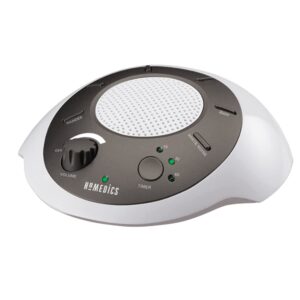
Keep it across the room rather than beside the pillow, and keep the volume at a level you can talk over. Our honest review of a portable sound machine goes into how loud is too loud, and it applies to the mains-powered ones here too.
Group four
The one that answers the five in the morning question
Some children are not frightened and are not waking. They have no way of knowing whether it is night anymore, so they come and ask you, every day, at ten to five.
A clock that changes color answers that question without you. It takes a week or two of dull repetition to land, and then it works for years.
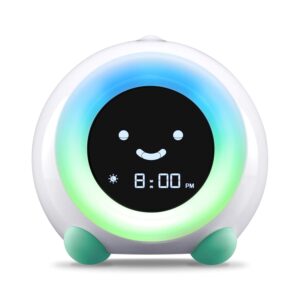
We have written about this one at length, including where it annoys people, in our full review of the ready-to-wake clock. Worth reading before you spend, because it is the priciest thing on this page.
What we would skip this year
Color-changing lights with a remote. They are a toy with a lamp attached. The remote becomes the bedtime negotiation, and the child who was scared of the dark is now awake at nine cycling through purple.
Anything advertised as a sleep aid that goes in a mouth. Supplements are a conversation with your doctor, not a gift-guide purchase, and the evidence for the ordinary boring fixes is stronger than most parents expect.
The honest caveat: we have not tested every item here in our own homes. Ratings are live Amazon ratings, pulled from our product library rather than typed in by us. Picks are chosen on light color, placement and noise, and where we do not know something, we say so.
The light is the smallest part of it
Nothing on this list beats the two free things: the same order every night, and a door left open the same amount.
Children read the room for whether the adults think it is safe. If the light goes on and you leave calmly, the light means safe. If it goes on after twenty minutes of pleading, it means the pleading worked. Same lamp, completely different lesson.
More on sleep and the evening
Frequently asked questions
Warm and dim. Amber, red and soft orange are the least disruptive, while blue and bright white are the ones that signal daytime. Whatever the color, the useful test is whether you can see the room without the lamp itself being uncomfortable to look at.
For a child who wakes and needs to know where they are, yes, as long as it is dim. For a child who only needs help settling, a light with a timer that fades out is often better. The room they fall asleep in is then the room they wake up in.
They help most with waking rather than with settling, because steady sound masks the household noises that break light sleep. Keep the machine away from the pillow and the volume low enough that you can hold a normal conversation over it.
Leave the first comment
Share your thoughts

I'm for the parent mid-meltdown - theirs or the kid's. I write from the actual floor of it: the crying that won't stop, the dinner thrown, the bedtime that unravels. Blunt because I respect you too much to pretend it's easy. Just what tends to work.
More from NourWhat's the one thing that calmed the chaos in your house?
No right answers here - tell us how it went. Someone reading needs to hear it.
Join the conversation