
He Is Twelve, Almost Six Feet Tall and Still Wants the Pillowcase

He asked in the car, looking out the window so he didn’t have to look at you. “Is it weird if I still go this year?” Then he changed the subject to basketball before you could answer.
So you’re googling it at the kitchen table. Fair enough. He’s taller than the neighbor who hands out full-size bars, and his voice cracked twice at dinner.
Is there actually an age limit?
Not one that covers the whole country. A handful of towns have tried, though, and one made the news in a big way.
Chesapeake, Virginia, had a rule on the books from 1970. As Time reported in 2019, the city code made it a misdemeanor for anyone over 14 to trick-or-treat, and for anyone to trick-or-treat after 8 p.m. The mayor said he was “absolutely” against the old rule, and he expected to remove it altogether.
So the real answer to “what time do kids trick or treat” is local. Check your town’s website in early October. Many places post suggested hours, and the street will tell you the rest (when the porch lights go off, you’re done).
In most neighborhoods, nobody is checking ID. The actual limit is social, and your kid already knows it better than any city council does.
Why does a twelve year old still want to go?
Because he’s standing with one foot in each world. Part of him wants to be treated like he’s older. Part of him still wants the candy haul, the dark street and the feeling of being a kid for one more night.
That pull is healthy. Tweens let go of childhood in pieces, and they like to pick the pieces themselves. Our post on the tween who says he’s too old for the Christmas Eve box covers the same push and pull from a different holiday.
There’s a social cost either way. Going can feel babyish if his friends have stopped. Staying home can feel lonely if they haven’t. Some boys won’t tell you which one is bugging them, which is very normal, and why sons go quiet is its own long read.
Your job is small here. Tell him it isn’t weird. Then let him make the call.
When can they go without you?
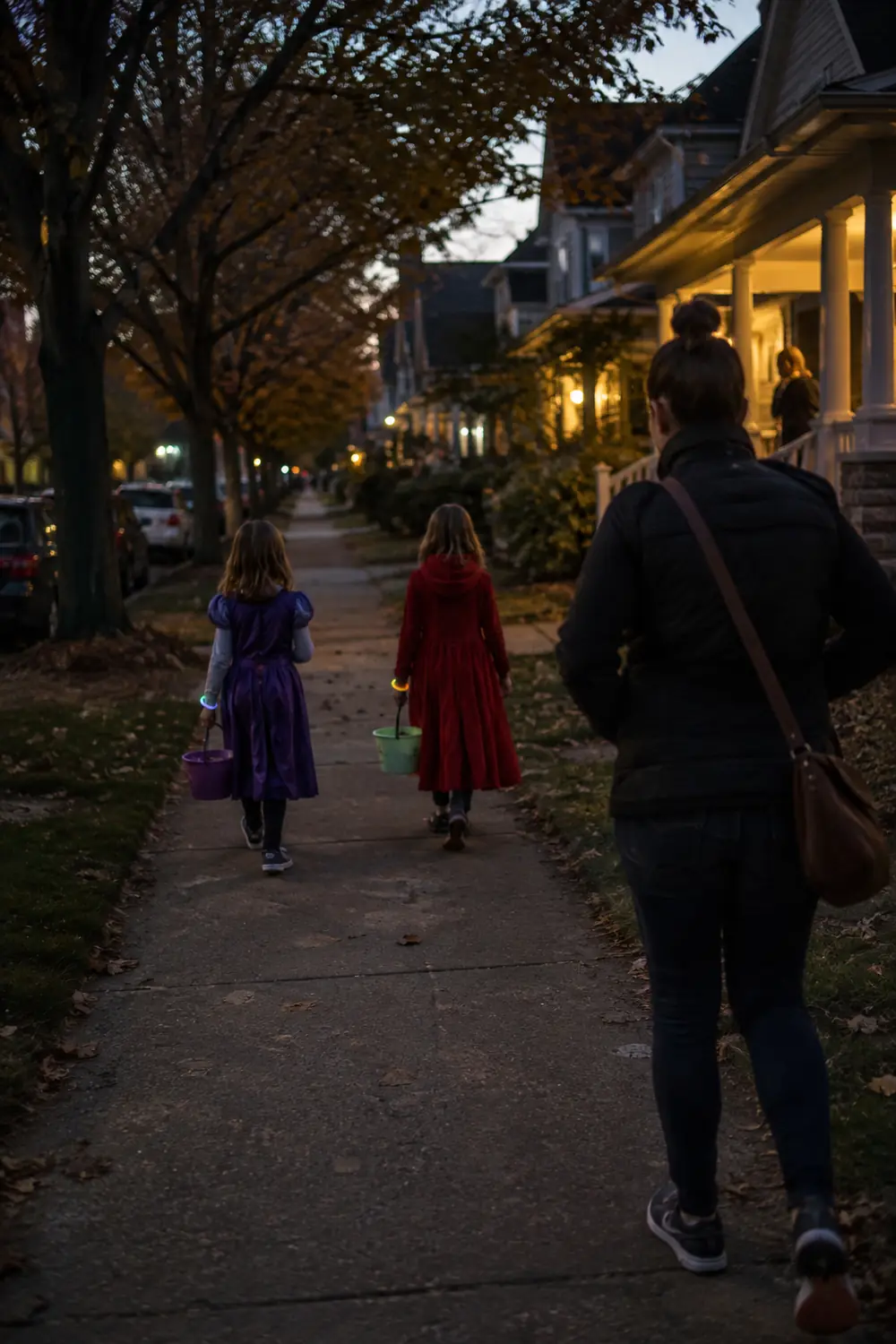
A common line comes from Safe Kids: children under 12 should not be out alone at night without an adult. Think of it as a guide, since kids grow up at different speeds. Plenty of twelve year olds still need you nearby, and a few eleven year olds are ready for half a block of space.
A good middle step is the trailing parent. You walk behind the group, far enough back that nobody has to admit you’re there. Most kids take the deal.
When they do go on their own, keep the rules short and non-negotiable. The American Academy of Pediatrics tells parents of older kids to review their plan and route, agree on a specific time to be home, and have them go in a group. Add a few of your own. A charged phone, with a text when they switch streets. A flashlight. Some glow sticks or reflective tape on a dark costume, even if he rolls his eyes.
Streets need the most care of all. The AAP says to stay on well-lit streets, use the sidewalk, and cross as a group at a crosswalk when there is one. Pick the route together in daylight, so he knows the busy corners before it gets dark and his friends start drifting into the road.
How much riskier are the streets on Halloween?
More than most parents guess. Researchers looked at 42 years of US crash data and published the results in JAMA Pediatrics. The risk of a pedestrian death was 43% higher on Halloween than on nearby evenings, and the average Halloween brought about four extra deaths.
The biggest jump was in kids aged 4 to 8, whose risk was ten times higher that night. Those are the little ones. Still, a group of excited twelve year olds in dark hoodies is hard for a driver to see, and the early evening was the worst stretch.
So the costume matters for more than points. Bright and reflective is better, and the AAP suggests face makeup or a hat as safer choices than a mask.
What does good teen trick-or-treating look like?
This is where teens earn their welcome. Talk it through before the night, once, in a light voice.
A real costume, for a start. A hoodie and a grin does not count. He should say “trick or treat” and “thank you” out loud, take one piece unless he’s told to grab more, and step aside for the little kids on the path. If a small child gets scared of his mask, the mask comes off. If a house has its lights off, walk on by. And if he has a little brother along, the little brother gets to ring the bell.
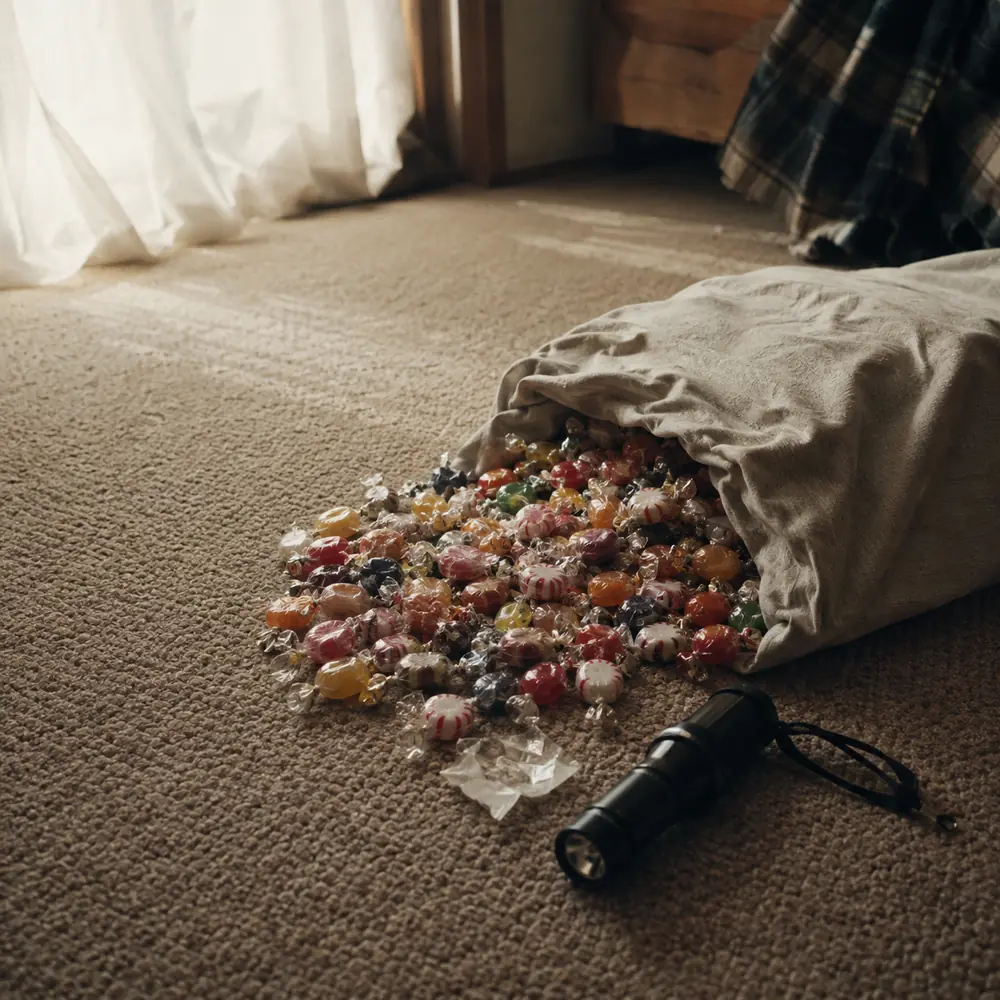
Later, when the candy pile is on the carpet, you can decide together what happens to all of it.
What if he decides this is the last year?
Let him. Don’t argue him back into it, and don’t make it sad in front of him. If you feel a small ache, that’s yours to hold (maybe with a fun-size bar or two from the bowl).
Many kids trade the pillowcase for a job. He can take a younger cousin around, work the door with you, or help set up a trunk-or-treat at school or church. Some go to a friend’s party, and some mostly want to scare the neighbors with a fog machine.
And if he goes back next year after swearing he was done? Also fine. Tweens change their minds about childhood about twice a week. The door stays open, and so does yours.
Leave the first comment
Share your thoughts
Frequently asked questions
There is no age limit that applies everywhere. Most families let the child decide when the last year is. A teen in a real costume who goes with a group, says thank you and makes room for little kids is welcome at most doors.
A few have had them. Chesapeake, Virginia, had a 1970 rule that made trick-or-treating over age 14 or after 8 p.m. a misdemeanor. In 2019 the mayor said he opposed it and expected to remove it. Check your own town’s website for local hours.
Safe Kids advises that children under 12 should not be out alone at night without an adult. After that it depends on the child. Start by walking behind the group, then agree on a route, a group, a return time, a charged phone and a flashlight.
Yes. A study in JAMA Pediatrics using 42 years of US data found the risk of a pedestrian death was 43% higher on Halloween than on nearby evenings. Children aged 4 to 8 faced ten times the usual risk, so bright costumes and crossing at crosswalks really matter.
Wear a real costume, say trick or treat and thank you, and take one piece unless offered more. Let younger children go first, remove a mask if it scares a small child, and skip houses with the lights off. Going in a group and heading home on time helps too.

I'm for the parent about to spend money they're not sure about. I buy the gadget, live with it, and give you the honest verdict - including the 'don't'. I've burned through enough hype to save you the cash, and when something truly earns its place, I'll show you exactly why.
More from TylerWhen did you last feel out of your depth - and what helped, even a little?
No right answers here - tell us how it actually went. Someone reading needs to hear it.
Join the conversation