
The Two Weeks Before School That Actually Matter

You can feel it coming before they say a word. The afternoons are still warm, the backpack’s still shoved in the cupboard, and somewhere around the middle of August your kid goes a touch clingy and a touch wound-up, asking the same question three slightly different ways: do I actually have to go? And you, who have your own quiet knot about the 7am chaos starting up again, are supposed to sound breezy about all of it.
Most back-to-school advice hands you a supply list and a laminator. Useful, sort of. But the thing that genuinely takes the edge off the first morning is smaller, quieter, and it starts a fortnight earlier, in the dark, while they’re asleep.
The countdown that calms (not the supply list)
Kids settle when the day stops surprising them. The single most effective move is to walk their sleep back to a school schedule slowly, instead of slamming it into place the night before term. Pediatric sleep specialists at the Sleep Foundation put it plainly: shift bedtime and wake-up by about 15 minutes every couple of nights, starting two weeks out, so their body clock drifts rather than lurches.
Here’s the whole plan, and it really is this short:
- Two weeks out: nudge bedtime and wake-up 15 minutes earlier every few nights.
- One week out: run the real morning once: up, dressed, fed, shoes on, out the door at the actual time.
- The night before: bath, clothes laid out, lunch packed, bag by the door.
- First morning: one good breakfast, an upbeat song, and enough buffer that nobody has to be hurried.
What “I don’t want to go” is usually saying
The reflex is to fix it fast (you’ll be fine, you’ll love it!), which is warm and well-meant and skips straight past the actual feeling. A worried kid mostly wants to know the worry is allowed to exist. So before the pep talk, get curious: what’s the bit you’re not looking forward to? Sometimes it’s the teacher. Sometimes it’s not knowing where the toilets are. Often it’s something gloriously specific you’d never have guessed.
Giving the worry a name (even an external one) helps small kids feel less swallowed by it. A picture book like The Worrysaurus does this beautifully, turning a vague stomach-churn into a little character you can talk back to. If the nerves are more about the social side, our piece on school anxiety in children goes deeper into what to actually say.
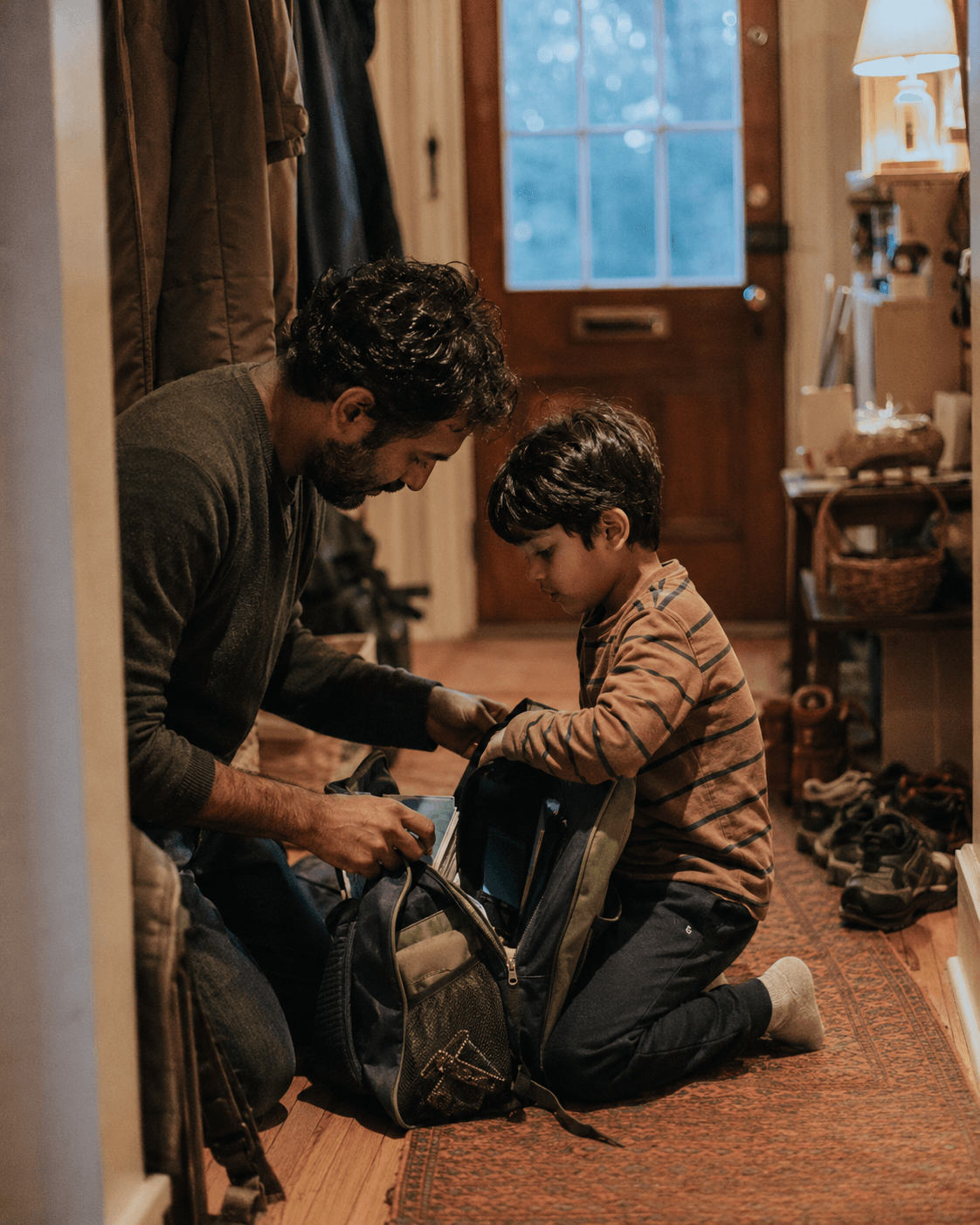
The walk-through that shrinks a big building
Fear loves a blank. A school your child has never properly seen becomes, in their imagination, enormous and full of unknown corridors. The Child Mind Institute recommends doing the boring, brilliant thing: take them on a walk-through before day one. Find the classroom, the toilets, the lunch hall, the gate where you’ll wave them off. Familiar shrinks scary. If you can swing a five-minute hello with the teacher, even better: a face attached to a name does a lot of the heavy lifting.
A morning that doesn’t start in a panic
By the first week of term, the goal is for the routine to belong to them, not to your nagging. This is where a couple of low-effort tools earn their place, not because gadgets fix anything, but because a kid who can see how much time is left stops asking you, and a kid who has a way to name a wobble can move through it. If mornings are a particular battleground in your house, our no-shouting morning routine chart pairs neatly with all of this.
A few small things that genuinely help. Nothing here is a magic wand, but each one quietly takes one job off your plate:
As an Amazon Associate, Decoded Kids earns from qualifying purchases. Price checked live on Amazon.The Worrysaurus

When the nerves are something bigger
Most first-day jitters fade within a week or two of normal school rhythm. Sometimes, though, they don’t, and that’s worth paying attention to rather than waiting out.
Anyway, you don’t have to nail every bit of this. Wind the sleep back, have one honest conversation, do the walk-through if you can, and you’ve covered the part that actually moves the needle. The first morning will still be a small circus. That’s allowed. So is the coffee you drink standing up afterwards.
Frequently asked questions
About two weeks before term. Shift bedtime and wake-up roughly 15 minutes every few nights so their body clock drifts into the school schedule gradually, rather than lurching the night before.
Keep the evening calm and predictable: bath, dim warm light, no screens for the last hour, and a short, honest chat about what tomorrow will look like. Knowing what’s coming is what lets an excited or nervous brain switch off.
Very. Most children feel some first-day nerves, and for the majority it eases within the first week or two of being back. Validating the feeling (rather than rushing to fix it) usually helps it pass faster.
The odd reluctant morning is normal. But fierce, daily refusal (especially with physical symptoms that clear up once they’re home) is worth raising with the school or your GP early, when it responds best to support.
Leave the first comment
Share your thoughts

I'm for the parent mid-meltdown - theirs or the kid's. I write from the actual floor of it: the crying that won't stop, the dinner thrown, the bedtime that unravels. Blunt because I respect you too much to pretend it's easy. Just what tends to actually work.
More from NourWhat's the one thing that actually calmed the chaos in your house?
No right answers here - tell us how it actually went. Someone reading needs to hear it.
Join the conversation