Top pick★ 4.5
Chore Chart for Kids
A magnetic board the kids move themselves, so the chart does the nagging instead of you.
Check price on Amazon
As an Amazon Associate, Decoded Kids earns from qualifying purchases. Price checked live on Amazon.


School mornings with an ADHD child can feel like a badly run airport. Shoes are missing, breakfast took too long, the backpack is somehow empty, and everyone is speaking in urgent weather alerts.
The usual advice is “make a routine.” Lovely. But if the routine lives only in the parent’s head, the child still has to rely on memory, time awareness, task switching, and emotional regulation before 8 a.m. That is a lot.
An ADHD morning routine chart works best when it gets the next step out of your mouth and into the room.
Most routine charts are too pretty, too long, or too far away from the mess. A chart in a bedroom does not help when the shoes are by the door. A ten-step chart does not help a child who already feels behind.
For ADHD mornings, the chart needs to be short, visible, and placed where the action happens. It should answer one question: what is the next step?
Start with five steps: clothes, breakfast, teeth and hair, shoes and coat, backpack and out. If your child is younger, use pictures. If your child reads well, use one or two words per box.

This kind of checklist can help when mornings turn into the same five reminders on repeat. I’d place it somewhere your child already walks past, like beside the bedroom door or near the breakfast table, so the routine becomes something they can see and finish instead of something you have to keep saying out loud.
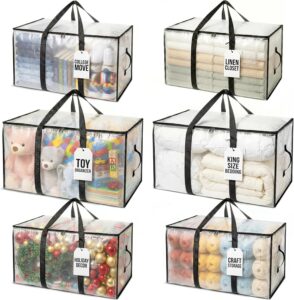
This is the cheap, practical version of a launch box when you do not want to buy a whole organizing system. I’d use one near the front door for shoes, socks, school papers, glasses, library books, or the random toy your child suddenly “needs” to bring. It is not pretty in a Pinterest-perfect way, but that is kind of the point: you can see what is inside, throw things in fast, and stop searching the house five minutes before leaving.

I’ve noticed that long explanations can make a tense morning worse, even when you are only trying to help. A short, calm cue gives your child something to do without turning the whole routine into another conversation.

The chart works better when tomorrow is partly built tonight. Backpack packed, shoes visible, lunchbox ready, timer charged, launch box cleared. Morning asks less because the room remembers more.
| Product | Best for | Rating |
|---|---|---|
| Visual routine chart | Next-step visibility | ★ 4.7 |
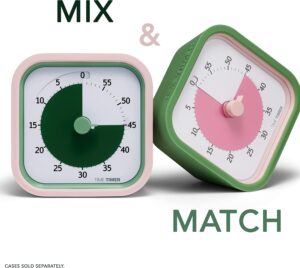
| Visual timer | Time blindness | ★ 4.8 |
| Launch box | Lost shoes, papers, backpack chaos | ★ 4.9 |
Make a launch box tonight.
One box by the door can take a surprising amount of pressure out of the morning. Backpack, shoes, coat, lunchbox, library book, glasses, school forms: anything your child usually forgets goes in one visible place.
The point is not to create a perfect little system. The point is to let the environment do more of the remembering, so you are not chasing missing socks while everyone is already tense.
Use fewer words in the morning.
When your child is overloaded, more explaining often turns into more noise. Try short cues like “check the board,” “next step,” or “timer says five minutes.”
That small shift matters. If you become the talking version of the routine chart, the chart is not doing its job yet. Less talking gives your child less to filter when their brain is already trying to keep up.
Reset the routine the night before.
A visual routine chart works better when the real items are already where your child can see them. Shoes by the door. Backpack packed. Clothes where they belong. Lunchbox ready, or at least not hiding somewhere ridiculous.
The goal is not perfect independence. Not yet. The goal is less friction in the places where mornings usually fall apart.
Introduce the tool when nobody is already melting down.
A chart or timer dropped into a chaotic morning rarely helps the first time. Your child needs a calm moment to touch it, move the pieces, press the timer, and understand what it is for.
Try it on a quiet afternoon instead. Let them help choose where the board lives. Let them test the visual timer when there is no pressure to leave the house. Anyway, a tool feels less like another demand when your child has had a little ownership first.
Start with the stuck place, not the product.
If one part does not work, that is useful information. It does not mean your child failed, and it does not mean the whole routine idea is wrong.
Shorten the routine. Move the chart lower. Make the launch box bigger. Use pictures instead of words. Start with the moment that keeps going wrong (shoes, breakfast, screen time, getting dressed) and build the ADHD-friendly morning routine around that one pressure point first.
Honest picks with real Amazon ratings.
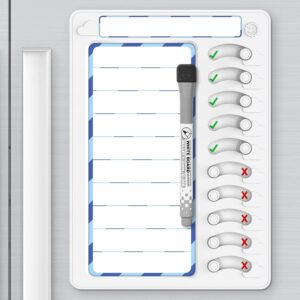
A magnetic board the kids move themselves, so the chart does the nagging instead of you.
As an Amazon Associate, Decoded Kids earns from qualifying purchases. Price checked live on Amazon.
Shows time shrinking as a red disc, so five more minutes stops being invisible.
A bigger silent countdown for the wall when the whole room needs the same clock.
They can help when they are short, visual, and placed where the routine happens. The chart should show the next step, not a long list of adult expectations.
Start with five steps: clothes, breakfast, teeth and hair, shoes and coat, backpack and out. Use pictures or very short labels.
Use a launch box by the door. Put shoes, socks, school papers, glasses, forms, and small distractions in one predictable place so the environment does more of the remembering.
No. A routine chart can reduce morning friction, but it does not diagnose, treat, or replace care from a clinician. It is a practical support, not a cure.

© 2026 DECODED KIDS · PRIVACY · AFFILIATE DISCLOSURE · TERMS

I'm for the parent whose mornings keep falling apart. I didn't train in ADHD - I lived it with three kids, then read the actual studies, so what you get here holds up in a real kitchen at 7:50 a.m. Specific, tested at home, never preachy.
More from MarcusNo right answers here - tell us how it went. Someone reading needs to hear it.
Join the conversation