
Co-Parenting Christmas Schedules: 4 Options That Spare Your Kid the Midday Handoff
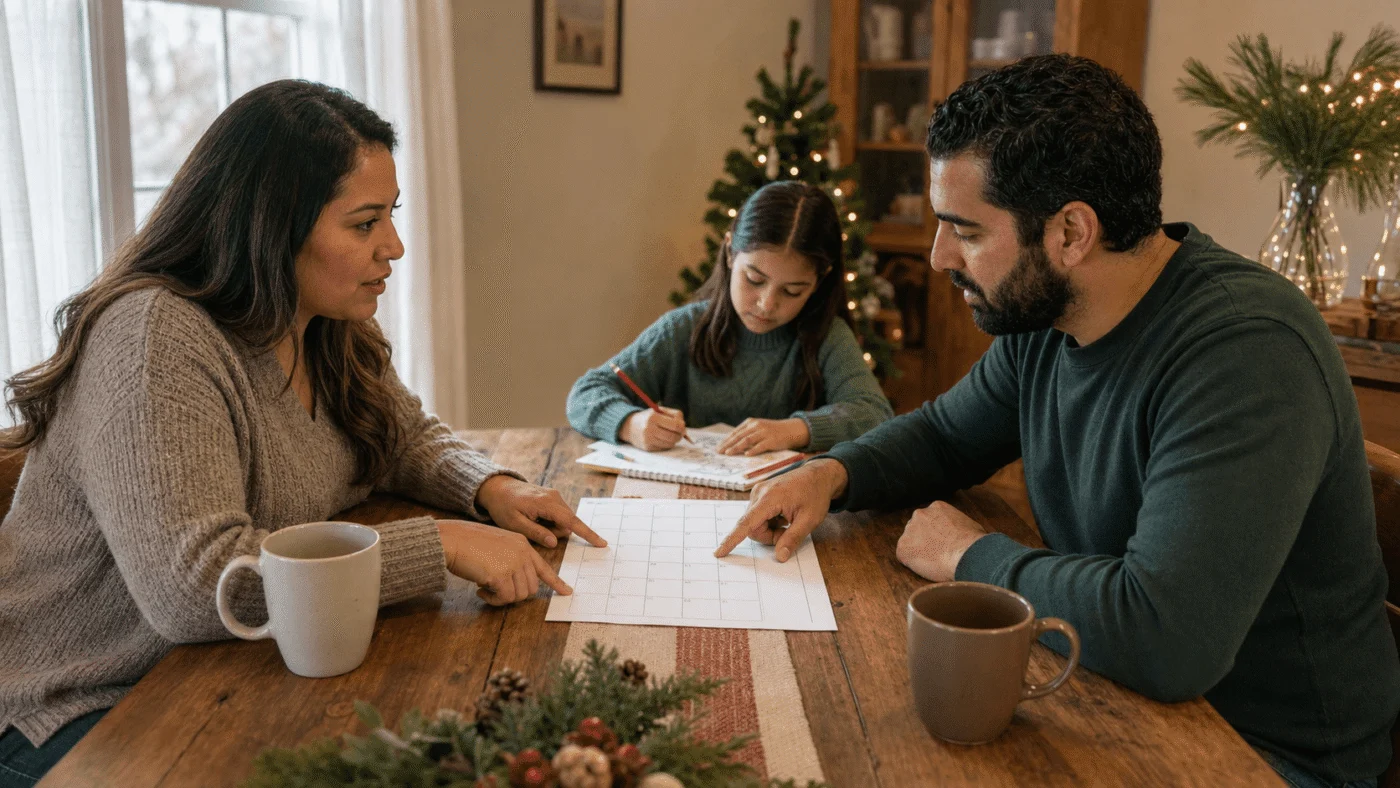
Half the presents are open, breakfast is still on the table, and somebody is watching the clock. Your child feels it too. At 11:45, Christmas turns into shoes, bags and the question of which new toy can come in the car.
A calmer co-parenting Christmas schedule usually has fewer rushed handoffs and longer blocks in one place. Follow your parenting order first. Within it, choose the pattern your child can understand before the day starts, even when that means the adults do not get identical hours.
What should decide the Christmas schedule?
Start with the boring facts: your current order or written agreement, travel distance, work shifts, your child’s age, and which traditions matter to them. A toddler may need shorter separations. An older child may want enough time to see cousins or finish a movie without packing again.
The American Academy of Pediatrics puts the emphasis on predictability rather than on fairness between the adults: keep the ordinary rhythms recognizable, agree the same basic rules in both houses, and settle the arrangement early enough that nobody is negotiating in front of the child. Custody terms themselves come from your own court order and vary by state, so treat this as planning guidance and not legal advice.
“Parents living separately should agree on a set of consistent rules for both households.”American Academy of Pediatrics
Which of these four schedules fits your family?
| Schedule | Sample pattern | Best fit | Main pressure point |
|---|---|---|---|
| Split Christmas Day | 9 a.m.–1 p.m. / 1:30–7 p.m. | Homes close together; order requires a split | The handoff cuts through the day |
| Alternate the full day | Christmas Day switches each year | Long travel; lower tolerance for exchanges | One parent waits until next year |
| Eve / Day split | Christmas Eve with A; Christmas Day with B | Both days carry real traditions | Agree the overnight exchange time |
| Two holiday blocks | Dec 22–26 / Dec 26–30, reversed next year | Distance, blended families, trips | Longer stretch away from each parent |
Split Christmas Day
Try: Parent A from 9 a.m. to 1 p.m.; one 30-minute exchange window; Parent B from 1:30 to 7 p.m.
This can satisfy an existing same-day arrangement, but the transition needs a hard edge. Do not schedule lunch at 12:45 and call that flexible. Pack the bag the night before, choose one pickup point, and use the same short goodbye from your regular custody handover routine.
Alternate the full Christmas Day
Try: Parent A has December 24 at noon through December 26 at 10 a.m. in even years; Parent B has that block in odd years.
Your child gets one unbroken Christmas morning. The emotional bill lands with the adults, because one of you misses the day each year. Build a real celebration on the other date instead of treating it like the consolation round. Kids are surprisingly open to “our Christmas is Saturday” when you mean it.
Christmas Eve / Christmas Day
Try: Parent A has December 24 at 10 a.m. through December 25 at 9 a.m.; Parent B has December 25 at 9:30 a.m. through December 26 at 10 a.m. Reverse next year.
This works when Christmas Eve already holds dinner, faith traditions or a family gathering. The morning exchange can still sting, so agree whether gifts are opened before or after it. Please do not make your child leave one half-open pile for another.
Two holiday blocks
Try: Parent A has December 22–26; Parent B has December 26–30. Reverse the blocks next year.
Long blocks suit families with several hours of travel or blended-family calendars. They also give your child ordinary downtime, which can be the nicest bit. For younger children, count the nights on a simple calendar and keep calls short enough that they do not swallow the visit.
How do you make the plan visible to your child?

Tell them the plan once it is settled, not while you are still bargaining. Use sleeps and landmarks: “Two sleeps here, Christmas breakfast with Dad, then Mom picks you up after lunch.” Let them ask the same question again. Repetition is how the plan gets solid.
A paper calendar in each home can help younger children see the same order of events. Keep colors neutral and names plain. No sad faces on the days they are away from you. The calendar is there to hold the plan so your child does not have to.
Affiliate note: If you buy through the product link below, Decoded Kids may earn a commission at no extra cost to you. This planner is an optional household aid, never a substitute for a parenting agreement or court order.
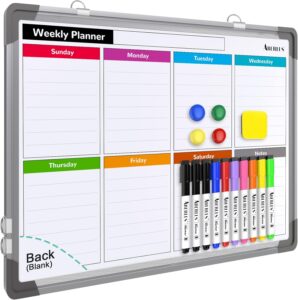
Weekly Calendar Whiteboard for Wall, 16×12 Inches Dry Erase Board, Small Magnetic White Board…
As an Amazon Associate, Decoded Kids earns from qualifying purchases. Price checked live on Amazon.
What should the confirmation message say?
Keep the message dull, specific and easy to retrieve later. One date format, one location, one bag plan. Do not tuck old grievances into the final sentence.
Confirming Christmas: pickup is December 24 at 10:00 a.m. at the library parking lot. Return is December 26 at 10:00 a.m. at the same place. Sam will bring the blue overnight bag, winter coat and medication in the labeled pouch. Please reply “confirmed” or send one specific correction by Friday at 6:00 p.m.
If direct planning turns into pressure, threats or endless circular messages, a more structured parallel-parenting approach may be safer. Mediation also has to account for coercive control. Mediation is not the right room for every family.
Pack once, then let Christmas be ordinary
Put clothes, medication, comfort items and the agreed traveling gifts in one bag the night before. Take a photo of anything that must come back. At the exchange, say the next reunion time and go. Your child does not need a perfect equal split. They need permission to enjoy where they are.
Frequently asked questions
The fairest schedule follows the parenting order and gives the child predictable, meaningful time with both parents. Fair does not always mean identical hours on December 25. Alternating the full day or dividing Christmas Eve and Christmas Day often creates a calmer holiday than a rushed midday split.
Split the day when your order requires it or both homes are close and your child handles transitions well. Otherwise, one longer block usually protects meals, play and rest. If you do split the day, use one clear handoff window and avoid making the child leave during a main tradition.
Start before travel, tickets and extended-family plans are fixed. Many families benefit from confirming the schedule several weeks or months ahead, depending on their order and distance. Put the final dates, times, location and transport responsibility in writing so the child hears one settled version.
Return to the current court order or written agreement and make one specific proposal in writing. Avoid bargaining through the child. A qualified family-law professional or suitable mediation service can explain options where you live. When coercive control, abuse or safety concerns exist, get specialist support before mediation.
Children can say which traditions and people matter to them, but they should not carry the final choice between parents. That can create guilt and a loyalty bind. Adults should make the decision within the parenting order, then explain the settled plan in simple, neutral language.