



DECODED KIDS

Top 5 Sensory Tools for Kids That Actually Get Used

A child curled comfortably inside a stretchy sensory body sock on a rug with fidget toys nearby
BY TYLER BROOKS · UPDATED 20.06.2026 · REVIEWED FOR ACCURACY · 7 MIN READ

In this guide

  1. The five tools worth knowing
  2. How to choose without wasting money
  3. What to keep near the hard moments

You can buy a whole drawer full of calming tools and still have nothing useful when your kid is under the table, chewing their sleeve, or melting down because the room got too loud.

So this is not a giant list of forty sensory toys. Most of those become clutter with good intentions. This is the shorter version: five tools parents actually reach for again and again, because they solve a real moment.

Exact test sentence: A small tool in the right place can make the hard moment easier to handle.

Old mark: A small tool in the right place can make the hard moment easier to handle.

New mark: A small tool in the right place can make the hard moment easier to handle.

The best sensory tool is not the cutest one. It is the one your child can use when life gets too loud, too fast, or too much.

The five tools worth knowing

Start with the problem, not the product. If sound is the fight, look at ear defenders. If sitting still is the fight, try movement or deep pressure. If busy hands keep stealing the show, go quiet and simple.

One good tool in the right place beats a perfect sensory basket nobody remembers to use.

OUR PICK — AFFILIATE LINK
A stretchy body sock gives deep, even pressure for kids who crash into cushions, hide under blankets, or ask for tight hugs. Use it for calm play or after-school decompression, not as a restraint.
ALSO RECOMMENDED
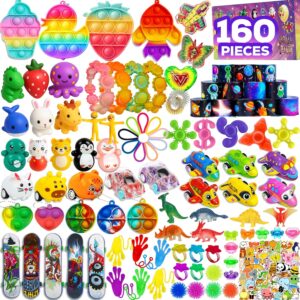
A quiet mixed fidget set helps you learn what your child actually reaches for. Skip loud, flashy toys for school. The useful fidget is the one that keeps hands busy while the brain comes back to the task.
ALSO RECOMMENDED
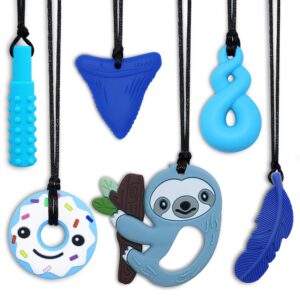
For the child who chews sleeves, pencils, or collars, chewelry gives their mouth a safer place to go. Choose age-appropriate silicone, check it often, and wash it like any other tool that lives in a kid’s mouth.
ALSO RECOMMENDED
A weighted lap pad gives deep pressure without the drama of a full blanket. It can help during homework, reading, car rides, or quiet time. Your child should always be able to remove it by themselves.
ALSO RECOMMENDED
A liquid motion timer gives busy eyes something slow to watch. It will not fix a meltdown, but it can help some kids settle during transitions, waiting, or a low-demand calm-down moment.
COMPARE: 5 SENSORY TOOLS FOR KIDS
ProductBest forRating
Body sockDeep pressure★ 4.6
Quiet fidget setBusy hands★ 4.5
ChewelryChewing sleeves★ 4.6
Weighted lap padHomework and reading★ 4.7
Liquid motion timerTransitions★ 4.5

How to choose without wasting money

You do not need all five. Pick the tool that matches what your child already does when they are trying to cope.

If they chew, start with chewelry. If they seek pressure, try a lap pad or body sock. If their hands need a job, try a quiet fidget. If they stare at spinning fans or falling glitter, a visual timer or bubbler may help.

Keep the tool where the hard moment happens. A lap pad in the homework chair beats one hidden upstairs. Ear defenders in the car beat ear defenders in a perfect basket by the sofa.

FAQTools & Apps

Frequently asked questions

Start with the problem you see most. If noise is the trigger, try ear defenders. If your child seeks pressure, try a weighted lap pad or body sock. If busy hands are the issue, try a quiet fidget.

No. Autistic and ADHD kids may use sensory tools, but any child can need help with sound, movement, touch, waiting, or calming their body after a long day.

Sometimes. A quiet fidget can give busy hands somewhere to go. Loud, flashy, or toy-like fidgets can become the distraction instead.

Use a sensible weight, supervise younger children, and make sure your child can remove the lap pad by themselves. Ask a clinician first if your child has breathing, mobility, or medical concerns.

Decoded Kids tools editor portrait placeholder
Written by Tyler Brooks
Tests parenting apps, gadgets, and tools so families waste less money on things that do not help
WHILE YOU’RE HERE…

When Your Child Seems Numb, Not Naughty

The Books That Got Me Through Co-Parenting

Co-Parenting When You Can Barely Text Each Other

Top 3 Amazon Tools for Children With ADHD

Top 5 Reasons Your Child Won’t Sleep

Top 5 Reasons Kids With ADHD Struggle at School

When Your Child’s Anxiety Looks Like Anger

Top 3 Calming and Sensory Tools for Kids

Top 5 Reasons Children Become Fussy Eaters

When Your Child Says I Hate You

AFFILIATE DISCLOSURE: THIS GUIDE CONTAINS AFFILIATE LINKS. DECODED KIDS MAY EARN A COMMISSION AT NO EXTRA COST TO YOU.

DECODED KIDS

© 2026 DECODED KIDS · PRIVACY · AFFILIATE DISCLOSURE · TERMS

JOIN THE CONVERSATION

Leave the first comment

Share your thoughts