The Best Ear Defenders and Headphones for an Overwhelmed Kid
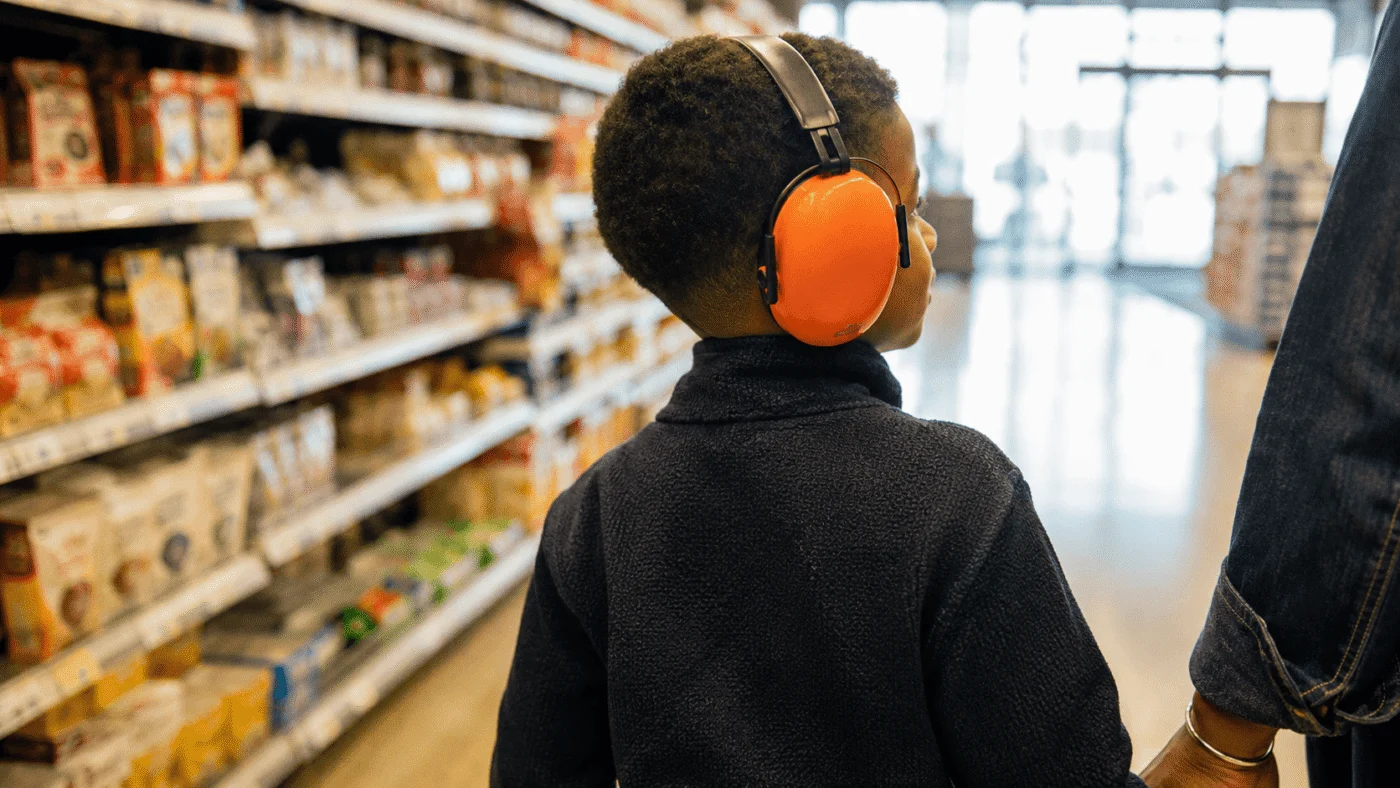
A packed supermarket on a Saturday morning. A school corridor ten seconds before the bell. The birthday party where every child is shouting and someone keeps popping balloons. For most people, these things are just a bit much. For some children, they are genuinely unbearable.
Sound sensitivity isn’t a behavior choice. It’s a nervous system thing. Some children’s auditory systems pick up environmental noise with far less filtering than average, meaning what registers as background hum to you lands on them like a direct feed. Research published in the journal Pediatrics found sensory over-responsiveness in roughly 1 in 6 typically developing children, and that figure rises considerably in children with ADHD, autism, or anxiety.
Ear defenders don’t fix the underlying sensitivity. But they give your child something quite rare in these moments: actual control over their own sensory input. And that changes things.
Does it matter if it’s ear defenders or noise-canceling headphones?
It really does. They work differently, and for sensory-sensitive children the distinction is worth understanding before you buy anything.
Ear defenders (also called ear muffs) work passively. Thick, foam-cushioned cups sit over the ears and block ambient sound through physical insulation. No batteries, no electronics. Just quieter. The NRR (Noise Reduction Rating) on the packaging tells you how many decibels they reduce; most good children’s models land between NRR 22 and NRR 28.
Noise-canceling headphones work via small microphones that detect ambient sound and generate an opposing frequency to cancel it out. They handle steady background noise well, the low hum of a plane cabin, a long car trip, an open-plan space. The reduction is often less than good ear defenders, though, and the sound they create isn’t true silence. It’s an altered version of silence, and some sensory children find that more unsettling, not less.
For sound protection in chaotic or unpredictable environments, passive ear defenders are usually the better starting point. The quiet they create is consistent. Noise-canceling headphones become genuinely useful when your child also wants to listen to something, like a familiar audiobook, white noise, or a known playlist, to replace unpredictable external sound with something they can control.
What to look for
Not all ear defenders designed for children are equal, and a pair a child finds uncomfortable won’t be worn when it counts.
NRR rating. For everyday noisy environments, a busy store, a school corridor, a loud restaurant, an NRR of 22 to 25 is usually sufficient. For louder events like fireworks, concerts, or a sports stadium, NRR 25 to 30 gives more reliable protection.
Weight. This matters more than it looks. Lightweight models under 200g get worn; heavier ones end up staying at home. The weight difference is often where manufacturers chose to cut costs.
Cushioning. Memory foam cushions are kinder than standard foam, particularly for children who are also touch-sensitive. Leatherette seals well acoustically but can feel sticky in warm weather. If your child has strong tactile preferences, look for fabric-covered cushion variants.
Headband adjustability. Children grow quickly, and heads vary enormously in size. A telescoping headband means the pair that fitted at five will still fit at eight.
Foldability. Models that fold flat fit in a school bag and make it to the school fair. Rigid designs tend to stay in the car.
Color. Let your child choose. It sounds minor, but a child who picked the red ones is considerably more likely to put them on in the supermarket doorway than one whose parent grabbed whatever was in stock.
The five pairs worth your money
Once you know the numbers to look for, the shortlist gets mercifully small. These five cover every age and every budget, and each one earns its spot for a different job: a first pair for a baby, a workhorse for school-age kids, and a heavier-duty option for the genuinely loud days out.
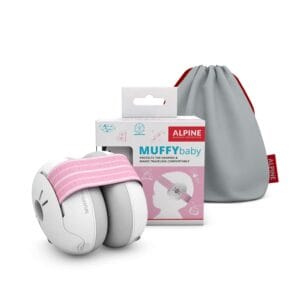
As an Amazon Associate, Decoded Kids earns from qualifying purchases. Price checked live on Amazon.Alpine Muffy (Baby & Toddler)
When they tend to help most
The specific situations vary by child, but certain ones come up again and again. Large supermarkets, particularly near the checkouts or freezer aisles. School assemblies and fire drills. End-of-term fairs. Concerts and fireworks nights. And, notably, haircuts, because the electric clippers are a very common trigger.
Public transport during busy periods, new environments where the soundscape is unpredictable, and the transition moment just before a loud event starts tend to be the hardest. Ear defenders work best when they go on before the overload begins. Once a child is already dysregulated, asking them to put something unfamiliar on their head is a very hard sell.
Getting a reluctant child to try them
Temple Grandin, who has lived with profound auditory sensitivity, described certain sounds as hitting her ears “like a dentist’s drill hitting a nerve.” For some children, that is not much of an exaggeration. And being asked to put something unfamiliar on their head during a difficult moment is its own sensory ask.
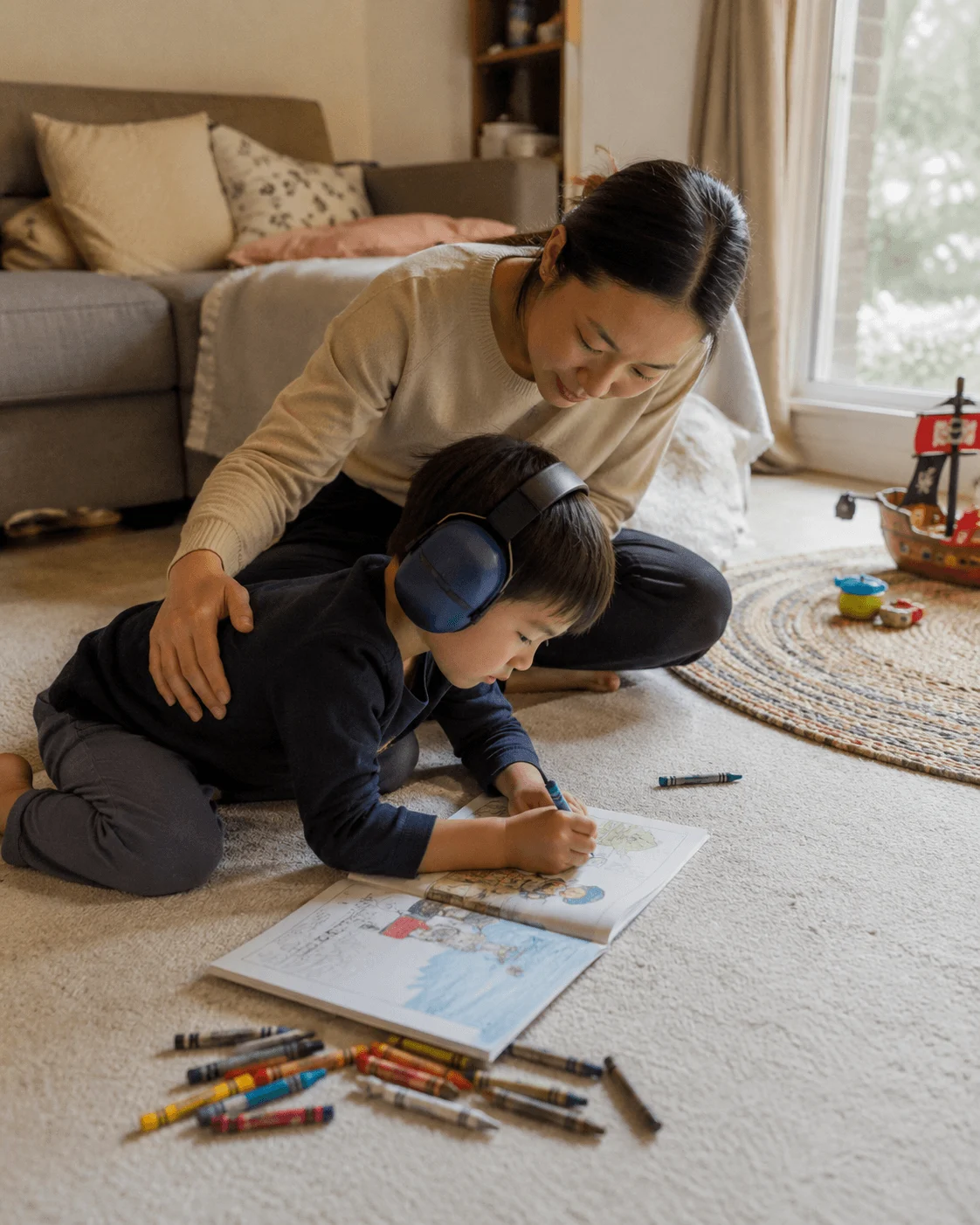
Try introducing them at home first, during something known to be noisy: the vacuum cleaner, the blender, a particularly loud toy. Low stakes, familiar environment. The goal is for the child to notice themselves: oh, this makes that quieter.
Giving them a name helps. “Quiet headphones” or “focus ears” or whatever language fits your child’s world shifts the framing from coping device to just a tool, the same way sunglasses are what you use when it’s bright outside.
Wearing a pair yourself sometimes normalizes them. A parent who treats ear defenders as just another thing in the bag, like a snack or a spare wipe, sends a very different message than one who produces them in a moment of crisis.
If your child genuinely refuses the full cup design, loop-style foam earplugs offer modest noise reduction in a much smaller, less conspicuous form. Brands like Flare Audio make a version sized specifically for children. The NRR is lower, but something they’ll actually wear is always better than the ideal pair sitting in a drawer.
If they also want to listen to something
Some children don’t need silence. They need replacement sound. A familiar audiobook, white noise, or a playlist they know well can make an overwhelming environment manageable in a way that ear defenders alone cannot.
For those children, over-ear headphones with active noise cancellation are worth considering. The key spec is volume limiting. Look for models that cap at 85dB or lower, which is the threshold the World Health Organization cites for safe daily listening exposure. Headphones without a volume limit aren’t safe for children to use independently, whatever the sound quality.
Wired models are simpler for younger children or anyone who tends to lose things. For an older child, wireless over-ear headphones with noise cancellation, a volume cap, and a long battery life are genuinely useful across school, travel, and homework sessions. Right. Those are the three things that matter together.
Frequently asked questions
Yes, for the environments where they’re needed. Passive ear defenders do not damage hearing and do not cause dependency. The concern that ears become more sensitive with protection has not been supported by current audiology research. Daily use in genuinely noisy situations is entirely appropriate.
NRR 22–25 handles most everyday environments, a busy store, a school corridor, a restaurant. For louder events like fireworks or concerts, NRR 25–30 gives more reliable protection. The right rating depends on the specific situation rather than the child’s diagnosis.
Ear defenders block sound passively through physical cushioning. Noise-canceling headphones use electronics to generate an opposing frequency that cancels ambient sound. Defenders typically reduce more total volume and handle unpredictable or chaotic environments better for most sensory children.
Current audiology evidence does not support this. Sensory sensitivity is driven by how the nervous system processes signals, not by what the ears are exposed to. Wearing defenders when needed does not retrain the system to become more sensitive.
Start at home during a low-stakes noise like the blender or vacuum cleaner. Let them hold and examine the defenders before wearing them. Try wearing a pair yourself first. Avoid introducing them mid-meltdown. Loop-style earplugs are a smaller, less noticeable alternative if full cup designs are consistently refused.

I'm for the parent standing in the bookshop, overwhelmed. I read them all - the wise, the smug, the single good idea stretched to 240 pages - so your nightstand stack stays short. I'll point you to what's truly worth it, and kindly, what to put back.
More from MeiWhich tool earned its place - and which was a waste of money?
No right answers here - tell us how it went. Someone reading needs to hear it.
Join the conversation