
My Child Gets a Stomach Ache Before School. Is It Anxiety or Something Else?

The backpack is packed. Shoes are technically on. Then one hand goes to the belly and the whole morning changes.
You want to be kind. You also need to get out the door. That is the awful little hinge this problem lives on.
Why does the stomach get the message first?
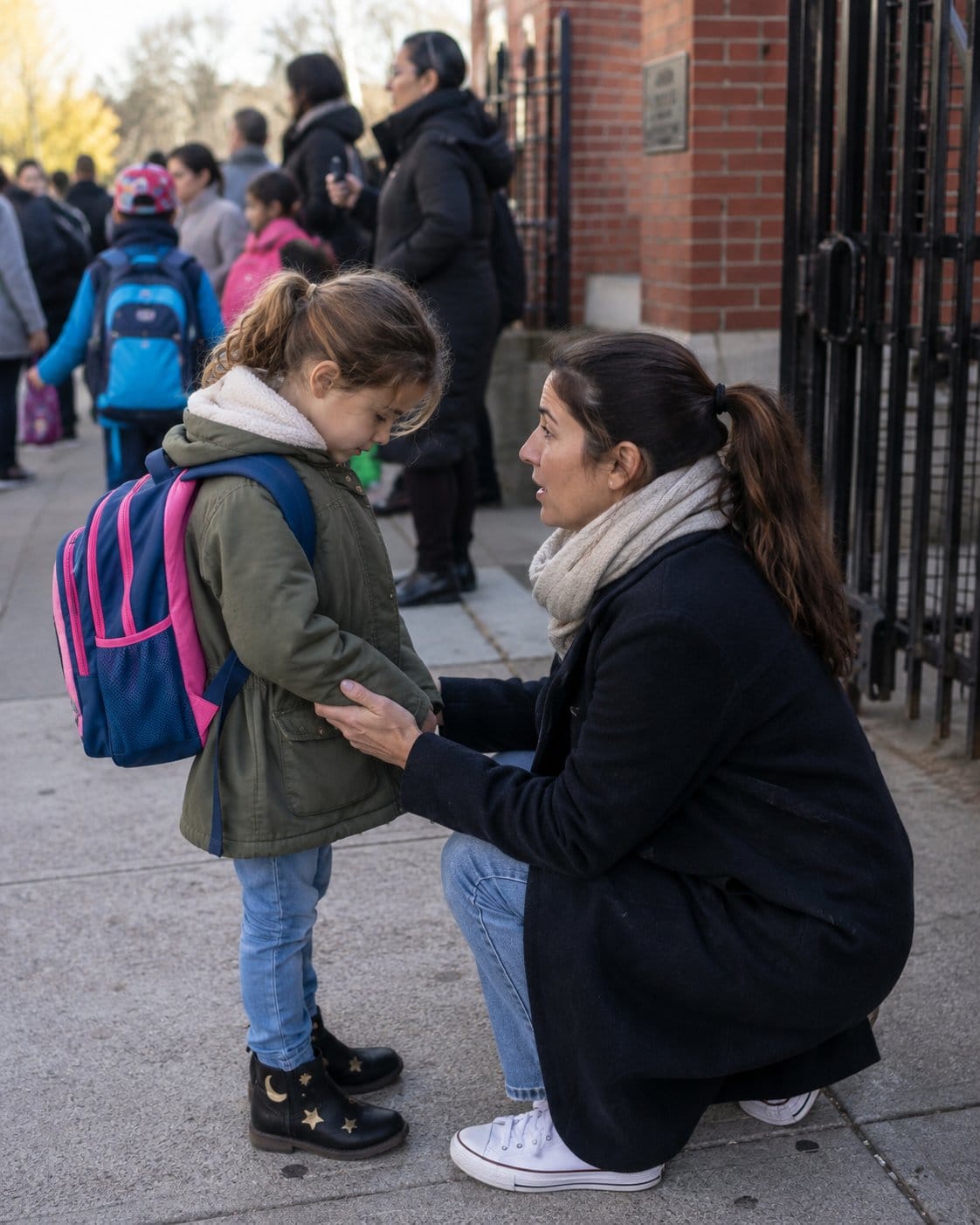
A worried child may not say, “I am scared of the cafeteria noise,” or “I think I will mess up the spelling test.” They say their stomach hurts, because that is the part shouting loudest.
The CDC notes that anxiety in children can show up as trouble sleeping, fatigue, headaches, or stomach aches. HealthyChildren.org says school avoidance can bring headaches, stomachaches, nausea, dizziness, and symptoms that mostly happen on school days.
That does not mean you skip the medical part. It means the medical and emotional parts may be sitting in the same chair, eating the same cereal.
What pattern should you look for?
Write down the boring details for a week. Time of day. Breakfast. Bathroom. Sleep. Test day. Bus day. Friend trouble. Nurse visits. What happened after they stayed home.
The pattern is usually kinder than your panic. Pain that appears at the exact same doorway moment and eases by mid-morning is different from pain with fever, vomiting, weight loss, blood, severe tenderness, or pain that wakes a child at night. Those are pediatrician calls, no debate.
If school itself is the stress point, our guide to when your child cannot go to school sits right beside this one. This article is the morning-body version, the “my stomach hurts” version.
What do you do at 7:42 a.m.?
Use one line and repeat it until it becomes furniture: “I believe your stomach hurts. We are helping your body and keeping the school plan.”
Then make the plan physical. Warm water. Bathroom try. Two bites of toast. Heating pad for five minutes if your pediatrician has okayed it. Shoes by the door. No courtroom debate at the table, because debate feeds the loop.
- Check the body without turning the morning into a trial.
- Text the teacher or nurse with the plan before the pattern gets dramatic.
- Keep the return-to-school step tiny, even if the first win is walking through the door.
How do you make school feel possible again?
Ask for one school adult who becomes the landing place. Not a whole committee. One calm person your child knows they can see for three minutes if the belly alarm goes off.
Children’s Health suggests school supports such as water access, a place to stretch, restroom passes, or a nurse plan for stress-related GI symptoms. That kind of plan matters because it tells your child, “You are not trapped there with the feeling.”
And yes, keep checking the ordinary body stuff. Constipation is boring until it wrecks a week. So is too little breakfast. So is poor sleep. Anyway, boring is where half the answers hide.
Give the body a script
Pick one sentence your child can use at school: “My stomach is doing the worry thing. Can I have my water and sit for two minutes?”
That sentence does two jobs. It keeps the pain real, and it gives the school a response that does not accidentally teach your child they have to escalate to be believed.
What to track for one school week
If the stomach ache keeps returning, do a five-day pattern check before you redesign the whole morning. Write down bedtime, wake-up time, breakfast, bathroom, the first complaint, and what happened at school the day before. You are not looking for a perfect diagnosis. You are looking for clues that make the next step smaller. One clue parents often miss is a child who will not use the toilet at school and holds it until home time.
Common patterns are Monday mornings, test days, separation at drop-off, friend stress, and late nights. The first week back from a long holiday is its own spike, which is why the return after winter break needs a runway of its own. If the pain appears only when school is close, anxiety may be part of the picture. If it also appears at night, during play, with fever, vomiting, weight loss, blood, or severe pain, treat that as medical until a clinician says otherwise.
Friend stress is one of the most common ones. If it comes out as nobody likes me, the script in that piece is a calmer place to start than proof.
When anxiety shows up as body pain, some kids also look angry, rude, frozen, or dramatic. That does not mean they are faking. It means their nervous system is trying to escape the thing it thinks is unsafe. If that sounds familiar, read when a child’s anxiety looks like anger next.
A better morning script
Keep the script short enough to repeat when everyone is tired. Try: “I believe your stomach hurts. We are checking your body, then we are doing the next school step.” After that, move to one tiny action: sip water, use the bathroom, put on shoes, sit in the car, or walk to the school door.
The mistake is trying to convince a scared child that school is fine. Reassurance often becomes a debate. A routine works better because it gives the brain proof through repetition. If mornings are messy every August, the two weeks before school routine can help you rebuild that rhythm before the first hard morning arrives.
Frequently asked questions
A stomach ache before school can be illness, constipation, hunger, anxiety, or a mix. The pattern matters. Pain that shows up mostly on school mornings, fades on weekends, and comes with worry, clinginess, or avoidance deserves both a medical check and a school-anxiety plan.
If they have fever, vomiting, diarrhea, severe pain, blood, weight loss, or pain that wakes them at night, call your pediatrician. If symptoms are familiar and anxiety-linked, many experts recommend a calm return-to-school plan instead of repeated staying home, with school support in place.
Yes. The CDC lists stomach aches and headaches among possible physical symptoms of anxiety in children. The pain can be real even when tests do not find a dangerous illness. Treat the body complaint seriously while also looking for stress triggers.
Try: “I believe your stomach hurts. We are going to help your body and still keep the school plan.” That validates the pain without letting the morning turn into a negotiation spiral. Then use the same tiny routine each day.
Ask for help when stomach aches are frequent, school attendance is slipping, your child is distressed most mornings, or you are unsure whether symptoms are medical. Start with your pediatrician, then bring the school counselor or a child therapist into the plan.
Leave the first comment
Share your thoughts
\n

I'm for the parent watching a feeling they can't name and wondering if it's normal. I've spent years close to the child-mental-health research and the specialists behind it, and I carry the heavy parts into plain language. I won't diagnose your child - I'll help you see what you're looking at, and say honestly when it's time to ask someone in person.
More from SofiaWhen did you last feel out of your depth - and what helped, even a little?
No right answers here - tell us how it actually went. Someone reading needs to hear it.
Join the conversation