
ADHD Child Refuses to Do Homework: What to Do Before the Fight Starts

You can feel your jaw tighten before the folder even opens. Your child says no, slides under the table, asks for a snack, loses the pencil, and suddenly one math sheet has turned into the whole evening.
If your ADHD child refuses to do homework, start smaller than your instinct wants. Check hunger, movement, and shame first. Then ask for a two-minute start, not a finished assignment. The goal is to get their brain over the first speed bump without turning you into the homework police.
Why does homework turn into a fight so fast?
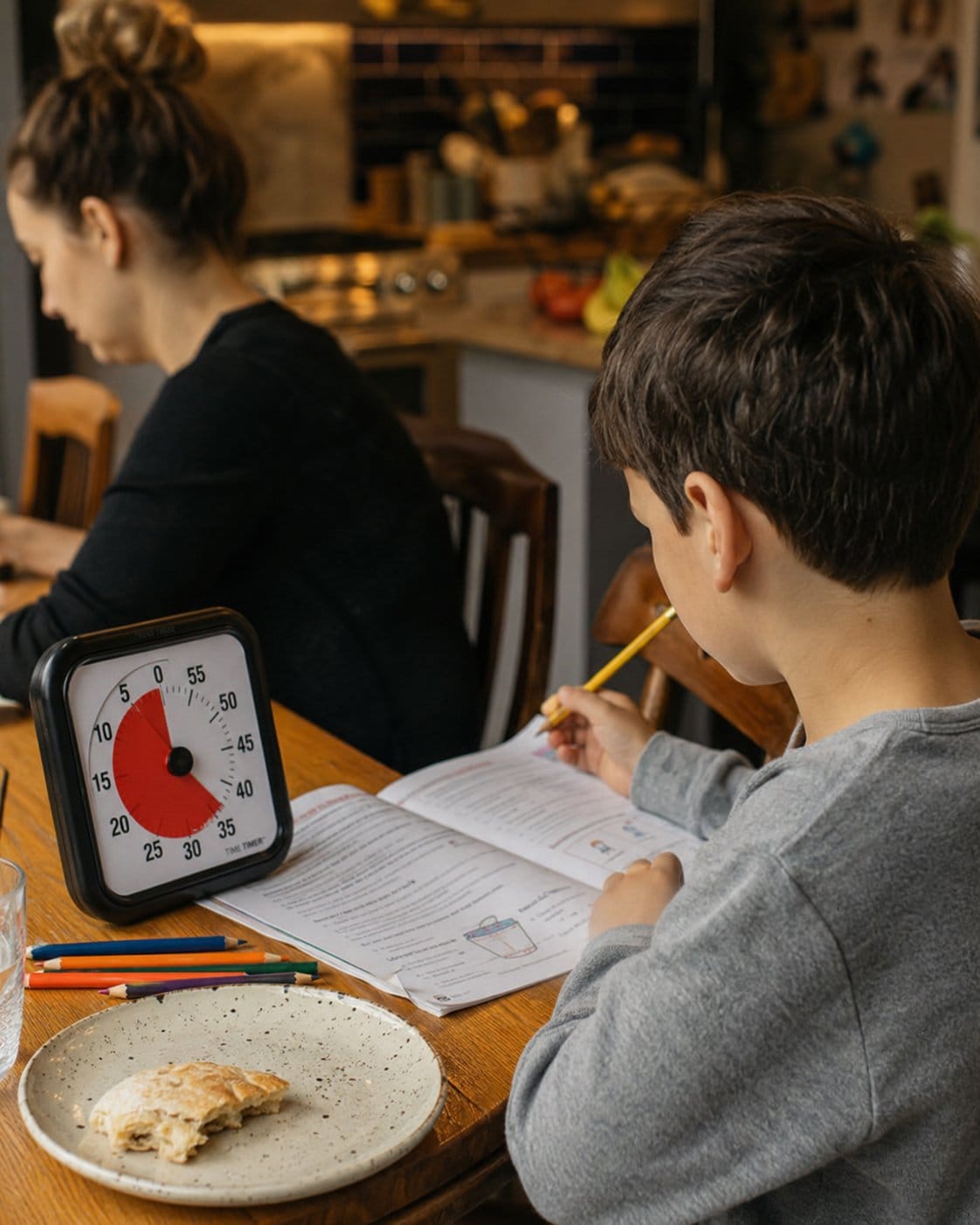
Homework lands at the worst part of the day. Your child has held it together at school, managed noise, copied directions, changed rooms, remembered lunch stuff, maybe swallowed a small social sting, and now the backpack asks for one more performance.
ADHD makes the hidden parts of homework heavier. Starting, planning, shifting attention, remembering directions, and staying with boring work can all feel huge. CHADD is blunt about it: “Homework problems prevent students with ADHD from reaching their full academic potential.” This is a known pattern, not a private failure in your kitchen.
The CDC’s school guidance for ADHD names supports that matter here too: clear tasks, shorter work when needed, breaks, extra warnings, and steady school-home contact.
What do you do before you mention the worksheet?
Start with the body. I know that sounds almost too basic when the missing spelling page is staring at you, but a hungry, wriggly, post-school brain is not going to become organized because you explain consequences harder.
Try a small landing routine before homework. Snack, drink, bathroom, ten minutes of movement, then the folder. Keep it boring and repeatable. If your child has already hit the floor, whispering “snack first” may do more than any motivational speech you were about to deliver.
Then take the shame out of the room. Many kids refuse because the task already feels like proof that they are slow, bad, or behind. Say the quiet part for them: “This looks like a hard start. We can make the start smaller.”
How to get an ADHD child to start homework
The first start should be almost silly. Not “finish math.” Not “do your homework.” Try one micro-start that is too small to argue with.
- Open the folder. That is the whole first job.
- Circle the first problem. Do not solve it yet.
- Write your name. Yes, count it.
- Do two minutes together. Stop when the timer ends, even if it is going well.
- Pick the easiest item first. Momentum beats moral purity here.
After the tiny start, offer a choice that does not change the boundary: “Do you want me beside you or across the table?” “Pencil or marker?” “Timer for five minutes or seven?” Choice gives their nervous system a handhold. Keep it narrow, because nobody needs a negotiation buffet at 5:12 p.m.
When a tool helps, keep it boring
A tool should remove a fight, not become a new project. If the problem is time blindness, use a visual timer. If the problem is remembering the sequence, use a small checklist.
The best tool is the one you can point to without sounding annoyed. “When the red is gone, we stop.” “Check the board.” That is the whole magic trick, and it is not very glamorous. Good.
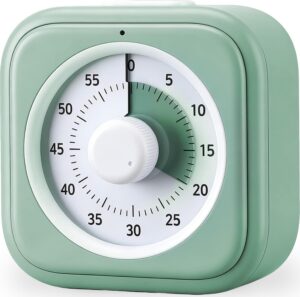
60 Minute Visual Timer
Use it for five-to-ten-minute homework sprints, not as a threat. The timer holds the boundary so your voice does not have to.
As an Amazon Associate, Decoded Kids earns from qualifying purchases. Price checked live on Amazon.
This fits when homework refusal is really “I do not know what happens next.” Keep the steps plain: folder, timer, two problems, break, pack away.
When should you email the teacher?

If homework keeps eating the evening, write the teacher before the relationship gets singed. You are not asking for your child to escape effort. You are asking what the work is meant to practice and how much is enough.
A useful email is short: “We are spending 55 minutes on work meant to take 15. After 20 minutes, accuracy drops and the fight starts. Which part should we prioritize?” That gives the teacher real data instead of a vague “homework is hard.”
Ask about reduced repetition, oral answers, chunked due dates, or doing fewer problems to show the same skill. The CHADD assignment accommodations page specifically mentions decreasing assignment length as a common ADHD support. Some kids need a 504 conversation too, especially when homework is hurting sleep, confidence, or family life.
What if your child still refuses?
Then you stop measuring the night by completed pages for a minute. Look for the pattern. Is refusal worse after screen time? After medication wears off? On writing-heavy days? When directions are vague? When the work is too easy and repetitive? Weirdly, “too easy” can still be painful when the brain has to drag itself through it.
Keep a tiny log for one week: start time, task, mood, minutes worked, what helped, what made it worse. You are not building a courtroom case. You are finding the squeaky hinge.
If your child is saying they are stupid, pause the homework plan and protect the child first. A child who still believes you are on their side matters more.
Make tonight smaller
Tonight, try one tiny start. Not the perfect system. Not a laminated command center. Snack, movement, folder open, two minutes, stop before everyone’s nervous system is crispy.
If that is all you get, it still counts. You taught your child that homework can begin without a war, and honestly, that is not a small thing.
FAQ
Many ADHD kids refuse homework because starting, planning, boring work, and mistakes can feel genuinely hard. Refusal can also come from hunger, fatigue, shame, medication rebound, or unclear assignments. Treat it as a stuck-start problem first, then look for patterns.
Make the first action tiny. Ask your child to open the folder, write their name, circle the first problem, or work for two minutes beside you. Starting is often harder than continuing, so the first goal is momentum, not a finished assignment.
Punishment usually makes homework feel heavier, especially when refusal is tied to shame, fatigue, or executive function. Use calm boundaries, short work sprints, visible supports, and teacher communication. Consequences may be needed, but they should not replace problem-solving.
It depends on age and assignment, but homework should not take over the entire evening. If work meant for 15 minutes regularly takes 45 to 60 minutes, tell the teacher. Ask what skill matters most and whether the assignment can be shortened or chunked.
Home often gets your tired child. School may have structure, peers, teacher prompts, and fewer emotional associations with you. Try a predictable landing routine, a small start, and a visible timer. If the gap stays big, ask school what support is happening there.