
Visual Schedule for Kids With ADHD Printable: A Calm Routine That Gets Used
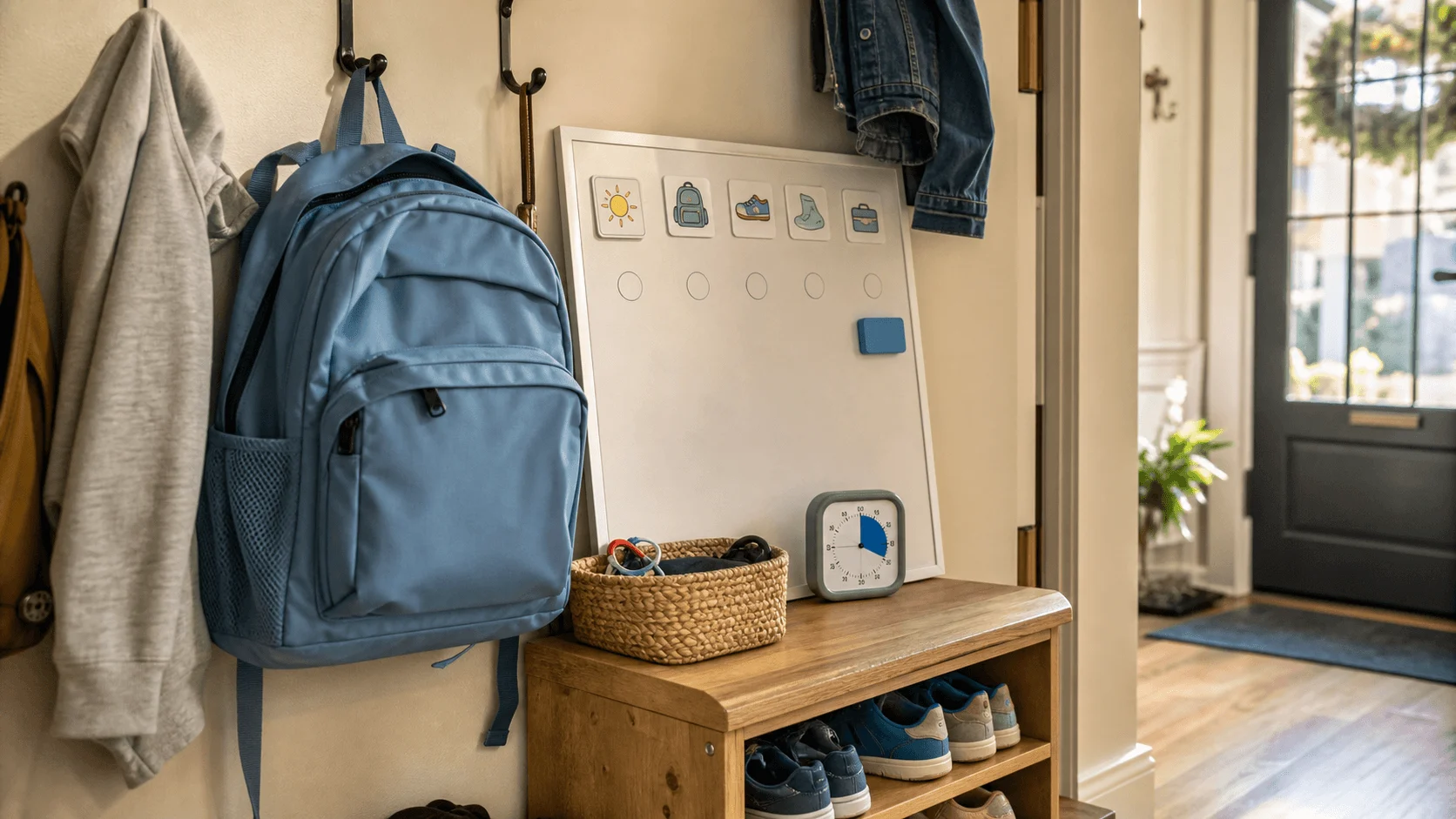
The hard part is not making a pretty chart. The hard part is making a chart your child uses on a Tuesday morning when one sock is missing, breakfast is half-eaten, and you have already said “brush teeth” four times.
A visual schedule for kids with ADHD printable works because it turns a disappearing instruction into something your child can look at again. It does not ask working memory to hold five steps. It puts the next step on the wall, the fridge, or the bedroom door where your voice does not have to carry the whole routine.
Why ADHD kids need the routine to be visible
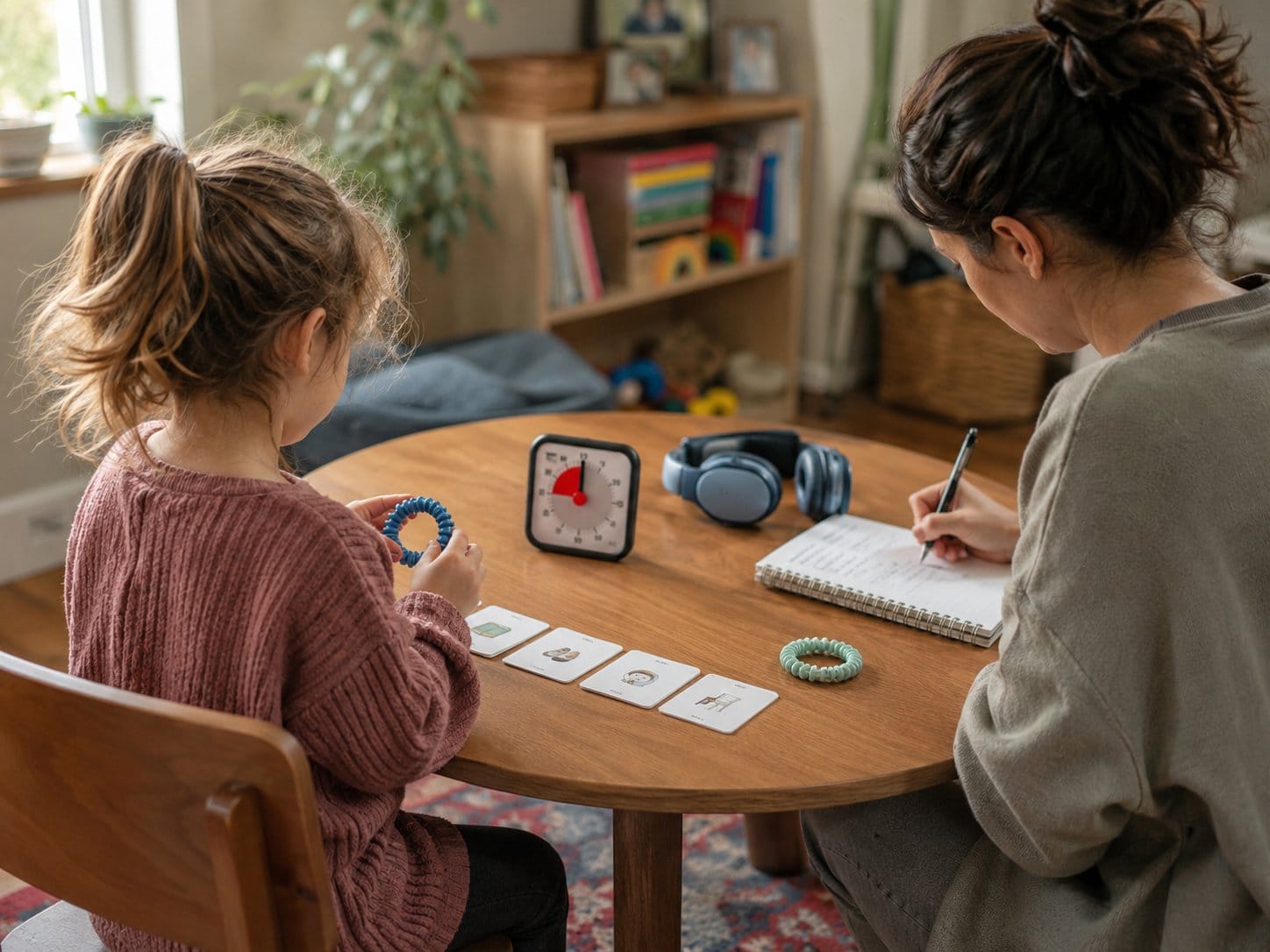
ADHD often makes sequencing, time, transitions, and task switching harder. So a verbal instruction like “get dressed, brush your teeth, pack your folder, and put shoes on” may sound simple to you and evaporate for your child before they reach the hallway.
The CDC notes that children with ADHD often benefit from organizational support, clear tasks, extra warnings before transitions, and predictable routines. A visual schedule is the home version of that support. It makes the invisible parts of routine visible.
A 2022 systematic review on visual activity schedules for children with ADHD found that schedule-based interventions can support on-task behavior and reduce problem behavior, though the research base is still small. That is a useful reminder: this is a support, not magic.
How to make a visual schedule for kids with ADHD printable
Do not start with a giant day planner. Start with the routine that currently eats the most peace: morning, after school, bedtime, homework start, or leaving the house. One routine. One page. One job.
For younger kids, use simple pictures with one or two words under each image. For readers, use short action words. Avoid clever wording. “Shoes” is better than “prepare your feet for departure,” even if the second one makes you laugh at midnight while designing it.
- Keep it short: four to six steps is usually enough.
- Put it where the routine happens: bathroom chart for teeth, entryway chart for shoes, kitchen chart for breakfast.
- Add a done marker: a check box, slider, clothespin, or finished pocket.
- Use the same order daily: predictable beats perfect.
- Review it before the rush: thirty calm seconds helps more than ten tense reminders later.
A simple visual schedule template
Use this basic structure for your printable. Across the top, write the routine name: “Morning Launch,” “After-School Reset,” or “Bedtime Landing.” Under it, make six boxes. Each box gets one picture and one word or short phrase.
For a morning routine, the boxes might be: bathroom, clothes, breakfast, teeth, backpack, shoes. For after school: backpack down, snack, ten-minute break, folder check, homework start, free choice. For bedtime: pajamas, teeth, toilet, book, light, hug.
The tiny trick is the finished action. Some kids like crossing off. Some like moving cards from “to do” to “done.” Some like flipping a tab. The point is not decoration. The point is visible progress.
When you introduce it, do not make a big speech. Try: “This is our new morning map. Let’s see what the map says first.” Then follow the chart with your child for a few days before expecting independence.
When the printable is not enough, try reusable visual schedule tools
Paper is perfect for testing the routine. But some families hit the same problem fast: the printable gets ripped, lost, ignored, or covered in breakfast. That is when a reusable board can help. Not because it is fancier, but because the child can physically move the task to “done.”
I would keep the tools simple. One main board for the routine you are working on, one backup if you have multiple kids or multiple rooms, and one premium option only if the whole family calendar is the real problem.
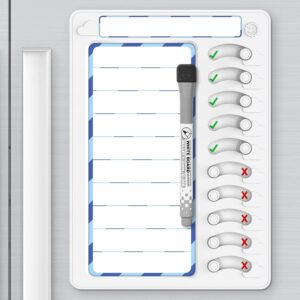
Chore Chart for Kids
This is the most natural upgrade from a printable. Use it when your child likes a physical “done” action and you want one routine board that can live on the fridge or entryway wall.
As an Amazon Associate, Decoded Kids earns from qualifying purchases. Price checked live on Amazon.
This makes sense if one chart becomes a family traffic jam. Give each child a board, or keep one in the bathroom, one by the backpack station, and one near the bedroom.
This is not the first step for a printable routine. It fits better when your older child needs the family schedule, chores, sports, and reminders in one visible place.
What to do when your child ignores the chart
First, assume the chart is giving you feedback. Maybe it has too many steps. Maybe it is in the wrong place. Maybe your child cannot tell what the picture means. Maybe the routine starts at the hardest possible moment.
Try shrinking it before you abandon it. If six steps fail, use three. If morning fails, test it on bedtime. If pictures feel babyish, use icons or words. If words are too abstract, take real photos of your child’s shoes, toothbrush, backpack, and bed.
Also check your own role. For the first week, you are not trying to be silent. You are transferring the reminder from your mouth to the chart. Point first. Talk second. “Check the map” is usually better than repeating the task in a sharper voice.
The calm version of success
The win is not a child who glides through the whole routine like a tiny project manager. The win is smaller and much more real: one less argument, one step they remember without you, one morning where the shoes happen before everyone is late.
Make the printable ordinary. Tape it low enough for your child to touch. Let it be imperfect. Let the corners curl a little. The goal is not a Pinterest board. The goal is a child who can look up, see what comes next, and feel a little less lost inside the day.
FAQ
Use the fewest steps that make the routine clear. For most kids, four to six steps works better than a full-day chart. Good first steps are bathroom, clothes, breakfast, teeth, backpack, and shoes for mornings, or snack, break, folder, homework, movement, and free choice after school.
Yes, they can help many ADHD kids because they externalize the routine. The schedule holds the steps when working memory is tired. It works best when it is short, visible, used daily, and paired with a clear “done” action.
Many kids can start with picture schedules around preschool age, but older kids can use them too. For older children, make the design less babyish: icons, short words, check boxes, or a family command center can feel more respectful.
You can, but the schedule should not depend on a prize every time. Start with visible completion, specific praise, and a natural next step. If rewards help, keep them small and tied to practice, not perfection.
Shrink the routine and make it more concrete. Use real photos, fewer steps, and place the chart exactly where the task happens. For the first week, walk through it together and say “check the map” instead of expecting instant independence.