
Weighted Blanket or Weighted Vest for Your ADHD Kid? How to Choose
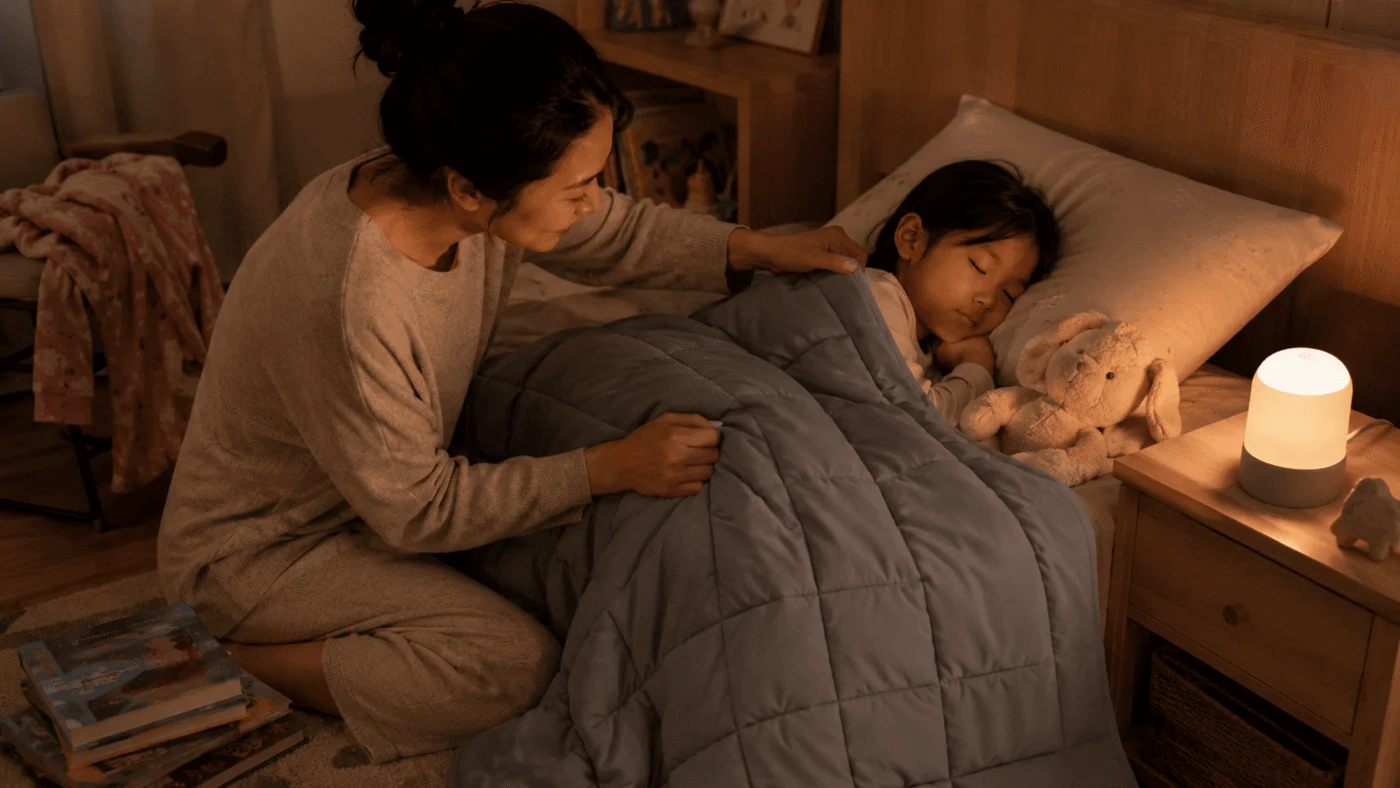
Somewhere between the school’s third email and the 9pm wrestling match that passes for bedtime, somebody said the word “weighted” to you. An OT, a teacher, another parent at pickup. And now you have two tabs open, a blanket and a vest, and no idea if you’re buying sleep or buying focus.
Short version, since you’re tired: the blanket is an evening tool, used at roughly 10% of your kid’s body weight for wind-down and sleep onset; the vest is a daytime tool, worn in short bursts for focus at the desk or calm in loud places. The research backs the calming effect more firmly than any promise of longer sleep, and neither one belongs anywhere near a baby. From there it’s your kid’s actual struggle that decides.
What deep pressure does
Both tools deliver the same input: firm, even pressure across the body, which the nervous system reads as “held.” Occupational therapists call it proprioceptive input; your kid calls it being squished, approvingly. Temple Grandin, who built her famous squeeze machine as a teenager, published a paper on this back in 1992 titled, in full, “Calming Effects of Deep Touch Pressure.” The title has aged well.
Now the honest part. A randomized trial in Pediatrics gave weighted blankets to autistic kids with sleep problems and measured no extra minutes of sleep, and yet the kids and their parents still preferred the weighted blanket and wanted to keep it. Which sounds like a failed study until you’ve watched a spinning kid go still under one. It calms; it doesn’t sedate. Buy it for the calm.
The case for the blanket
If the hard part of your day starts after dinner, the fidgeting through stories, the fourth trip out of bed, the blanket is your tool. The convention OTs use is about 10% of body weight, give or take a pound or two, so a 10 lb blanket suits a kid of roughly 70 to 100 pounds. Under the weight, the wriggle settles, and settling is the doorway sleep walks through.
The safety lines are not negotiable, though. Nothing weighted on a baby or a child under 2, full stop; the American Academy of Pediatrics keeps weighted bedding out of infant sleep entirely. Your kid must be able to push the blanket off alone and tell you they want it gone. And a child with breathing, heart or mobility issues needs a doctor’s yes first.
Kids Weighted Blanket, 10 lb
As an Amazon Associate, Decoded Kids earns from qualifying purchases. Price checked live on Amazon.
The case for the vest
The blanket can’t come to third-period math. That’s the whole argument for the vest: the same pressure, wearable, in doses. OTs typically run vests on a schedule, around 20 minutes on and then a break, because a nervous system that wears weight all day stops noticing it. Homework desk, long car rides, the dentist’s waiting room, assemblies. Under a hoodie nobody at school sees a thing, which matters more to an eight-year-old than any of the sensory theory.
So which one for your kid?
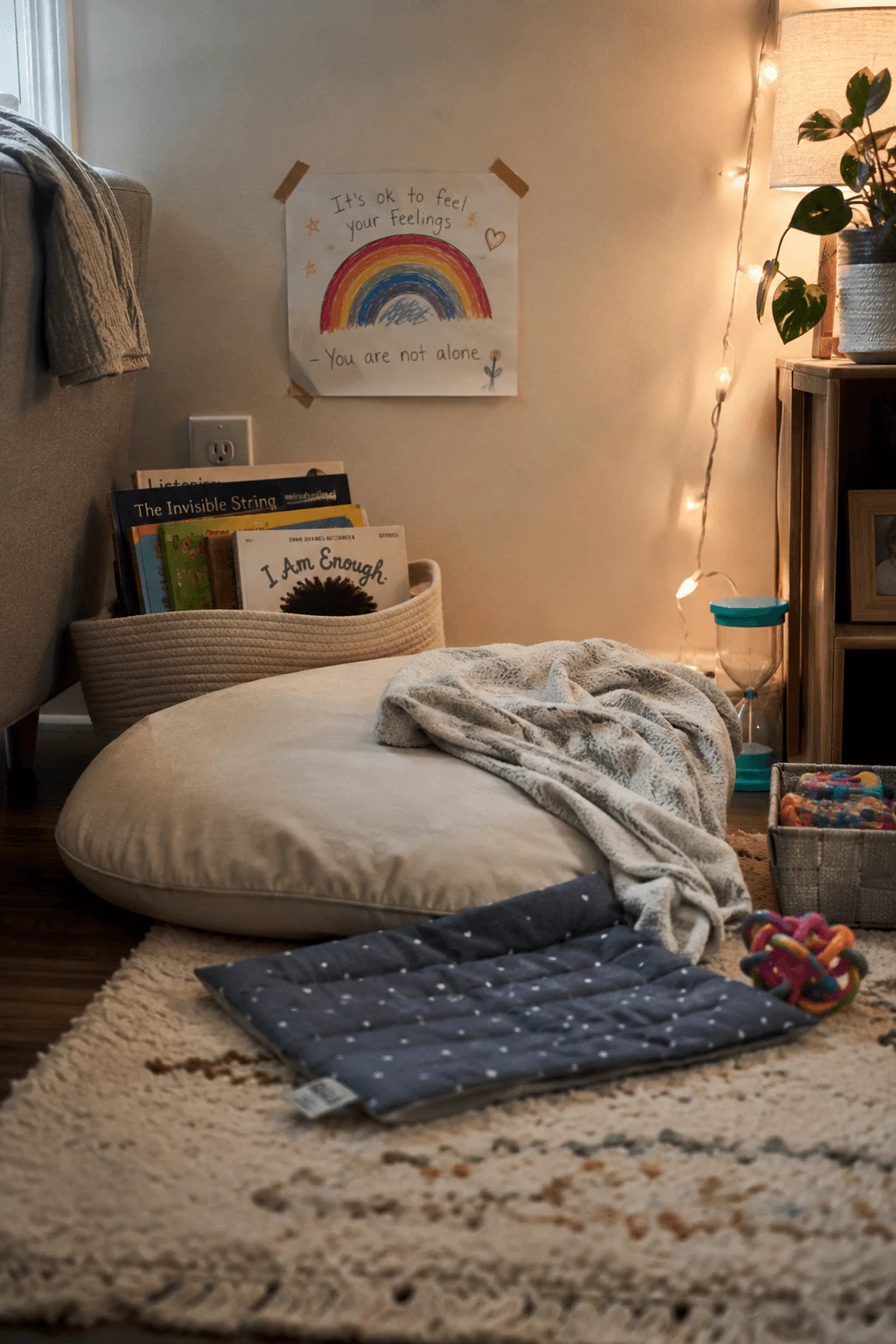
Match the tool to the hour the wheels come off. If your evenings are the war zone and mornings are survivable, start with the blanket. If the notes home are about carpet time and the homework chair creaking across the kitchen, start with the vest. The blanket also earns a daytime job if you fold it into a calm corner, where it becomes the heaviest, best part of the calming toolkit after a rough afternoon.
And whichever you pick, remember what it’s for. Deep pressure takes a revved-up body and brings it somewhere a kid can think. It will not finish the worksheet, and it will not replace the conversation about what the hard behavior is actually saying. Tools underneath, relationship on top.
Blanket vs vest, side by side
Same deep pressure, two different jobs. Ratings are current Amazon averages.
Start with one, run it for two honest weeks, and let your kid’s body vote. It will, louder than any review.
Frequently asked questions
Yes, for healthy children roughly age 3 and up, at about 10% of body weight, as long as the child can remove the blanket alone and wants it there. They are never safe for babies or children under 2, and kids with breathing, heart or mobility conditions need a doctor’s approval first.
The standard occupational-therapy guideline is about 10% of the child’s body weight, plus or minus a pound or two. A 50 lb kid takes roughly a 5 lb blanket, a 70 to 100 lb kid a 10 lb one. When in doubt, size down: a lighter blanket still calms, an over-heavy one becomes hard to escape.
For a healthy child over about 3 who can push it off and climb out alone, most occupational therapists are comfortable with overnight use at the correct weight. If your child is younger, small for their age, or you’re unsure, use it for the wind-down and slide it off once they’re asleep.
The evidence is mixed but leans toward a real calming effect for some kids, especially in short, scheduled doses of about 20 minutes. Occupational therapists use them as one tool for regulating a restless body, not a treatment for ADHD itself. Try one for two weeks and judge by your own kid.
Leave the first comment
Share your thoughts

I'm for the parent whose mornings keep falling apart. I didn't train in ADHD - I lived it with three kids, then read the actual studies, so what you get here holds up in a real kitchen at 7:50 a.m. Specific, tested at home, never preachy.
More from MarcusWhat finally made your child's focus click - even a little?
No right answers here - tell us how it went. Someone reading needs to hear it.
Join the conversation