
Best Volume-Limited Bluetooth Headphones for Kids (That Actually Cap the Volume)
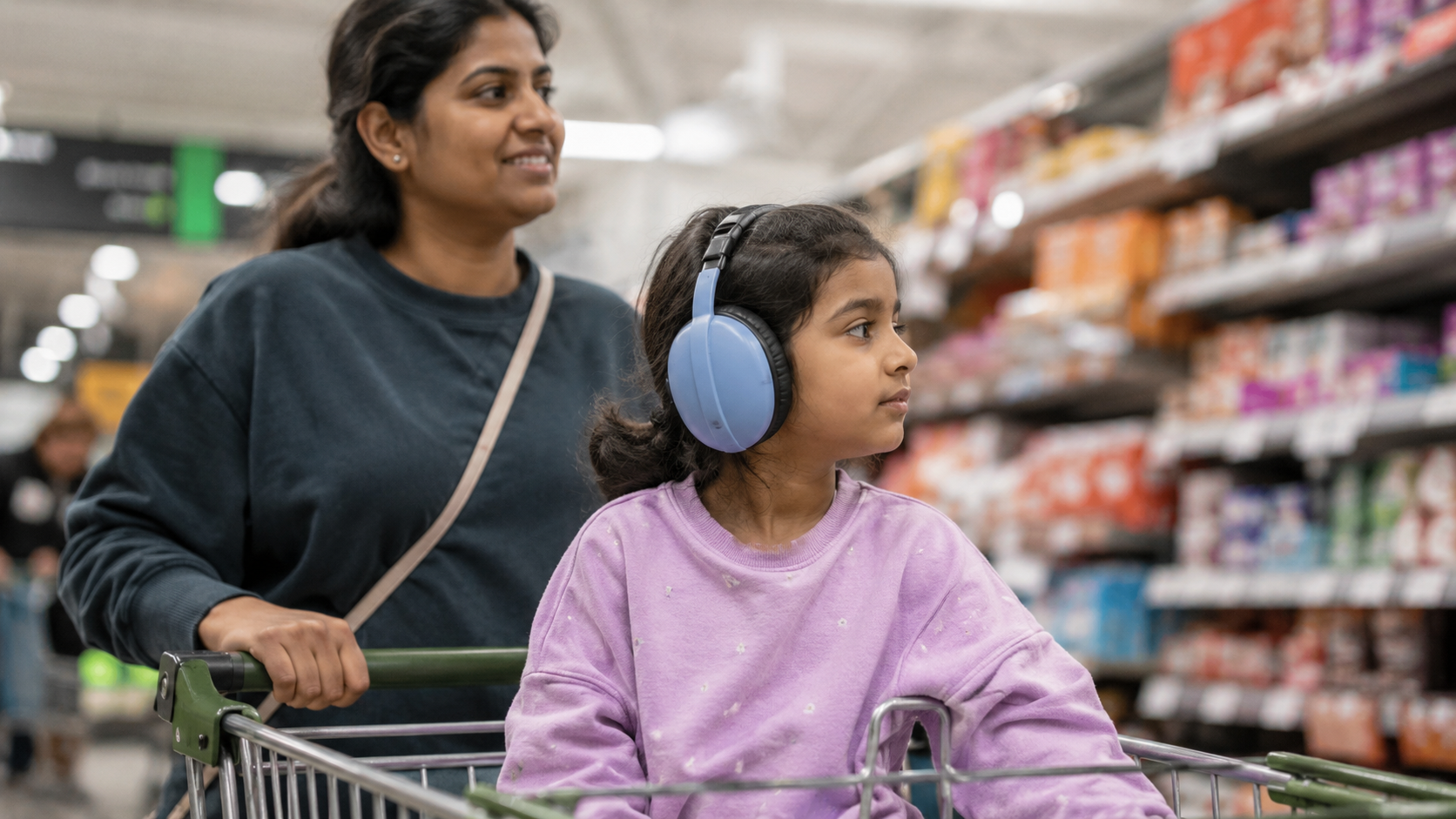
You hand over the headphones so the flight, or the waiting room, or the back seat stays survivable. Then the worry creeps in: is this loud enough, for long enough, to actually hurt their ears? It’s a fair question, and the headphone box is not always honest about the answer.
Almost every pair sold for kids says “volume limited” somewhere on the label. What that number actually is, and whether there’s a second mode that quietly undoes it, is the part that matters. That is the whole reason this list exists.
Why “volume limited” is the only spec that really matters
Hearing damage from headphones is not about one loud song. It is about how loud, for how long. The World Health Organization’s safe-listening guidance puts the everyday ceiling at around 85 decibels for a sustained stretch; above that, the safe daily window shrinks fast. That is the number a kids’ headphone is really promising to hold you under.
The catch: a lot of pairs advertise “85 dB” but include a second, louder mode (often 94 dB) for noisy places like a plane. Ninety-four decibels is not a small step up, it is roughly the loudness of a lawnmower, and the safe listening time at that level is measured in minutes, not hours. A volume cap only protects your kid if it is the mode the headphone actually stays on.
The picks, ranked
All four cap the volume; they differ in how they connect, how long they last, and one important honesty note on the cheapest wireless pair. Prices are approximate and move around on Amazon, so check the live figure before you buy.
| Model | Type | Volume cap | Battery | Rating | DK Score |
|---|---|---|---|---|---|
| iClever BTH22Top pick | Wireless + AUX | 74 / 85 dBA | 60 hrs | 4.6★ (2,760) | 8.6 |
| iClever BTH12 | Wireless | 74 / 85 dBA | 85 hrs | 4.6★ (12,853) | 8.1 |
| iClever Kids HS19 | Wired | Volume limited | None | 4.6★ (14,876) | 7.8 |
| JoySpark Kids | Wireless | 85 / 94 dBA | 60 hrs | 4.6★ (3,307) | 7.4 |
iClever BTH22 — the safest all-rounder
DK Score 8.6 / 10 · 4.6★ (2,760 ratings) · approx $26
The pair we’d hand most parents first. The volume tops out at a stated 74/85 dBA, the battery goes a genuinely long 60 hours, and, crucially, there’s an AUX cord in the box, so the day the charge dies at 30,000 feet you plug it straight into the tablet and the trip is saved. USB-C fast charging and the newer Bluetooth 5.4 are the small modern touches that make it feel current rather than cheap.
Get it if
- You want the safest all-round pick without overthinking it
- You travel and want a wired backup for a dead battery
- Long days out: 60 hours is a lot of car rides between charges
Skip it if
- You want the absolute longest battery, the BTH12 lasts longer
- Your younger child specifically wants the light-up look
iClever BTH12 — best for younger kids
DK Score 8.1 / 10 · 4.6★ (12,853 ratings) · approx $23
Same honest 74/85 dBA ceiling as our top pick, with two things younger children love: colour-changing LED lights on the earcups and an enormous 85-hour battery. The lights are the reason it wins for the four-to-seven crowd, and the reason to skip it if your kid uses headphones at bedtime, when a glowing earcup is the last thing you want. Bluetooth 5.2 is a half-step behind the BTH22 but nothing you’ll notice on a tablet.
Get it if
- Your child is younger and loves a bit of light-up fun
- You want the longest battery here, a whole 85 hours
- Most listening happens on a tablet, not at lights-out
Skip it if
- The LED lights would wind up a bedtime or wind-down kid
- You want the newest Bluetooth and a wired backup port
iClever Kids HS19 — best wired, no battery to die
DK Score 7.8 / 10 · 4.6★ (14,876 ratings) · approx $17
Sometimes the smartest kids’ headphone is the boring wired one. No pairing, no charging, nothing to go flat halfway through a movie, and the lowest price of the four. It plugs into anything with a 3.5mm jack (school Chromebooks, older tablets, the seat-back screen on a plane), the volume is limited, and it folds flat for a bag. The obvious catch is modern phones and many new tablets have dropped the headphone jack, so check your device first.
Get it if
- You want no battery, no pairing, and the lowest price
- It’s for school devices or a wired seat-back screen
- You want a cheap, reliable backup pair for the bag
Skip it if
- Your device has no headphone jack
- A trailing cord is a dealbreaker for a wiggly toddler
JoySpark Kids — cheapest wireless, with one caveat
DK Score 7.4 / 10 · 4.6★ (3,307 ratings) · approx $20
A perfectly decent budget wireless pair, with a mic for calls and a 60-hour battery, and the one honest reason it sits at the bottom: its volume limit has two modes, 85 dB and 94 dB. On the 85 dB setting it’s as safe as the others. On the 94 dB setting it is well over the ceiling we’d want for a child, and there’s nothing stopping a curious kid from switching it. If you’ll keep it on the safe mode and check it now and then, it’s good value. If you can’t supervise that, spend the extra few dollars on the BTH22.
Get it if
- You want the cheapest wireless option with a mic
- You’ll keep it on the 85 dB mode and check occasionally
- Battery life matters: 60 hours is plenty
Skip it if
- You can’t supervise the volume mode, the 94 dB setting is too loud for a child
- You want the sturdiest build of the group
Wired or wireless for a kid?
Wireless wins for the car and the plane, where a cord snagging on a car seat is a real daily annoyance, and it’s what most kids will reach for. Wired wins for school, for the youngest children who treat a cord as a chew toy waiting to happen, and for the simple fact that a wired pair never needs charging and never goes flat at the worst moment. Plenty of families end up with one of each: a wireless main pair and a cheap wired backup that lives in the bag.
The one number to check before you buy
Whatever you pick, open the listing and find the volume figure before you add to cart. If it says a flat 85 dB with no louder second mode, you’re covered. If it lists two numbers, decide honestly whether you’ll keep it on the safe one. That single check protects your kid’s hearing better than any brand name on the box.
Frequently asked questions
The widely used ceiling is around 85 decibels for sustained listening, in line with WHO safe-listening guidance. Above that, the safe daily listening time drops quickly, which is why a hard 85 dB limit is the key spec to look for in a kids’ pair.
Most do hold the limit on their standard mode, but some models add a second, louder mode (often 94 dB) for noisy places. The cap only protects your child if the headphone stays on the safe setting, so check whether a louder mode exists and whether your child can switch it.
Wireless is more convenient for car rides and travel, while wired pairs never need charging, cost less, and suit school devices. Many families keep a wireless main pair plus a cheap wired backup, so there’s always one that works.
Volume-limited over-ear headphones are commonly used from around age three, once a child will keep them on comfortably. For babies and toddlers, ear protection is about blocking loud environments rather than listening, which is a different type of product.
It’s not recommended. Adult headphones usually lack a volume cap and are sized for a larger head, and noise cancelling is a separate feature from the volume-limiting that protects a child’s hearing. A purpose-built kids’ pair is the safer choice.
Leave the first comment
Share your thoughts

I'm for the parent standing in the bookshop, overwhelmed. I read them all - the wise, the smug, the single good idea stretched to 240 pages - so your nightstand stack stays short. I'll point you to what's truly worth it, and kindly, what to put back.
More from MeiWhich tool actually earned its place - and which was a waste of money?
No right answers here - tell us how it actually went. Someone reading needs to hear it.
Join the conversation