WEATHER
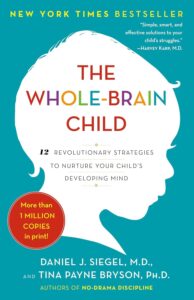
The Whole-Brain Child by Daniel Siegel and Tina Payne Bryson comes up most consistently in research and among clinicians. It explains why meltdowns happen at the level of brain development, which makes the practical strategies feel logical rather than arbitrary. Because you understand the mechanism, you use the techniques more consistently.
The book is short enough to finish in a week and dense enough to return to when you are in a different developmental phase.
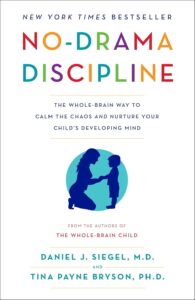
No-Drama Discipline, also by Siegel and Bryson, is the follow-up specifically designed to address the cycle of reactivity. It reframes discipline as a teaching opportunity rather than a control mechanism, and the scripts in the book are transferable to real moments.
Most parents who read it report that the first change they notice is in their own pause before responding, not in the immediate behaviour of the child. That shift alone is what breaks the pattern.
Look for a few signals: the book should cite research clearly, practitioners should recommend it rather than just celebrities, and the core framework should be compatible with what you know about child development. Be cautious of any book that claims one universal method works for every child, because temperament variation alone makes that implausible.
Our How We Work page explains the same standard we apply to our own articles and reviews.
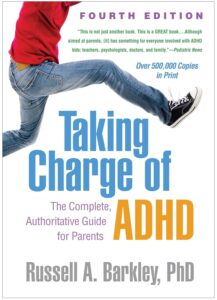
Read: How We Choose What We Recommend →Taking Charge of ADHD by Russell Barkley is the reference that paediatric psychiatrists and educational psychologists most frequently point parents toward. It covers the neuroscience, the practical daily management, and the school navigation in one place.
The Explosive Child by Ross Greene is the companion read for parents whose child has intense emotional reactions alongside the ADHD; it shifts the frame from compliance to collaborative problem-solving. Both are written for parents rather than clinicians.
There are far fewer books specifically for single parents than the demand justifies, which is a genuine gap. The ones that exist tend to be practical guides to logistics and co-parenting rather than emotional support books. Single-parent-relevant chapters appear in broader parenting books more often than dedicated titles.
Our Single-Parent Life articles cover the specific dynamics that come up repeatedly in this community, and our FAQ answers there are curated for the single-parent context specifically.
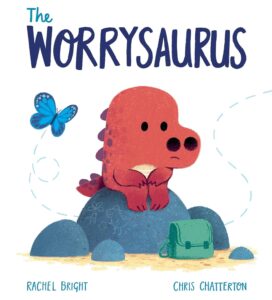
Read: Single-Parent Life Questions Answered →The Worrysaurus by Rachel Bright is one of the best picture books for young children aged 3 to 6 because it gives anxiety a character and a shape, which helps young children name what they are feeling rather than just acting it out. For older children, What to Do When You Worry Too Much by Dawn Huebner is the workbook that therapists most often recommend to parents.
Both work better when read together with an adult than handed over as a solo activity.
Both, but for different reasons. Reading before a challenge gives you a framework and vocabulary so you can think in those terms when the situation is live; reading during a challenge gives you practical tools exactly when you need them. The biggest mistake is reading so many books simultaneously that no single framework has time to become habitual.
Pick one book, read it fully, try the approach for six to eight weeks, and then decide whether to supplement it with another.
Explore: Our Reading List →Audio books work very well for parenting books because most of the content is principle-based rather than visual or reference-heavy. The exceptions are workbooks (which require writing), books with diagrams or charts, and books you want to annotate and return to by chapter.
For many parenting authors the audio version is especially effective because the conversational tone translates well and the author often narrates their own work. Most titles are available on standard audio platforms.
Explore: Books and Guides Category →How to Talk So Kids Will Listen and Listen So Kids Will Talk by Faber and Mazlish has been in print since 1980 because it works and because the approach is practical enough to begin using the same day you read it. It is conversational rather than academic, which makes it accessible in the middle of a difficult phase rather than only as pre-reading.
Our books category has the full list of titles we have tested and reviewed.
Explore: Our Recommended Books →We source from three places: peer-reviewed journals in developmental psychology, child psychiatry, and educational research; books by clinicians or researchers who are active in their field; and real parent experiences gathered through our community and comment sections. We do not cite self-published blogs, social media posts, or studies funded solely by the manufacturer of a product we are reviewing.
Our How We Work page has the full standard, including how we handle emerging or contested research.
Read: How We Source Our Research →Still not finding what you need?